Sola-Site-Logo
Search

Home » Blog » 25 Solar Pergola Design Ideas for Backyards, Patios & Decks

25 Solar Pergola Design Ideas for Backyards, Patios & Decks

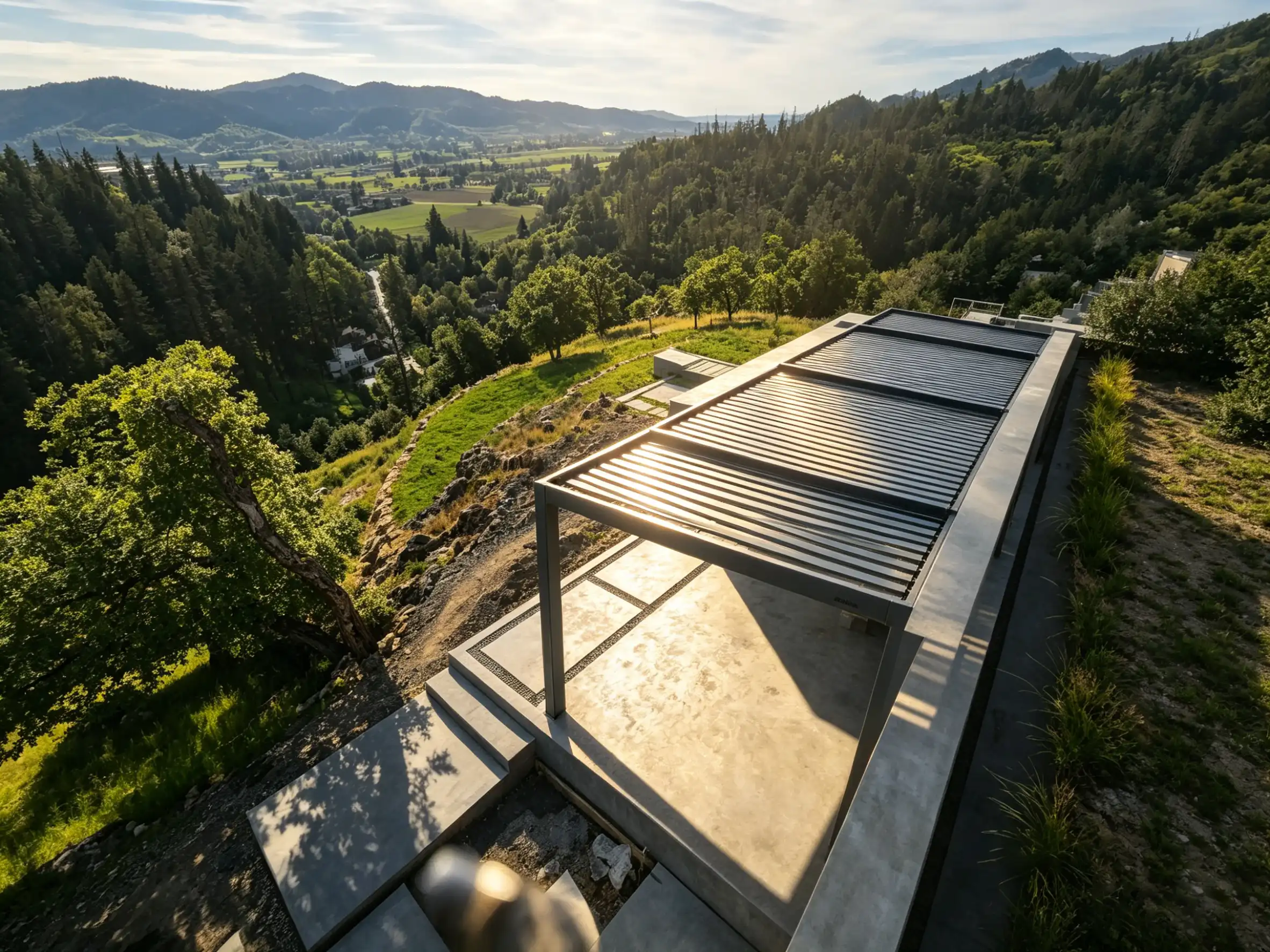
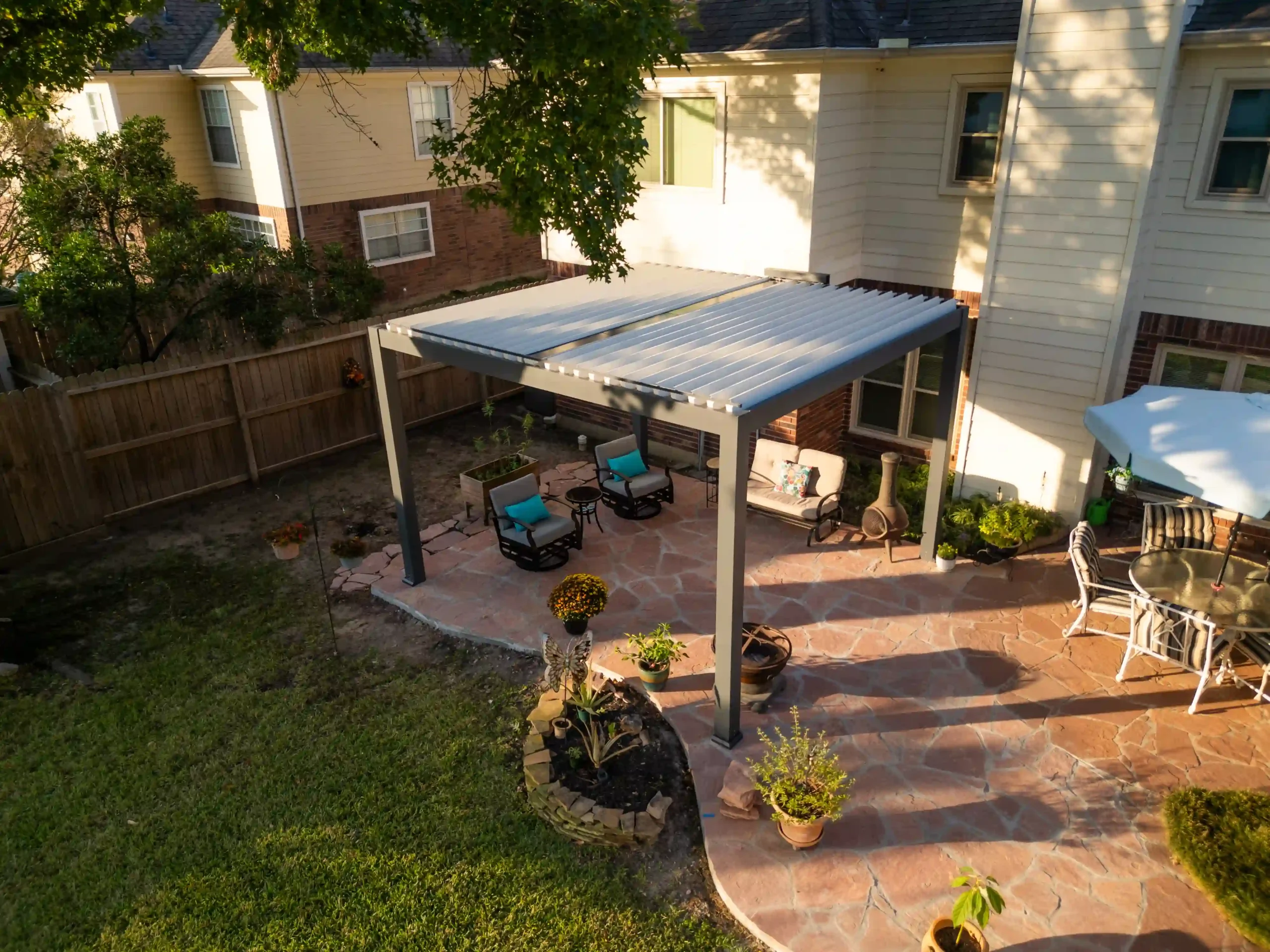
aerial view of custom pergola for residential backyard

Looking for solar pergola design ideas for your backyard, patio, or deck? The right pergola can turn an exposed outdoor area into a comfortable space for dining, relaxing, cooking, and entertaining. From freestanding backyard structures to wall-mounted designs and deck pergolas, the layout, size, roof style, and accessories you choose can make a major difference in how the space works.

In this guide, we share 25 solar pergola design ideas for different outdoor spaces and needs. The collection includes 19 real Sola customer projects, along with additional design ideas based on popular layouts, features, and ways to customize a solar-powered pergola.

Unlike a traditional fixed patio cover, a solar-powered louvered pergola combines adjustable shade with integrated solar power. Sola's system is designed to power the pergola's built-in features, including motorized louvers, LED lighting, and optional accessories, without requiring conventional grid wiring to operate these features.

Use the ideas below to find a pergola style that fits your space, then explore the practical considerations—from size and placement to shade, privacy, lighting, and customization—before choosing your design.
1. Backyard Pergola Design Ideas

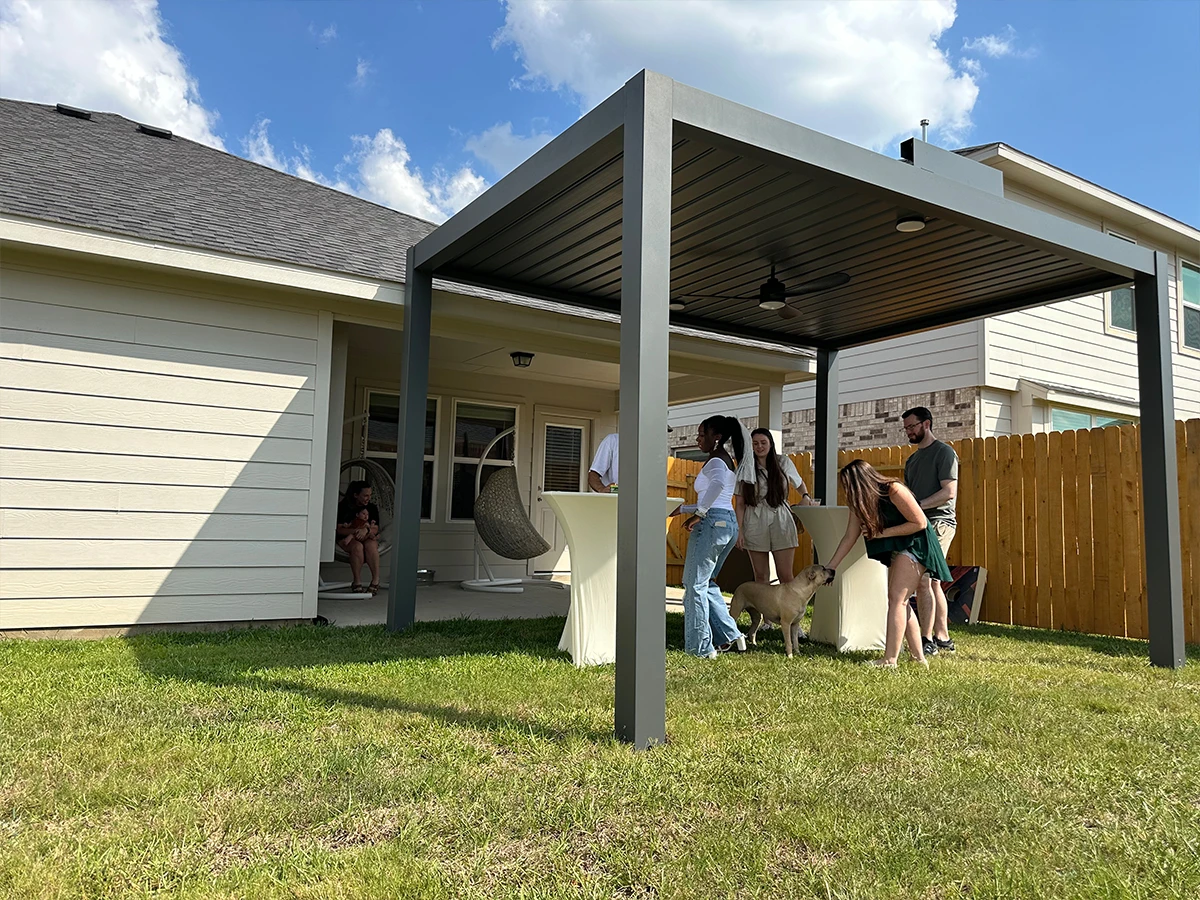
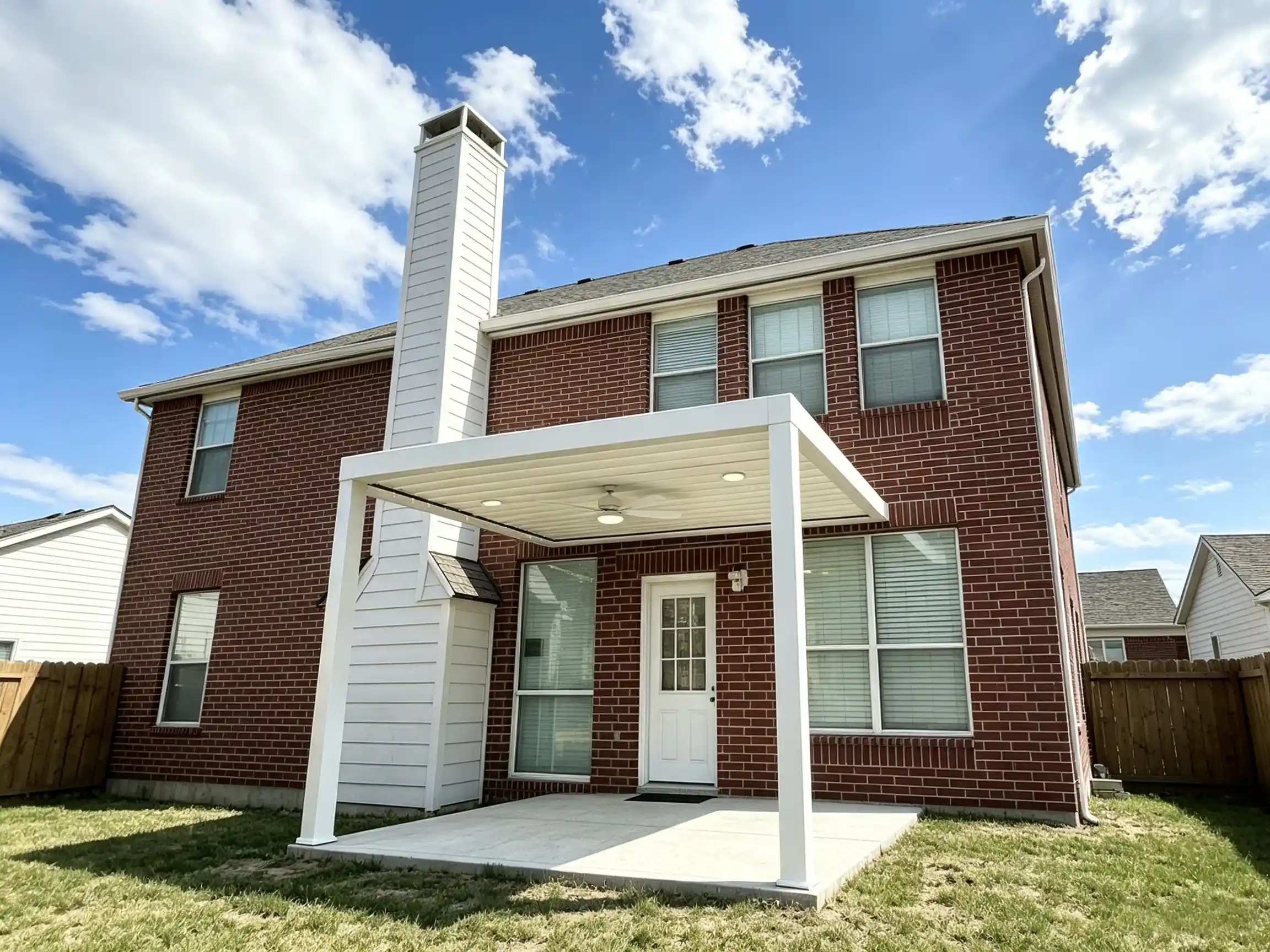
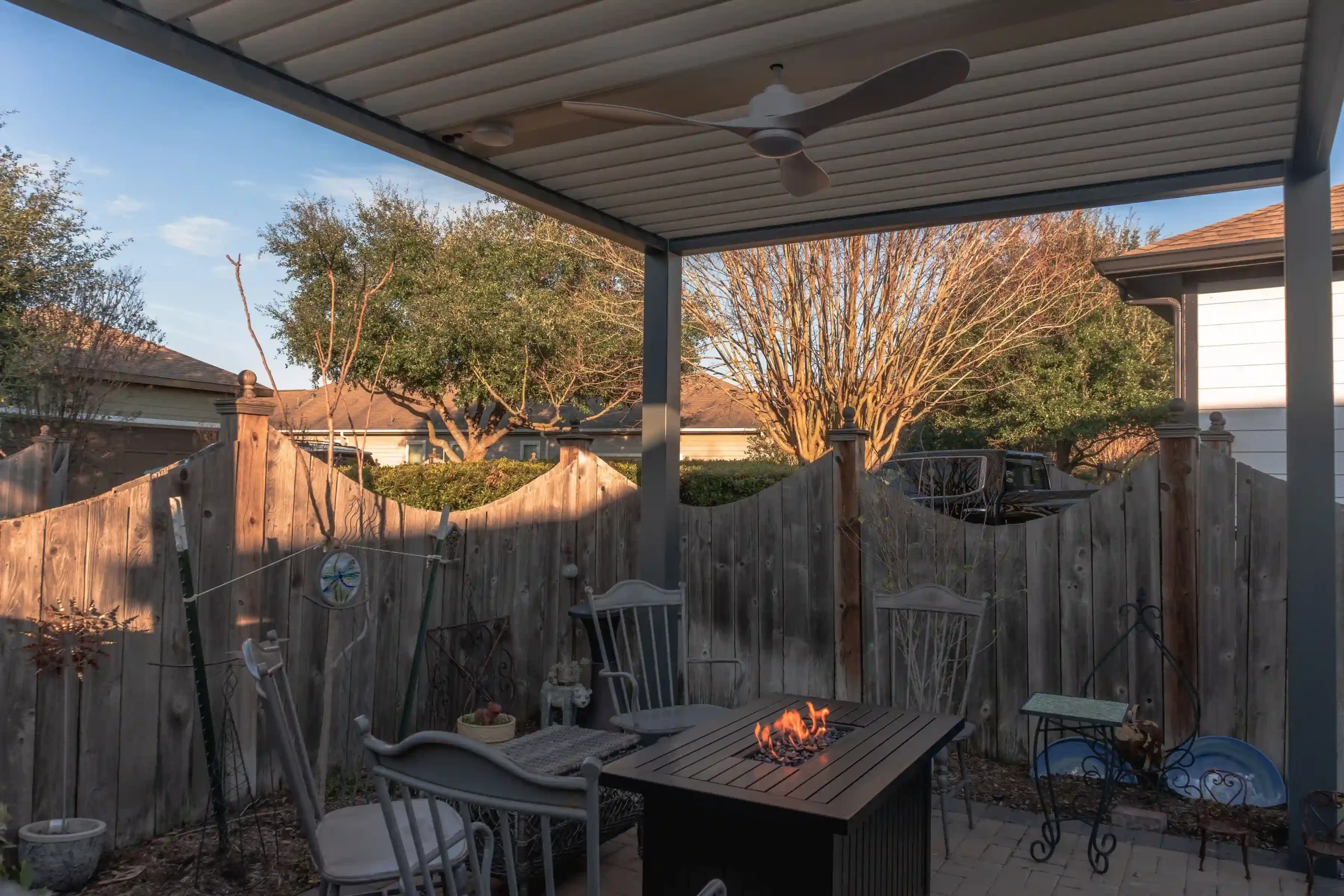
Freestanding Backyard Solar Pergola — 10 × 12 Design

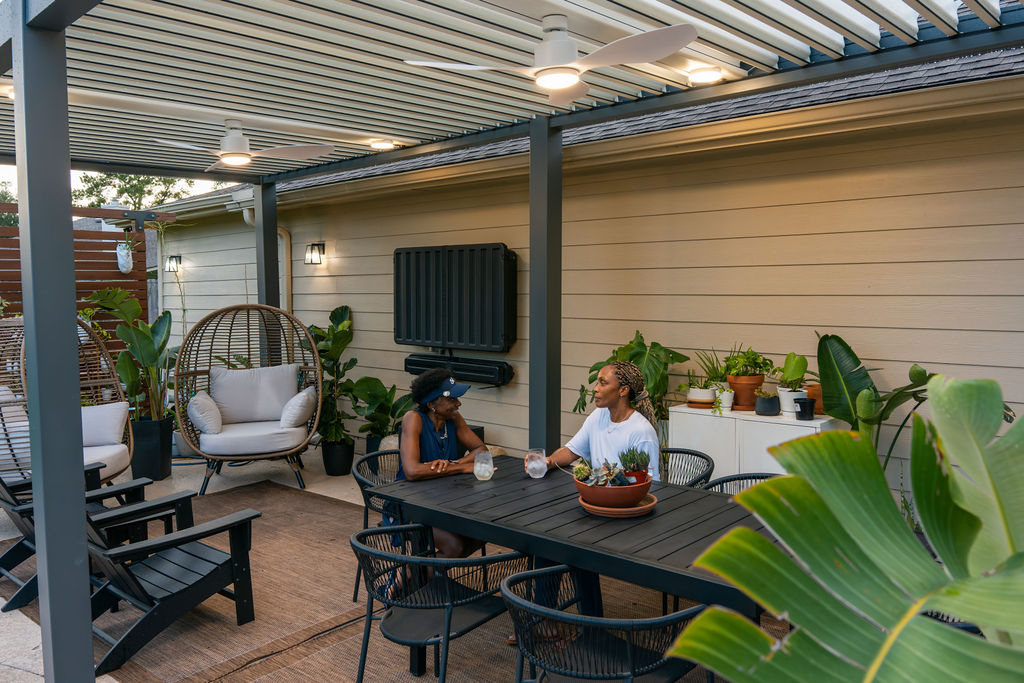
Sharon wanted to make better use of her backyard, but the open space lacked shade, weather protection, and evening lighting—limiting her ability to relax or host friends and family. 

Best for: Small-to-medium backyards, outdoor seating, casual dining, and everyday relaxation.

Design takeaway: A 10 × 12 footprint is a practical starting point when you want a defined outdoor room while preserving plenty of open yard space. Motorized louvers also allow homeowners to adjust sunlight and shade throughout the day.

View the Complete Project→

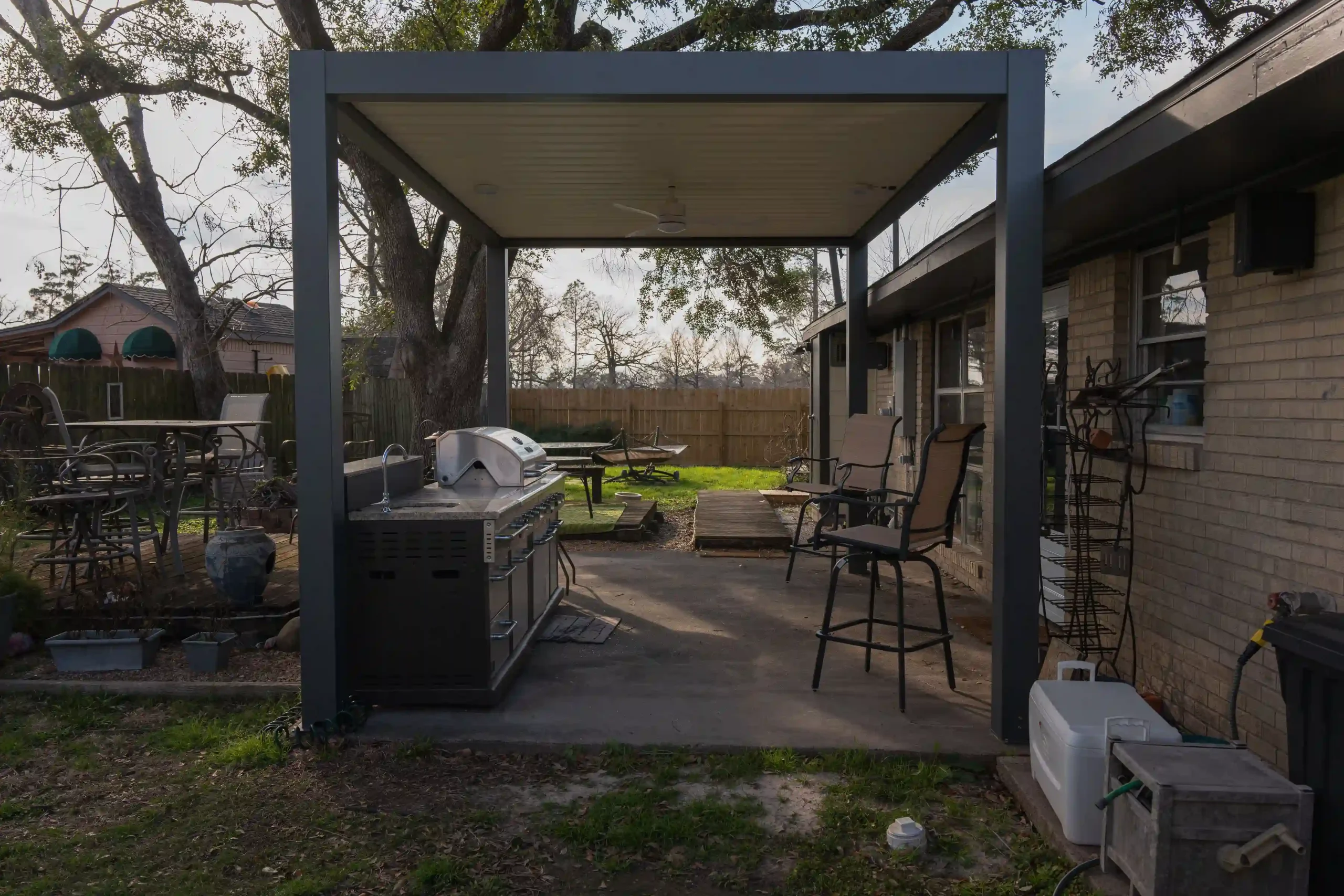
Outdoor Kitchen Solar Pergola — 10 × 14 Design

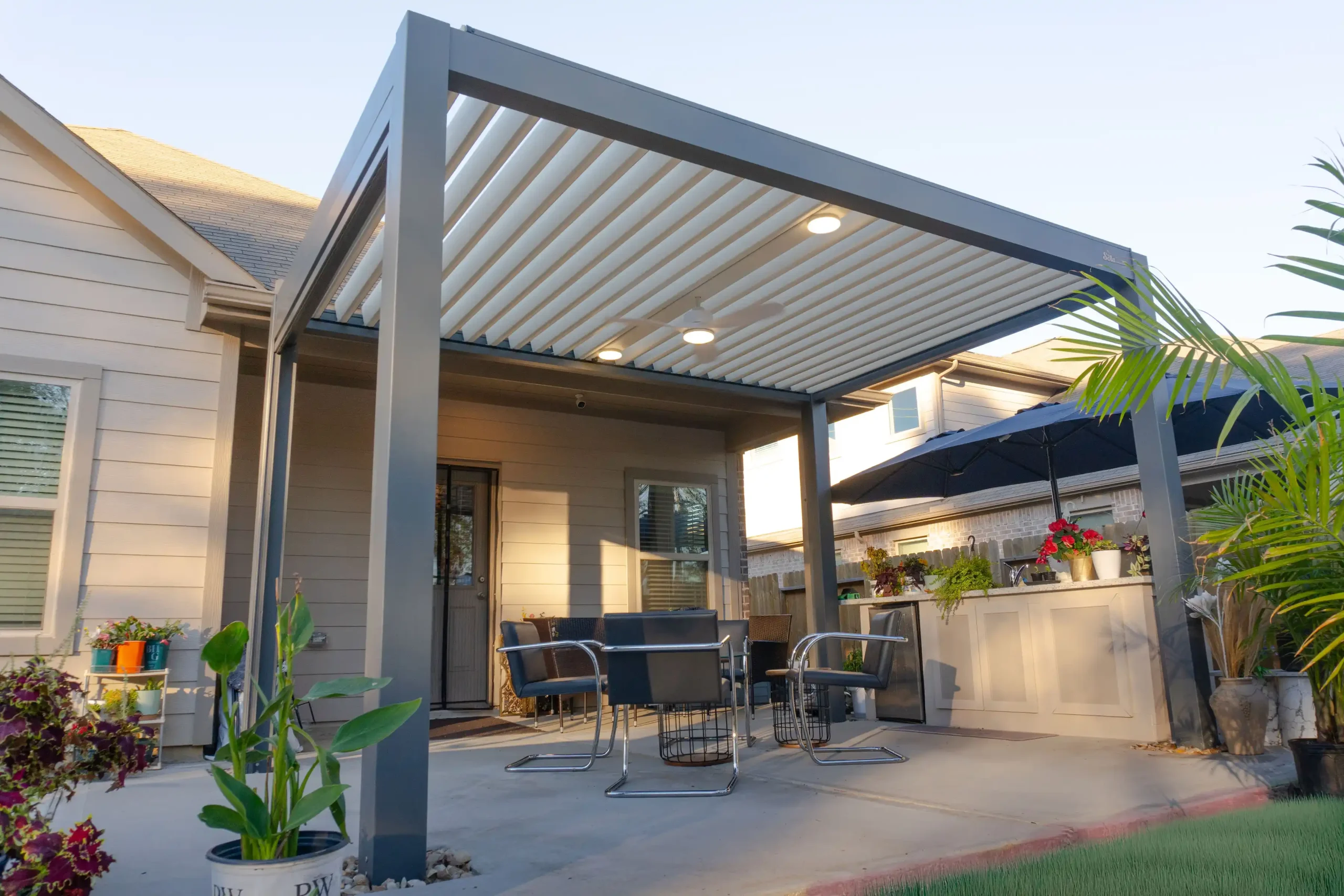
Garcia’s backyard cooking area was stuck in “problem purgatory”—blistering sun ruined meals, rain canceled cookouts, and the space lacked “dream kitchen” charm. 

Best for: Outdoor kitchens, BBQ areas, dining spaces, and frequent backyard entertaining.

Design takeaway: When designing a pergola over an outdoor kitchen, prioritize enough width and depth for both cooking and circulation. A larger footprint such as 10 × 14 can create separate zones for the grill, food preparation, and dining area.

View the Complete Project→

10 × 20 Solar Pergola for a Houston Backyard

The Smith family sought to replace their high-maintenance wooden pergola with a smart, durable solution for their Houston, TX backyard. Their old structure warped, faded, and needed constant upkeep, with no control over shade or light—leaving the patio sweltering in Texas heat and unusable after dark.

Best for: Large backyards, family gatherings, outdoor dining, and entertainment areas.

Design takeaway: A 10 × 20 layout works well when the pergola needs to accommodate multiple activities rather than a single seating area. Consider dividing the space into dining, lounge, and cooking zones when planning a large backyard pergola.

View the Complete Project→

Large Aluminum Solar Pergola — 10 × 24 Louvered Design

This Cypress, TX family wanted to turn their unused backyard into a welcoming space for gatherings and daily relaxation. With no reliable shade, the yard became sweltering in the Texas sun, lacked privacy, and was unusable after dark or light rain.

Best for: Large backyards, outdoor entertaining, dining areas, and multi-zone outdoor living.

Design takeaway: For a wide backyard, a 10 × 24 pergola can provide enough coverage to combine several outdoor functions under one structure. When planning a large pergola, consider furniture layout, walking paths, drainage, and access around the perimeter.

View the Complete Project→

13 × 14 Motorized Solar Pergola for Backyard Entertaining

The Taitano family aimed to upgrade their underused Houston backyard into a versatile outdoor space for relaxation and entertaining. Their patio was sweltering in Texas heat, lacked shade control, and was unusable after dark or in changing weather.

Best for: Backyard entertaining, outdoor dining, family gatherings, and larger seating areas.

Design takeaway: A 13 × 14 footprint offers a useful middle ground between compact and oversized backyard structures. It provides enough room for seating and dining without requiring the footprint of a very large 20- or 24-foot pergola.

  View the Complete Project→

Backyard Solar Pergola with a Protective Roof

Santos’ backyard was a “potential-rich but underused space.” Extreme sun made midday hangs unbearable, rain turned the area into a “muddy mess” for days, and the lack of a private, cozy zone meant no real “resort-like escape” at home. 

Best for: Backyards exposed to strong sun, outdoor lounges, and homeowners who want more weather protection.

Design takeaway: A louvered roof gives a backyard pergola more flexibility than a permanently open roof. Louvers can be adjusted to let in sunlight or closed when stronger shade and rain protection are needed.

View the Complete Project→

Backyard Solar Pergola with Privacy Screen

Dyson’s Houston backyard had immense potential but zero protection. Extreme midday heat made the patio unusable, weekly rain ruined his cushions, and the lack of a privacy screen left the space fully exposed to neighbors' eyes.

Best for: Backyards close to neighboring homes, outdoor lounges, and spaces where privacy matters as much as shade.

Design takeaway: Privacy is often an overlooked part of pergola planning. Adding side screens or shades can turn an exposed backyard structure into a more comfortable outdoor room without completely enclosing the space.

View the Complete Project→

Rain-Ready Backyard Solar Pergola for All-Weather Living

Alana’s backyard had plenty of space for entertaining, but zero protection from the elements or onlookers. The lack of a waterproof sunshade turned her patio into a "solo-only" zone during hot afternoons, while wet weather regularly canceled her plans, wasting the potential for year-round outdoor fun.

Best for: Rain-prone areas, outdoor dining, entertaining, and homeowners who want to extend outdoor use across more seasons.

Design takeaway: If weather flexibility is a priority, consider a pergola with adjustable louvers and an integrated drainage system. The goal is not simply to add a roof, but to create a space that can adapt to changing conditions.

View the Complete Project→

Backyard Solar Pergola for an Outdoor Oasis

Qandil’s lush backyard had oasis potential, but harsh sun and rain kept him from enjoying it fully—he lacked a pergola with roof to make the space usable.

Best for: Landscaped backyards, garden retreats, outdoor lounges, and homeowners creating a resort-style space at home.

Design takeaway: A pergola does not need to dominate a backyard. Positioning it within an existing landscape can create a dedicated destination for dining or relaxing while keeping the surrounding lawn and garden visually open.

View the Complete Project→

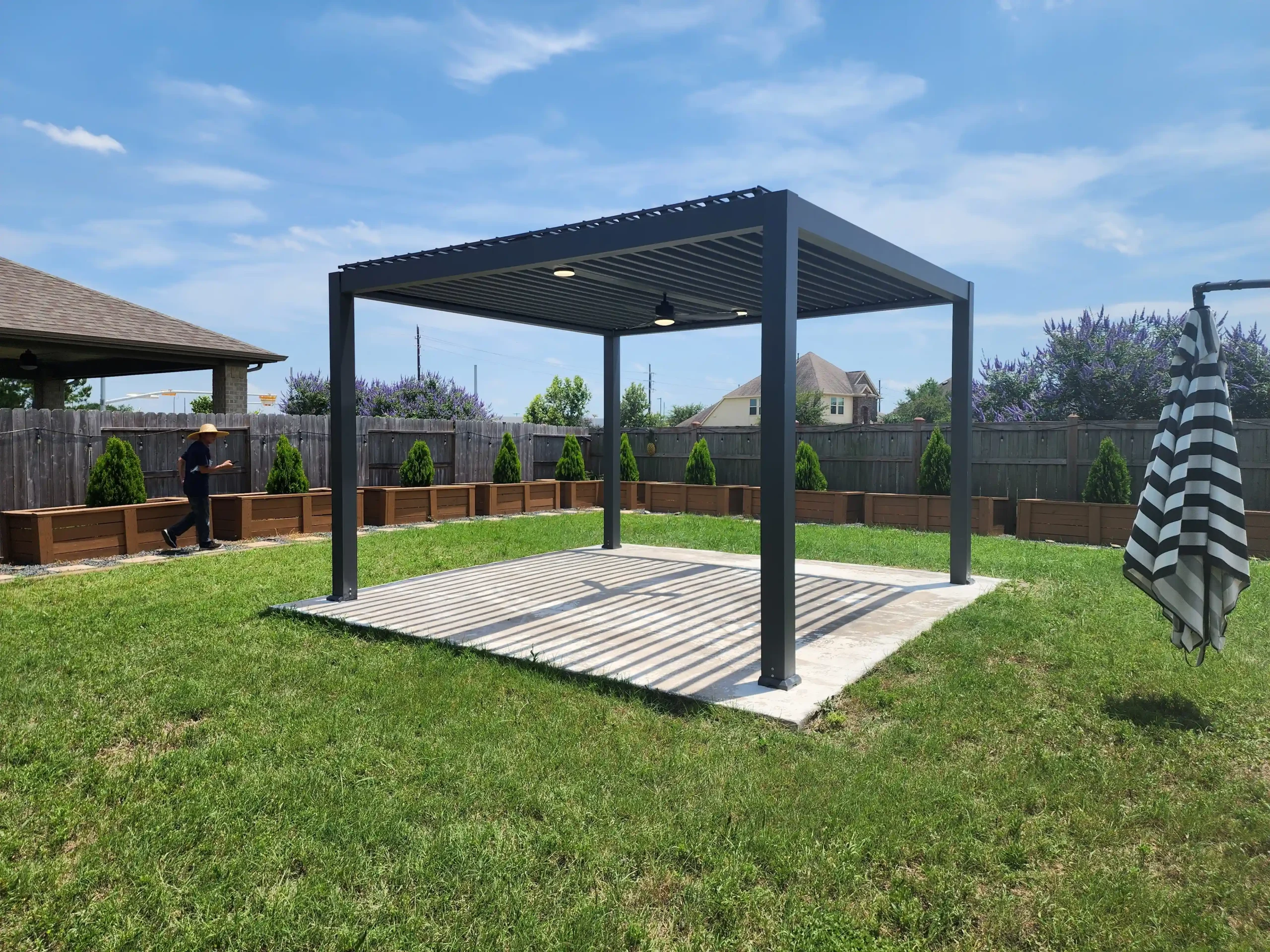
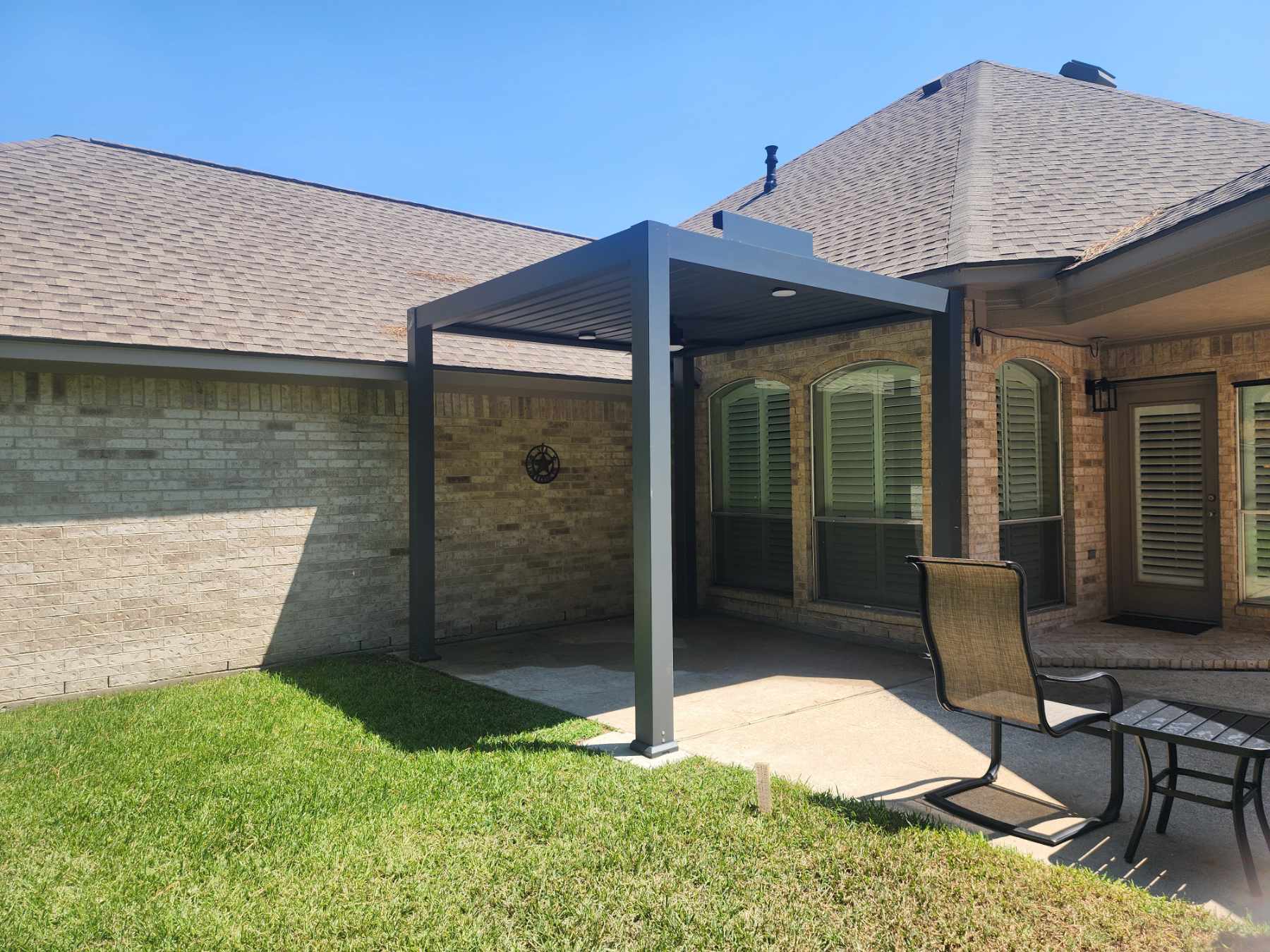
Compact 10 × 10 Freestanding Solar Pergola in Houston

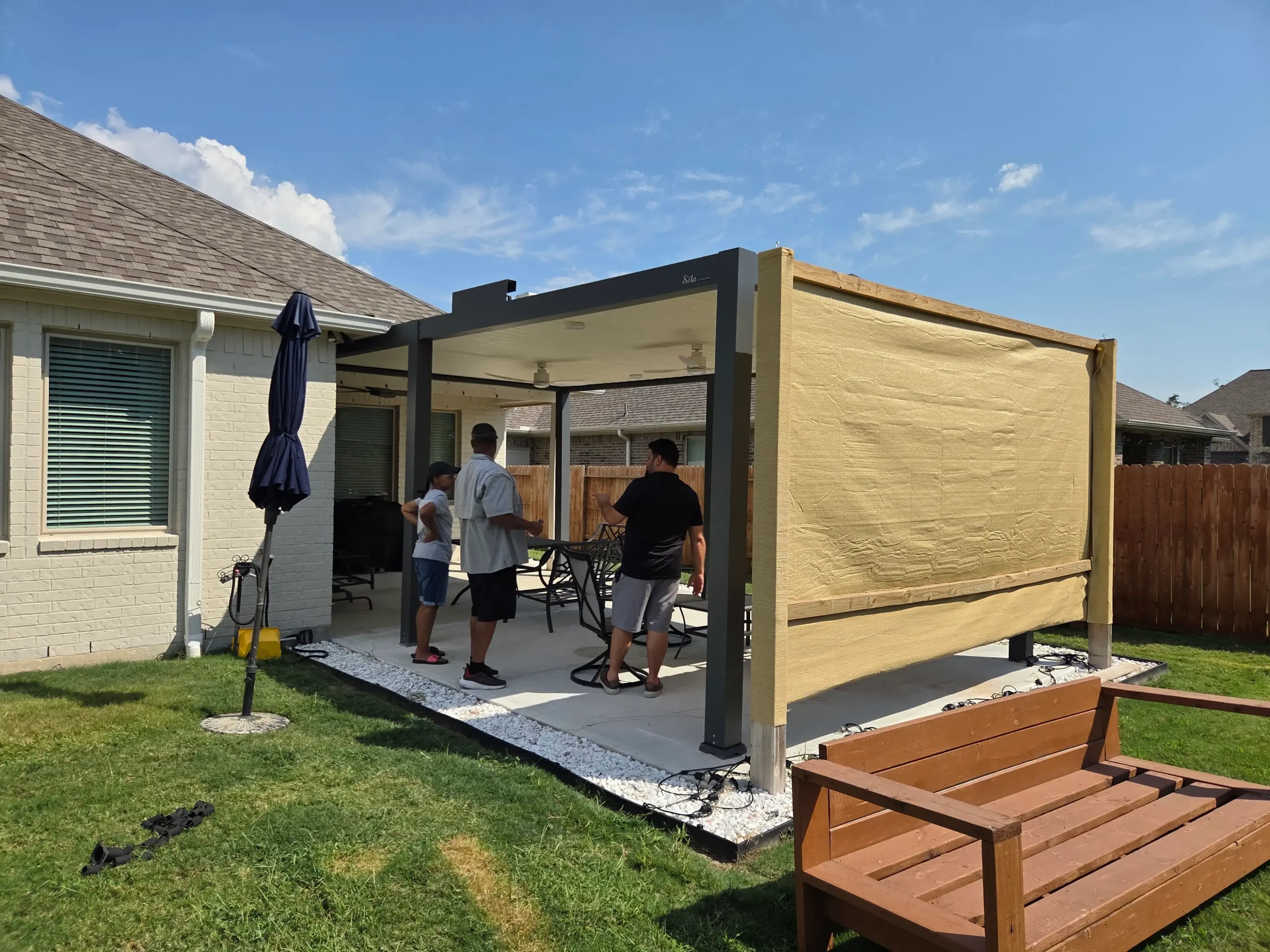
The Hall family wanted a dedicated, cozy outdoor space to fully enjoy their Houston backyard day and night. With no reliable shade or weather protection, and no easy way to add lighting or cooling, they could rarely relax outside after dark. 

Best for: Small-to-medium backyards, compact patios, seating areas, and homeowners working with limited space.

Design takeaway: You do not need a very large yard to benefit from a pergola. A 10 × 10 layout can create a clearly defined outdoor living zone while leaving room around the structure for landscaping, circulation, and other backyard uses.

View the Complete Project→

2. Patio Pergola Design Ideas

A Better Alternative to an Umbrella

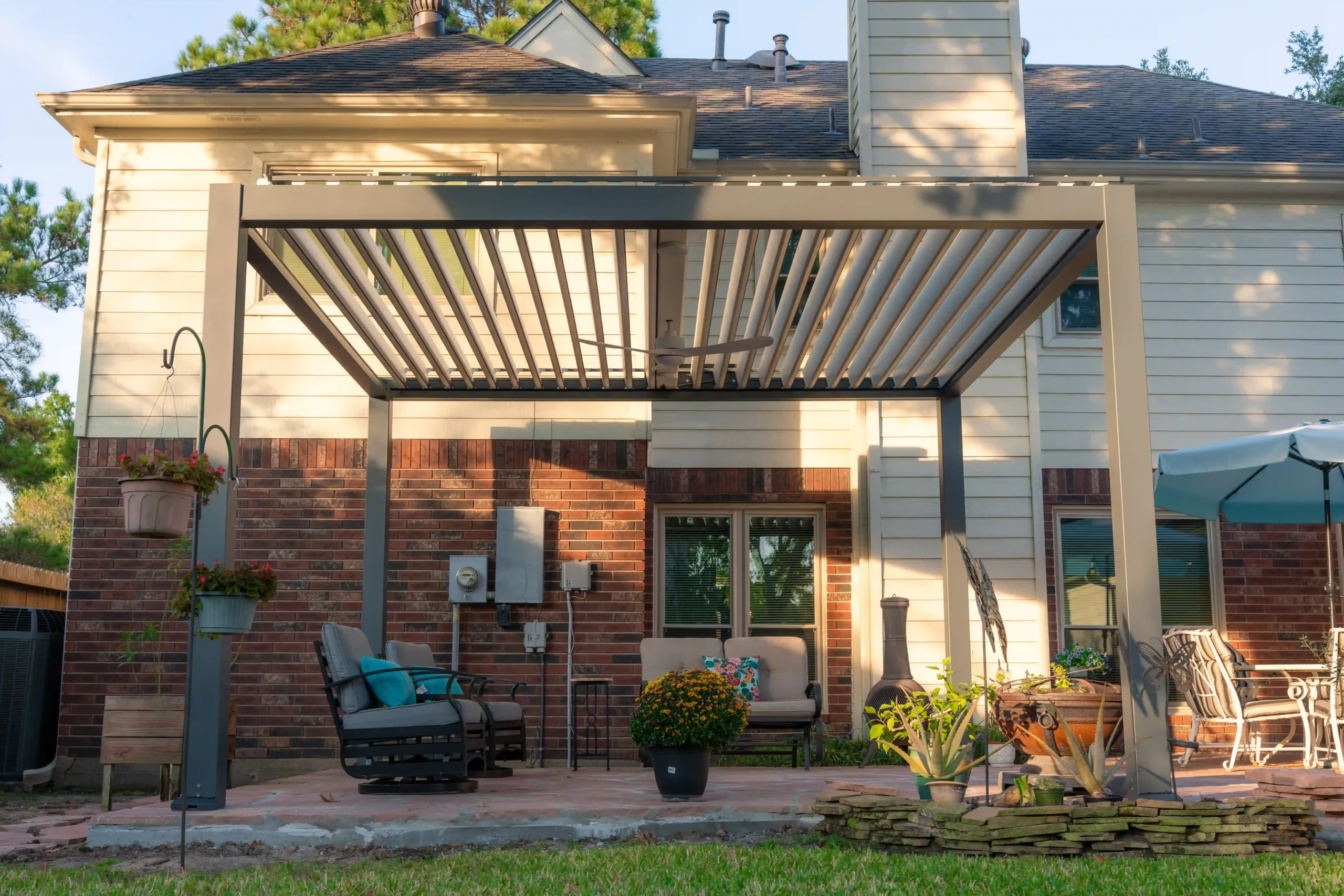
Bruce and Denise’s Pearland, TX backyard was ruined by Texas sun and wind—their old patio umbrella toppled easily and failed to block glare, making the space sweltering by day.   

Best for: Patios currently relying on umbrellas, outdoor dining areas, and homeowners looking for more consistent shade.

Design takeaway: If an umbrella no longer provides enough coverage or stability, a permanent patio cover can create a more usable outdoor living area. A louvered solar pergola also gives you the flexibility to adjust the amount of sunlight throughout the day.

View the Complete Project→

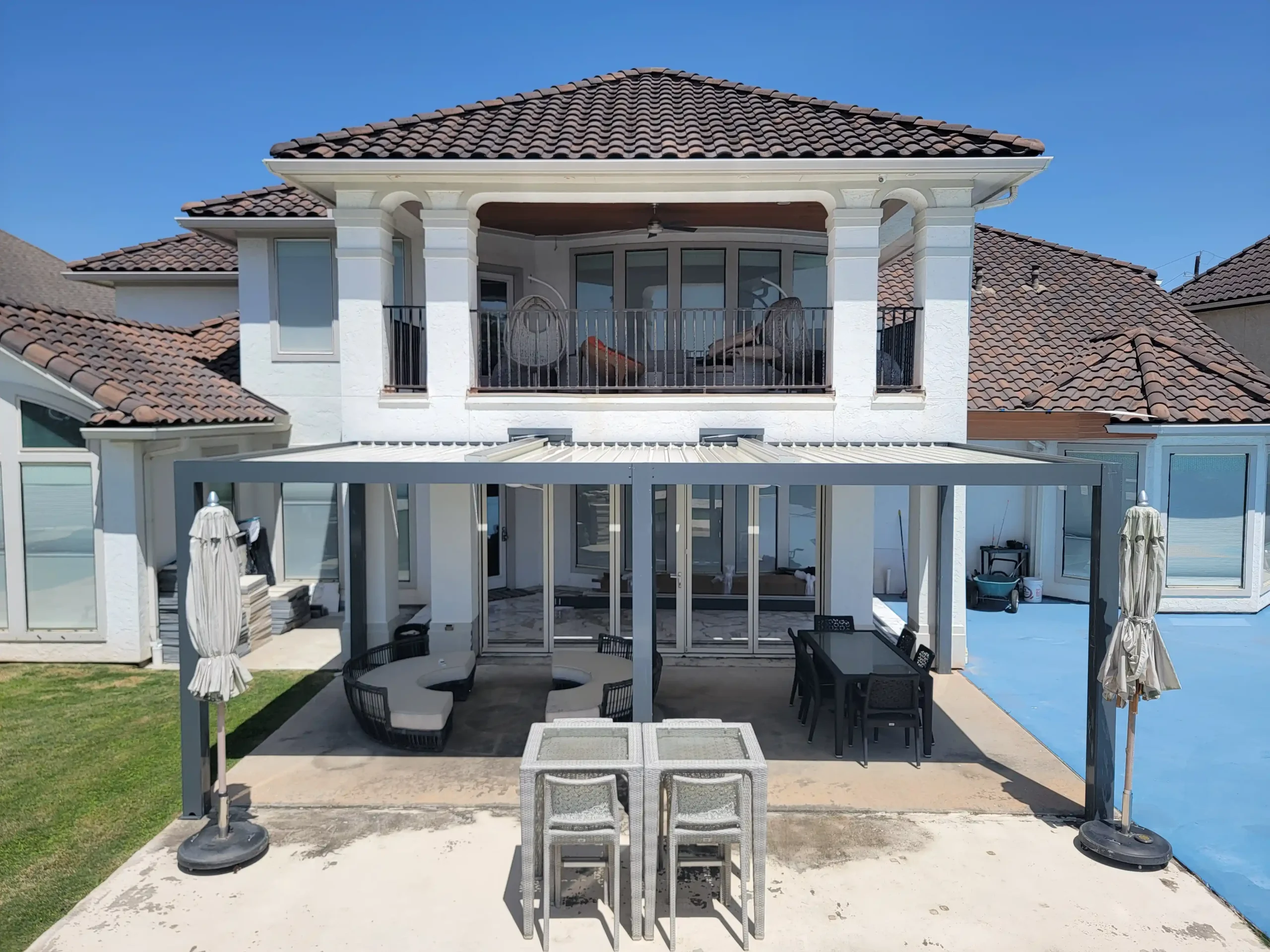
Lakeside Solar Pergola for Outdoor Entertaining

Danny's back patio was once underused and weather‑vulnerable, suffering from harsh sun, rain damage, and poor comfort. The open-air space did not match his luxury lakeside home and was not ideal for outdoor gatherings.   

Best for: Lakeside homes, waterfront patios, outdoor dining, and entertaining areas where preserving views is important.

Design takeaway: A pergola beside a lake should provide shade and weather protection without visually blocking the surrounding landscape. An open-sided louvered design can define the outdoor living area while keeping the waterfront view visible.

View the Complete Project→

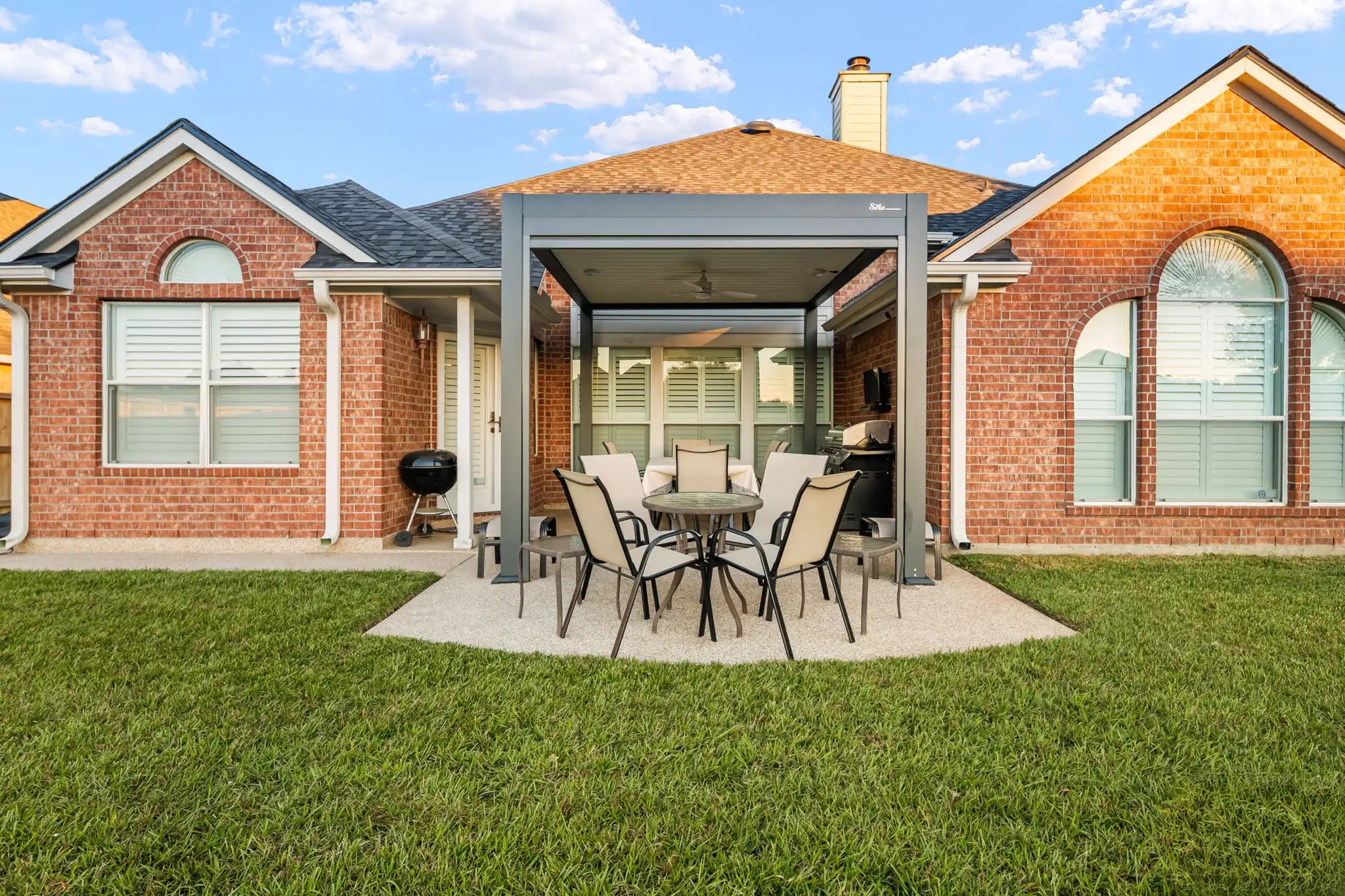
10 × 14 Aluminum Solar Patio Cover in Houston

The Irey family wanted to turn their underused backyard patio in Houston, TX, into a functional, cool space for daily relaxation. With no reliable shade, the patio was sweltering in the Texas sun, and flimsy patio umbrellas failed to provide consistent coverage or withstand the wind. 

Best for: Medium-sized patios, outdoor seating, dining areas, and homes in hot or sunny climates.

Design takeaway: A 10 × 14 footprint provides enough coverage for a typical dining or lounge setup without requiring an oversized structure. When choosing the size, measure the usable patio area first and leave enough clearance around furniture and walkways.

 View the Complete Project→

3. Deck Pergola Design Ideas

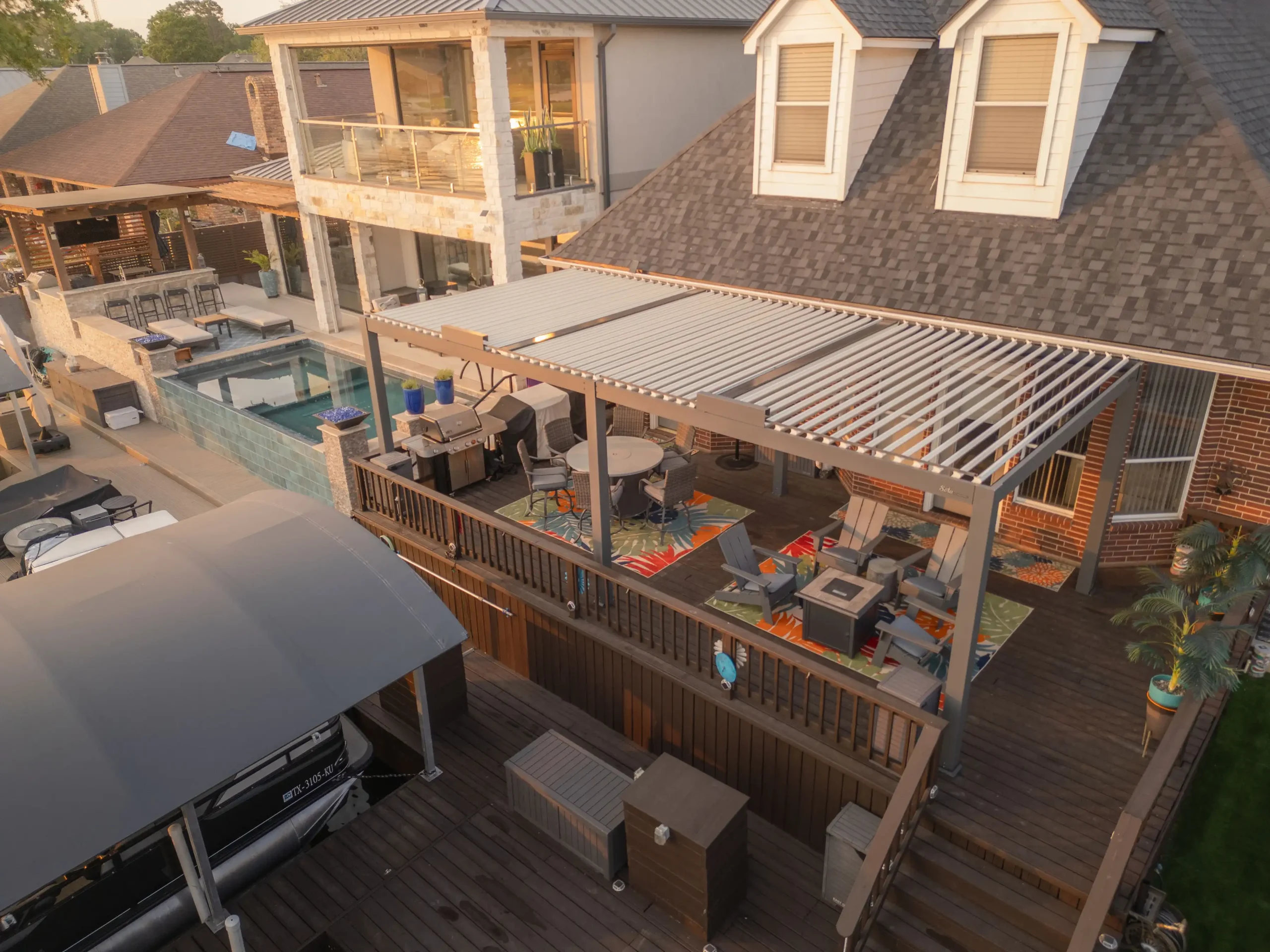
Solar Pergola on a Lakeside Deck

Mark’s beautiful lakeside deck was designed for entertaining, but the elements kept it underused. Under the unobstructed sun, the deck baked in intense heat, while lake-reflected glare created a stuffy, muggy atmosphere that made hosting impossible.

Best for: Lakeside decks, elevated outdoor entertaining areas, and homes with scenic views.

Design takeaway: When adding a pergola to a deck with a view, prioritize a structure that provides shade without creating a visual barrier. Adjustable louvers allow you to control overhead sunlight while keeping the sides open to the surrounding landscape.

View the Complete Project→

Custom Solar Pergola for a Windy, Exposed Deck

Tracee and Daniel’s backyard was held hostage by its environment. Facing a natural wind tunnel from a nearby canal, their old wooden and fabric gazebo quickly rotted and tore, losing its structural stability in high winds. The open layout and close-proximity neighbors meant zero privacy, while relentless swarms of mosquitoes ruined any hope of outdoor relaxation.

Best for: Wind-exposed decks and patios, homes near waterways, and outdoor spaces where privacy and weather protection are major concerns.

Design takeaway: Challenging locations often require more than a standard pergola size. Consider local wind exposure, privacy needs, drainage, and the condition of the existing deck before choosing a structure.

View the Complete Project→

4. Wall Mounted Pergola Ideas

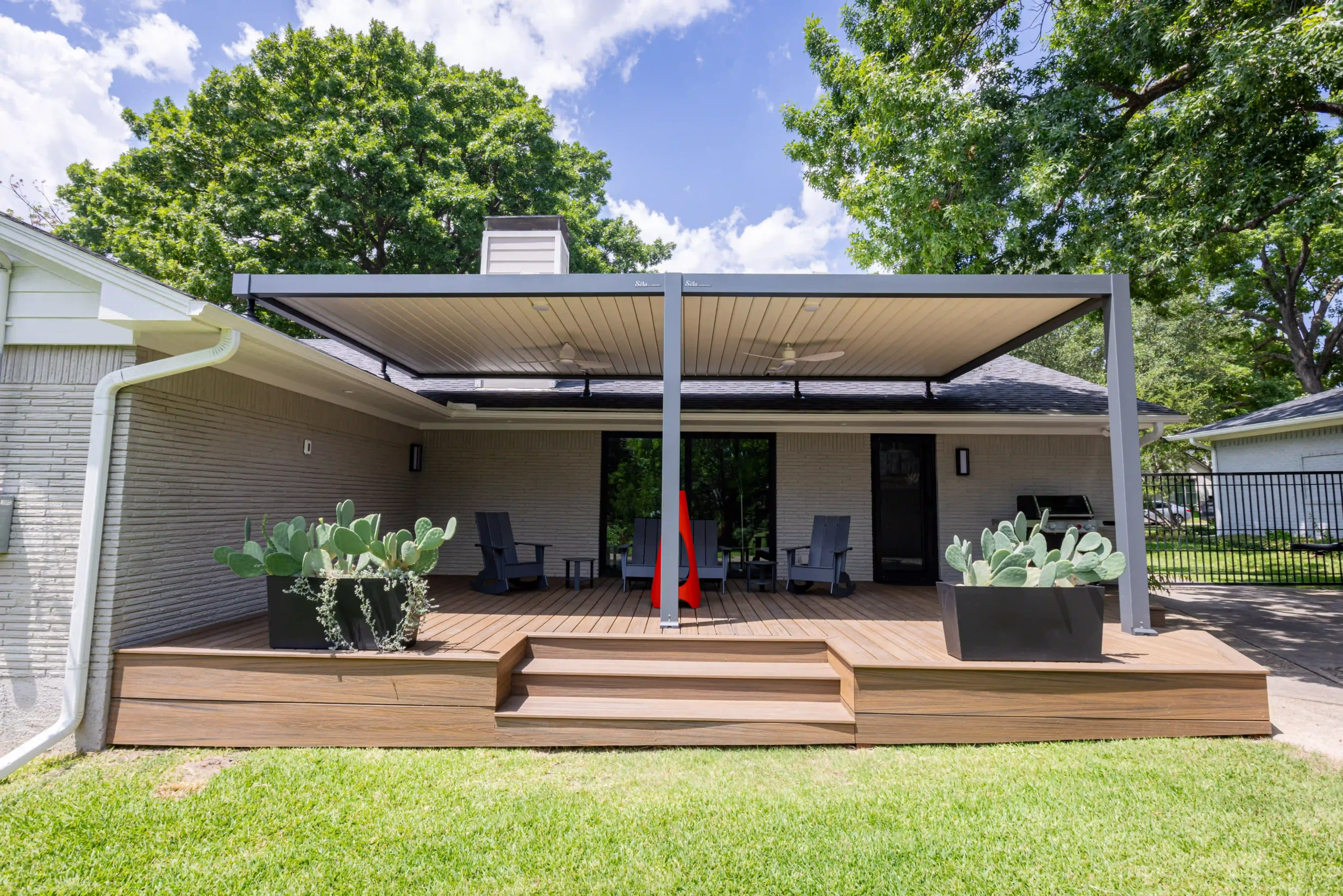
13 × 26 Wall-Mounted Solar Pergola with Roof in Dallas

The Vant Slot family in Dallas, TX, wanted to turn their underused backyard deck into a year-round outdoor living area, protected from the Texas sun and sudden rain. They needed a seamless, sturdy solution that matched their home while preserving roof integrity.

Best for: Large patios or decks connected to a home, covered outdoor living areas, and homeowners who want to extend an existing living space.

Design takeaway: A wall-mounted pergola can make a large attached patio feel like a natural extension of the home. Before installation, pay close attention to wall attachment, roofline, drainage, and local structural requirements.

View the Complete Project→

Three Connected Solar Pergolas for a Large Hillside Terrace

This luxury Houston villa boasted a massive hillside concrete terrace with endless potential, but the space remained severely underused. Fully exposed to sun and rain, the patio lacked any structural partition to define social areas, while standard patio covers threatened to obstruct the villa's signature panoramic valley views.

Best for: Large terraces, luxury homes, expansive patios, and outdoor spaces that need multiple functional zones.

Design takeaway: Multiple connected pergola sections can be more flexible than one oversized structure. Separate sections can help define dining, lounging, and entertaining areas while adapting to the shape of a large terrace.

View the Complete Project→

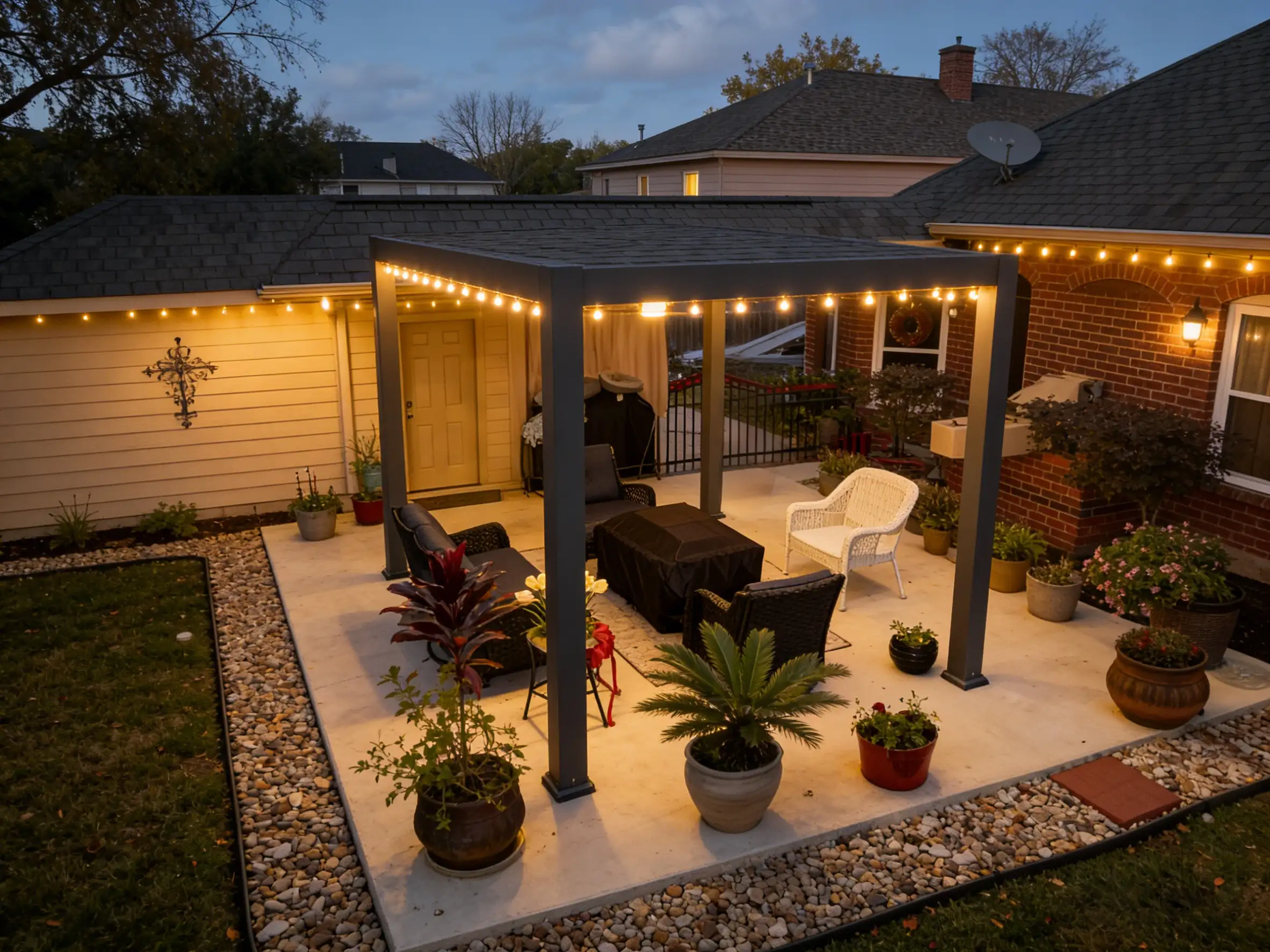
10 × 14 Wall-Mounted Solar Pergola for a Small Patio

The Rodriguez family wanted to maximize their small Houston backyard patio while boosting their home’s curb appeal. Limited space made traditional 4-post pergolas impractical, and harsh Texas sun and rain left their patio unusable for most of the year.

Best for: Small patios, narrow backyards, townhouse-style outdoor spaces, and areas where floor space is limited.

Design takeaway: Wall-mounted pergolas are especially useful when every square foot matters. Attaching the structure to the home can reduce the footprint needed for support posts and create a more integrated transition between indoor and outdoor areas.

View the Complete Project→

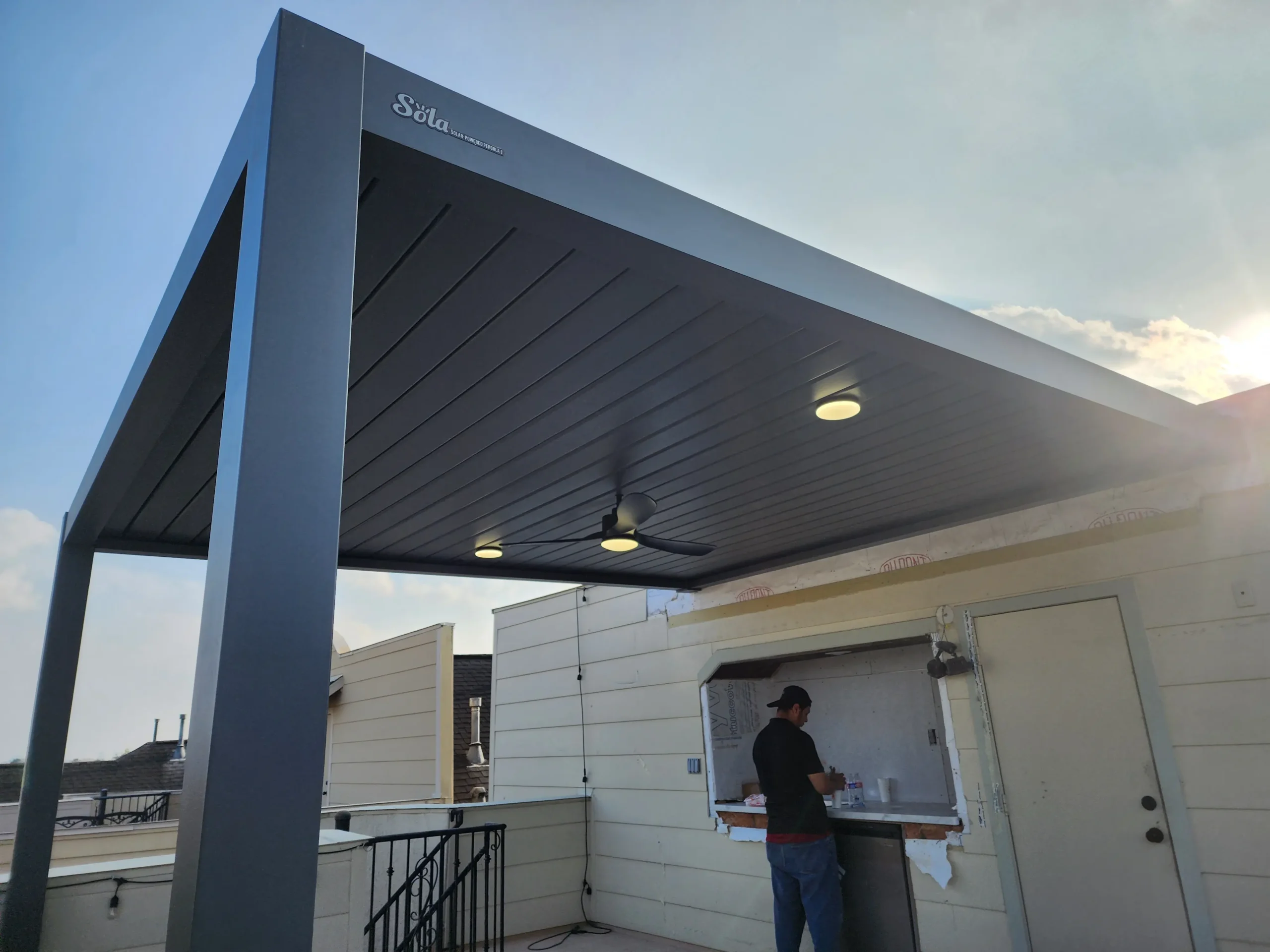
All-Weather Aluminum Solar Pergola for a Rooftop

Wolfe sought to transform his exposed rooftop into a private sanctuary. Before the upgrade, the space was at the mercy of the elements and neighbors' eyes—leaving the deck a “sweltering box” in the midday sun, prone to “drenched chaos” during sudden rains, and feeling like a “fishbowl” with zero privacy.

Best for: Rooftop decks, urban terraces, exposed balconies, and outdoor spaces with limited natural shade.

Design takeaway: Rooftop pergolas require careful planning around wind exposure, structural loads, drainage, and privacy. An adjustable louvered roof can provide more flexibility than a permanently fixed cover, but local structural requirements should always be confirmed before installation.

View the Complete Project→

5. How to Choose the Right Solar Pergola Design?

1) Material & Durability

  • Wooden pergolas require annual applications of stains and sealants, making them prone to rapid deterioration in Texas's humid climate, poolside moisture, and coastal air.
  • Vinyl structures cannot be customized to fit specific sizes and lack sufficient structural strength.
  • In contrast, Sola’s heavy-duty aluminum louvered frame resists rust, mold, and UV damage, requiring only easy, seasonal cleaning.

2) Layout & Space Planning

  • Full Backyard: Large freestanding and connected multi-unit models for entertaining, outdoor kitchens, and central gathering zones
  • Standard Patio:  Medium-width freestanding pergolas are perfect for dining sets, casual lounging, and evening meals
  • Elevated Deck: Deck-compatible solar pergolas engineered for elevated framing, perfect for second-story and raised patios.
  • Wall-Mounted: Space-saving attached designs that extend indoor living directly outside, ideal for narrow yards and small lots
     
    ⚠️Always confirm HOA rules, setback codes, underground utilities, and deck load limits before installation.

3) Weather, Shade & Privacy Needs

Motorized louvered roofs allow full control: open for sunlight, partially closed for soft shade, fully sealed for rainproof weather protection. Add solar-powered motorized privacy screens for noise reduction and side yard seclusion.

4) Solar Wire-Free Power Benefits

  • No yard trenching
  • No electrical permits
  • No ongoing utility bills
  • No wet-area electrical hazards.
  • Built-in battery storage ensures reliable louver, light, and fan operation even during cloudy weather and power outages.

6. How to Customize Your Solar Pergola?


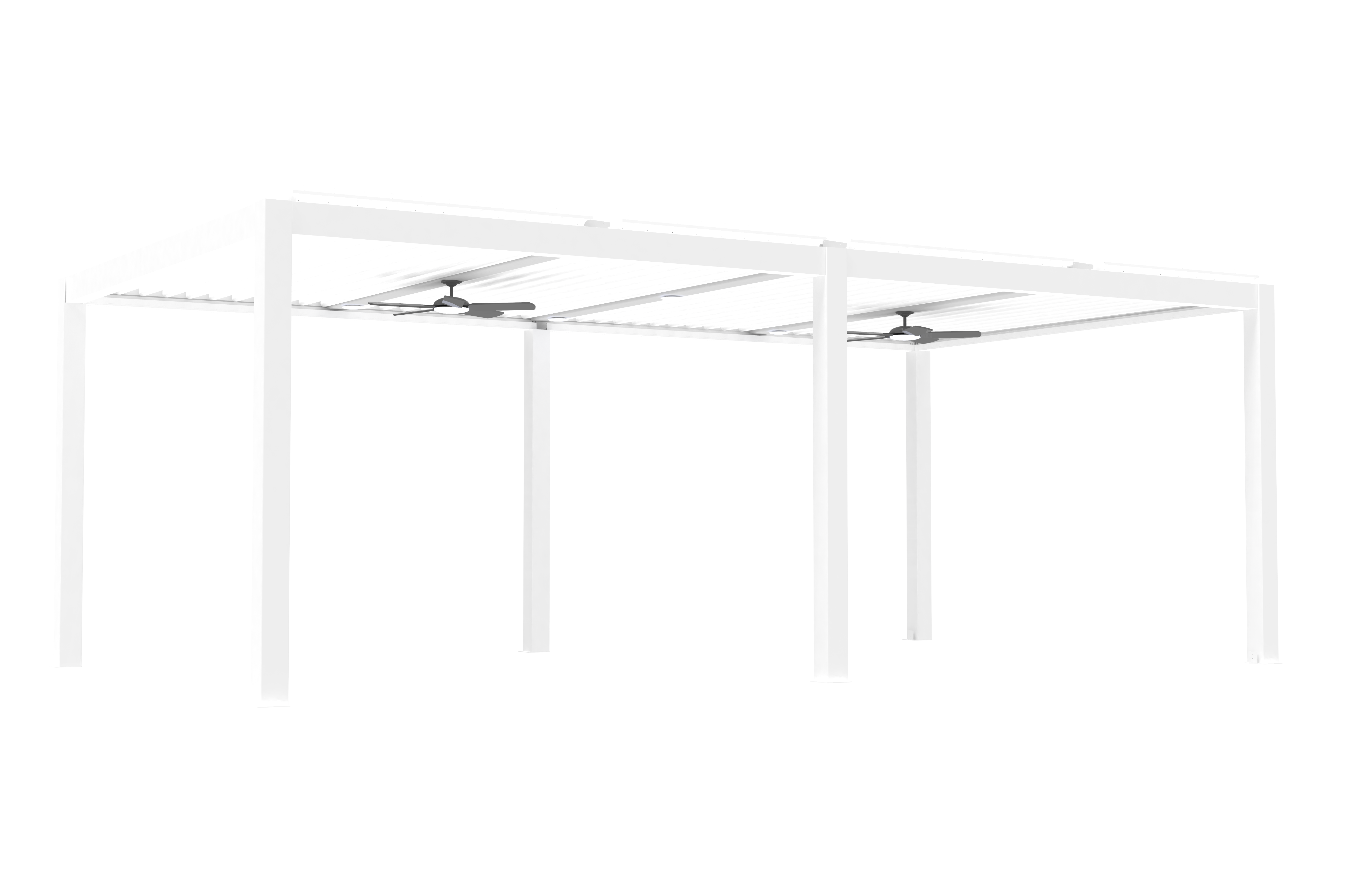
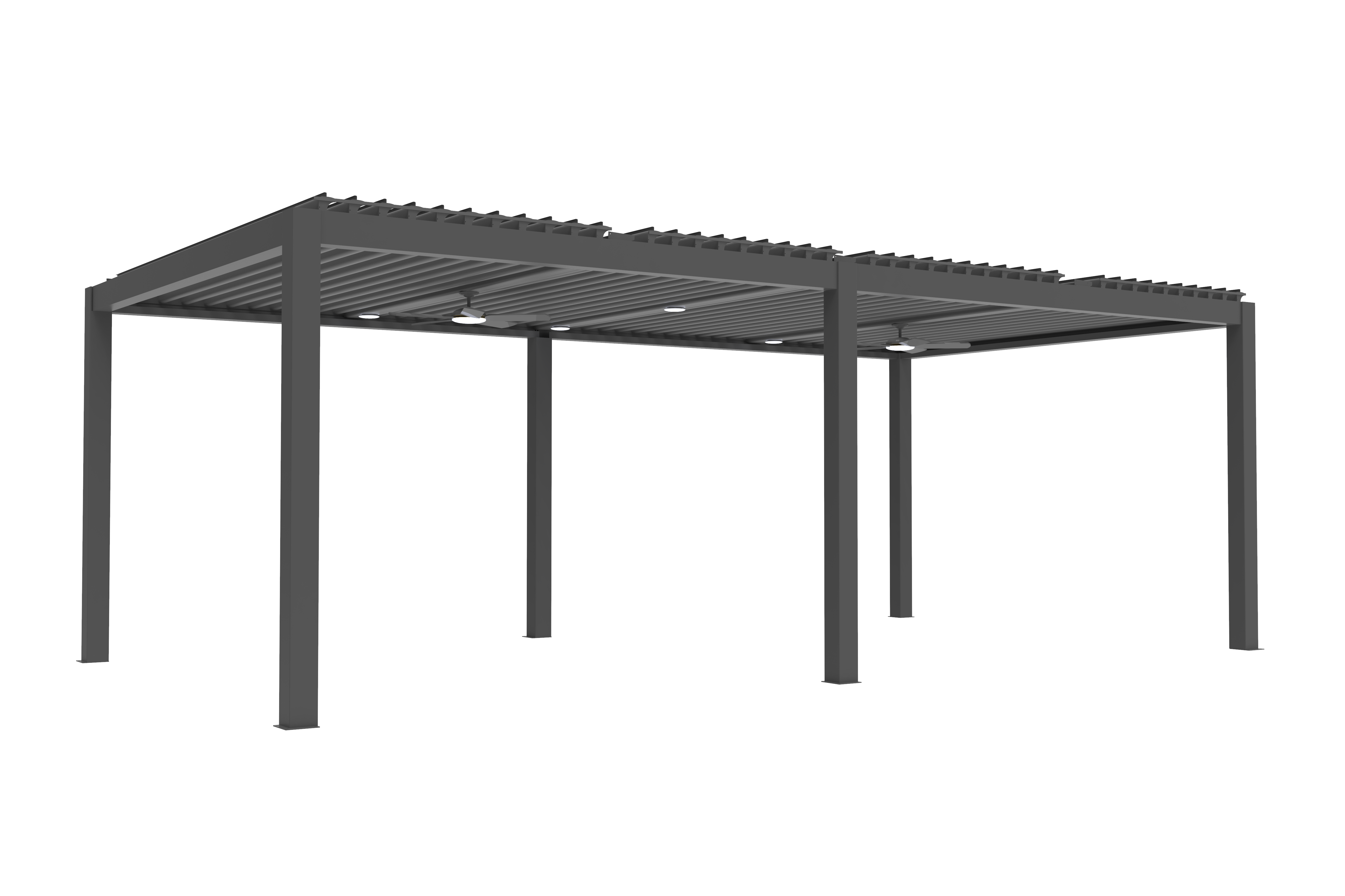
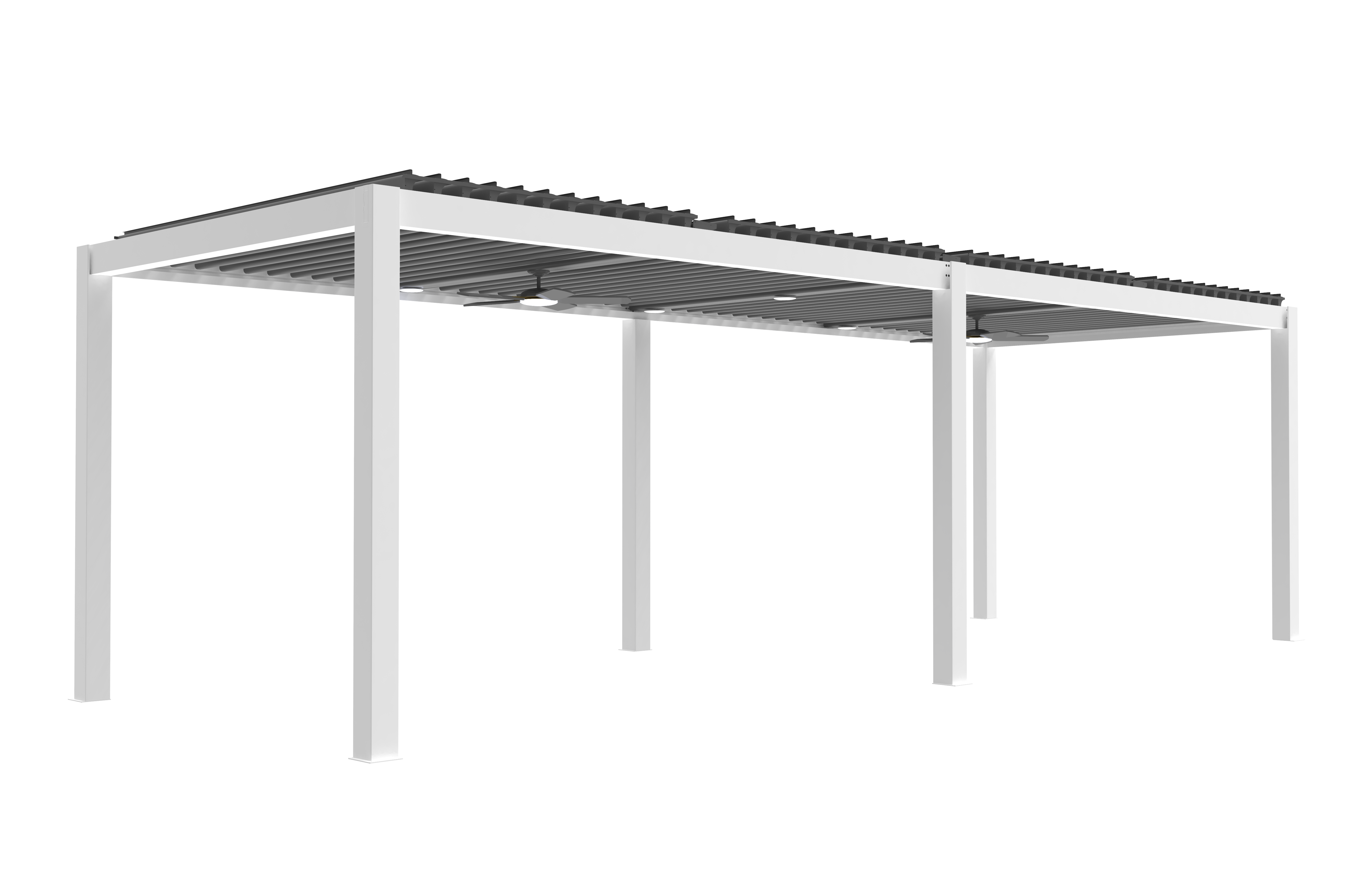
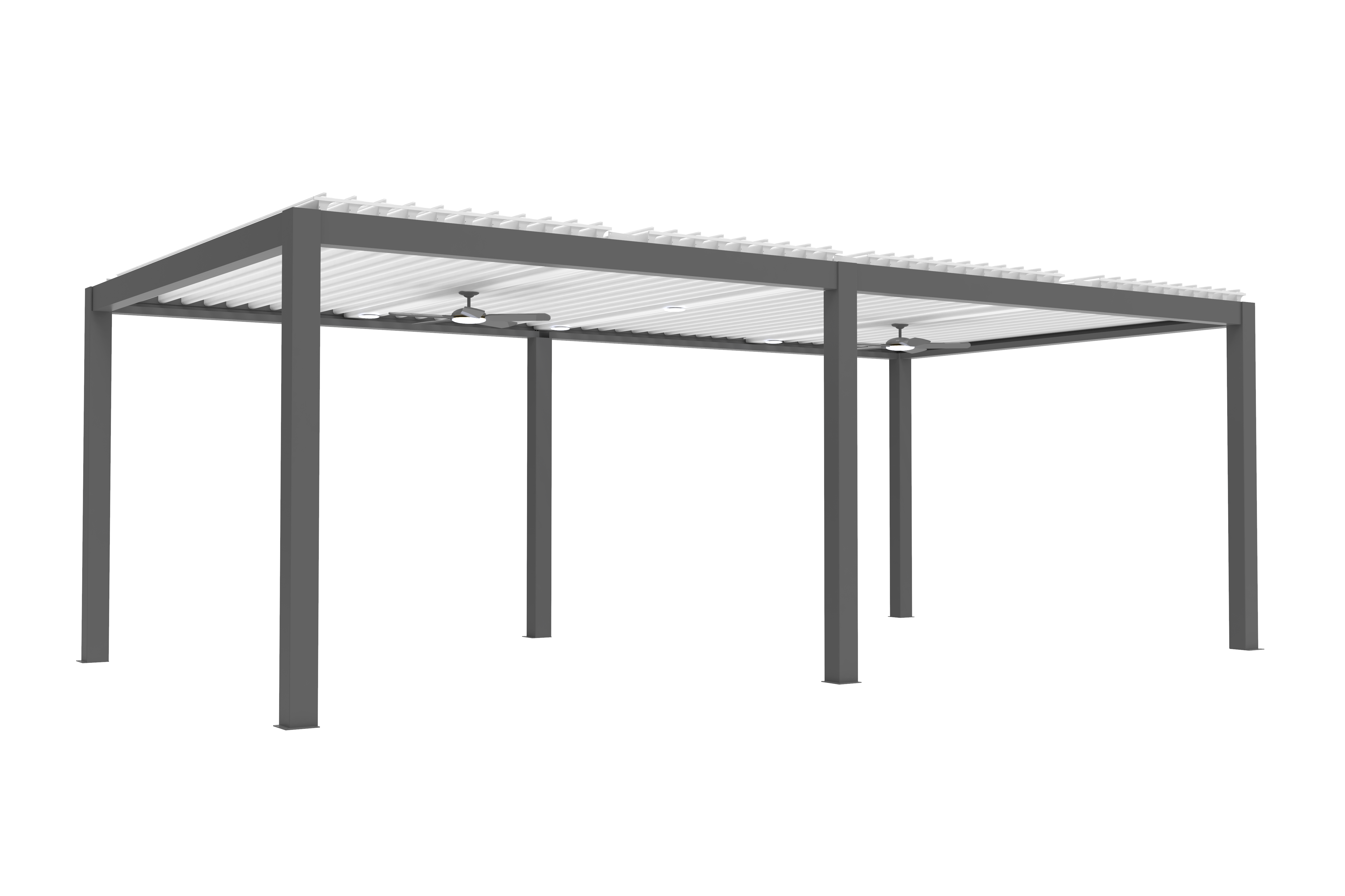
 1) Determine the color of the framework to match the exterior walls and decorative lines of the house

We offer four standard colors. If you need customized colors, please feel free to contact us at any time

White

Gray

White-Gray

Gray-White

 2) Add optional accessories to your pergola to maximize shade

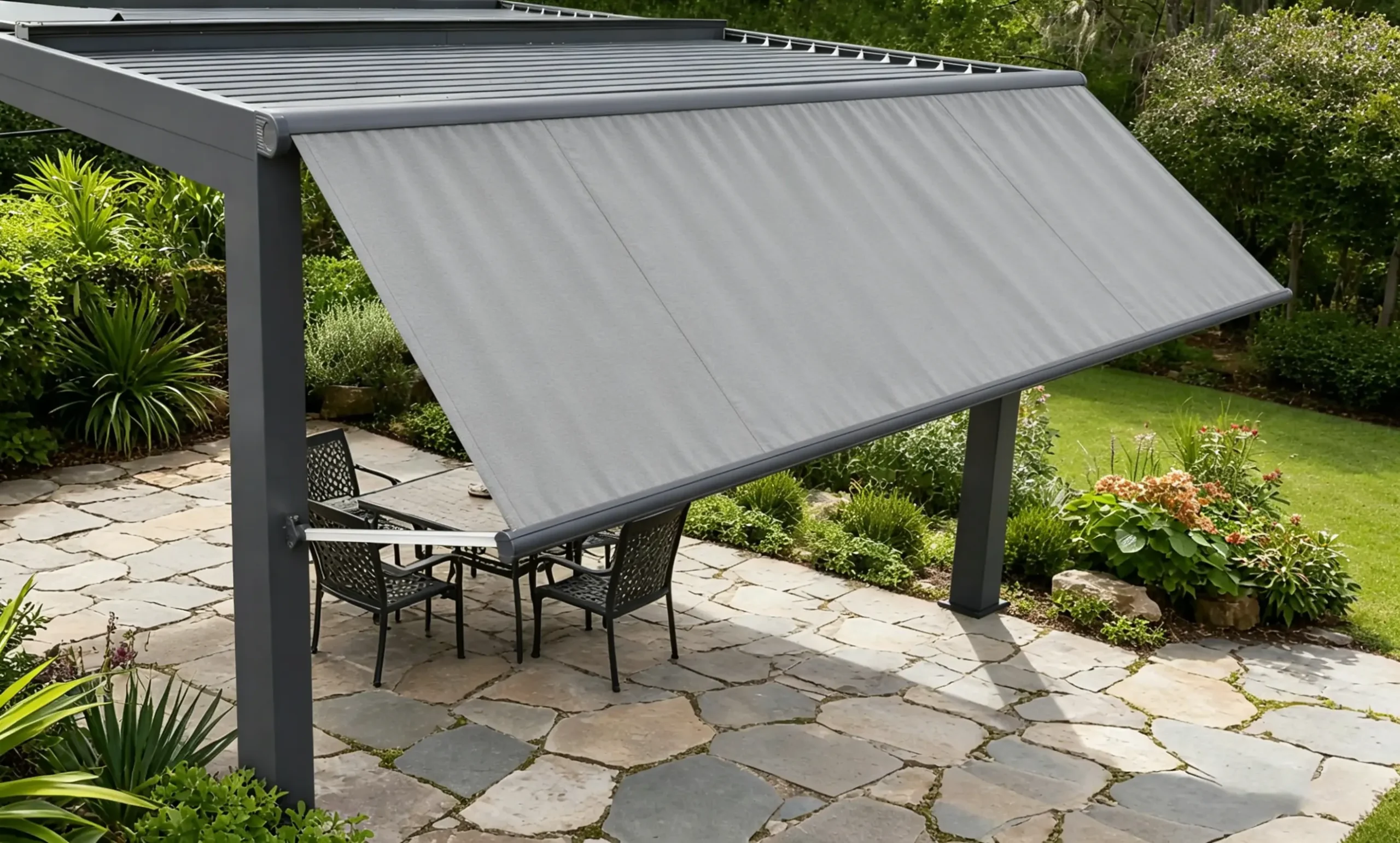
Gray drop arm awning installed on a pergola, shading a backyard patio dining area

Drop Arm Awning

  • Superior UV Protection
  • Effective Heat Insulation
  • Flexible Tilt Adjustment
  • Continuous Ventilation

                  View Detail →

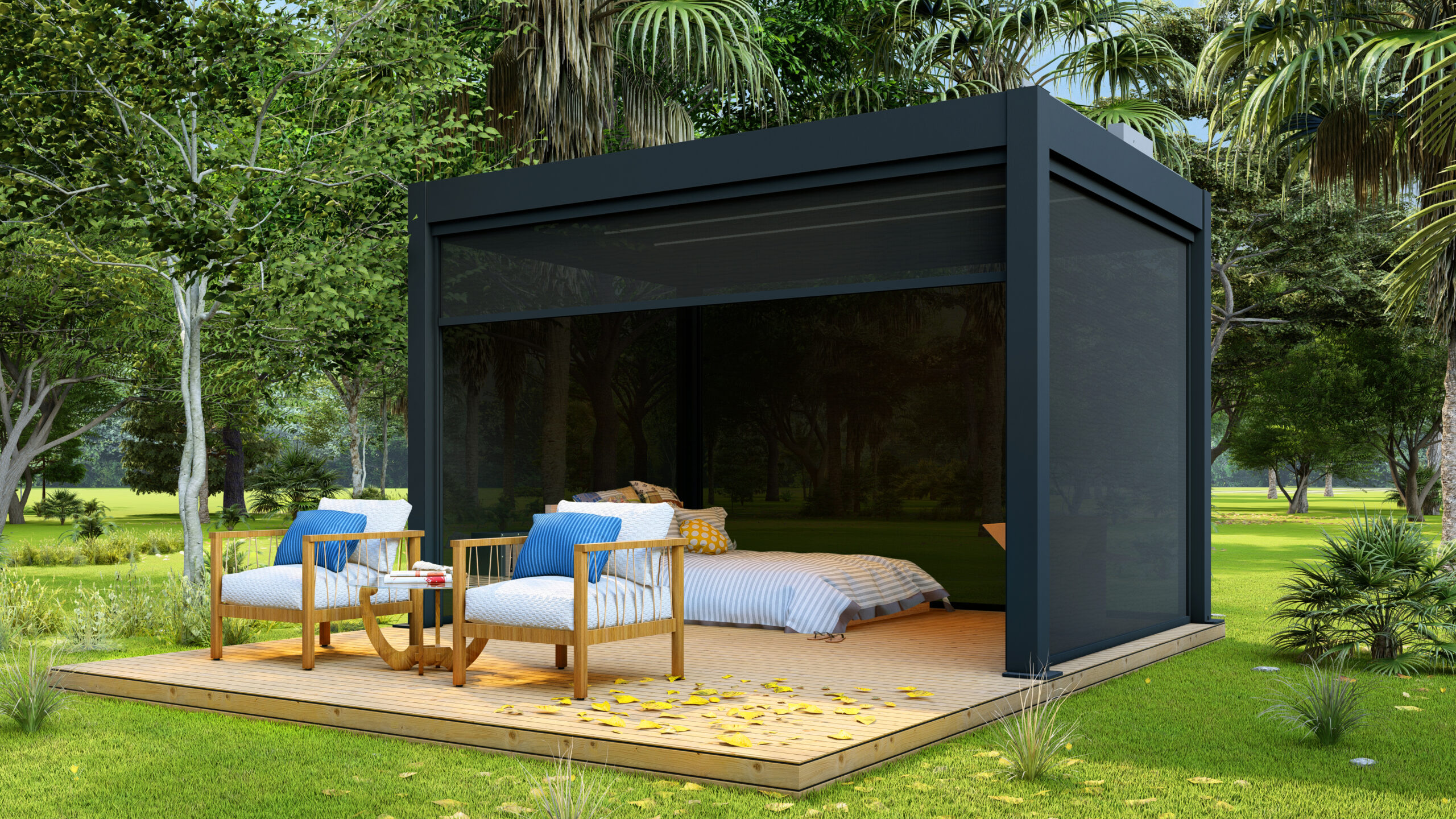
roller shade

Roller Shade

  • Completely integrated with the pergola
  • Remote control integration
  • UV protection
  • The anti-derailment system

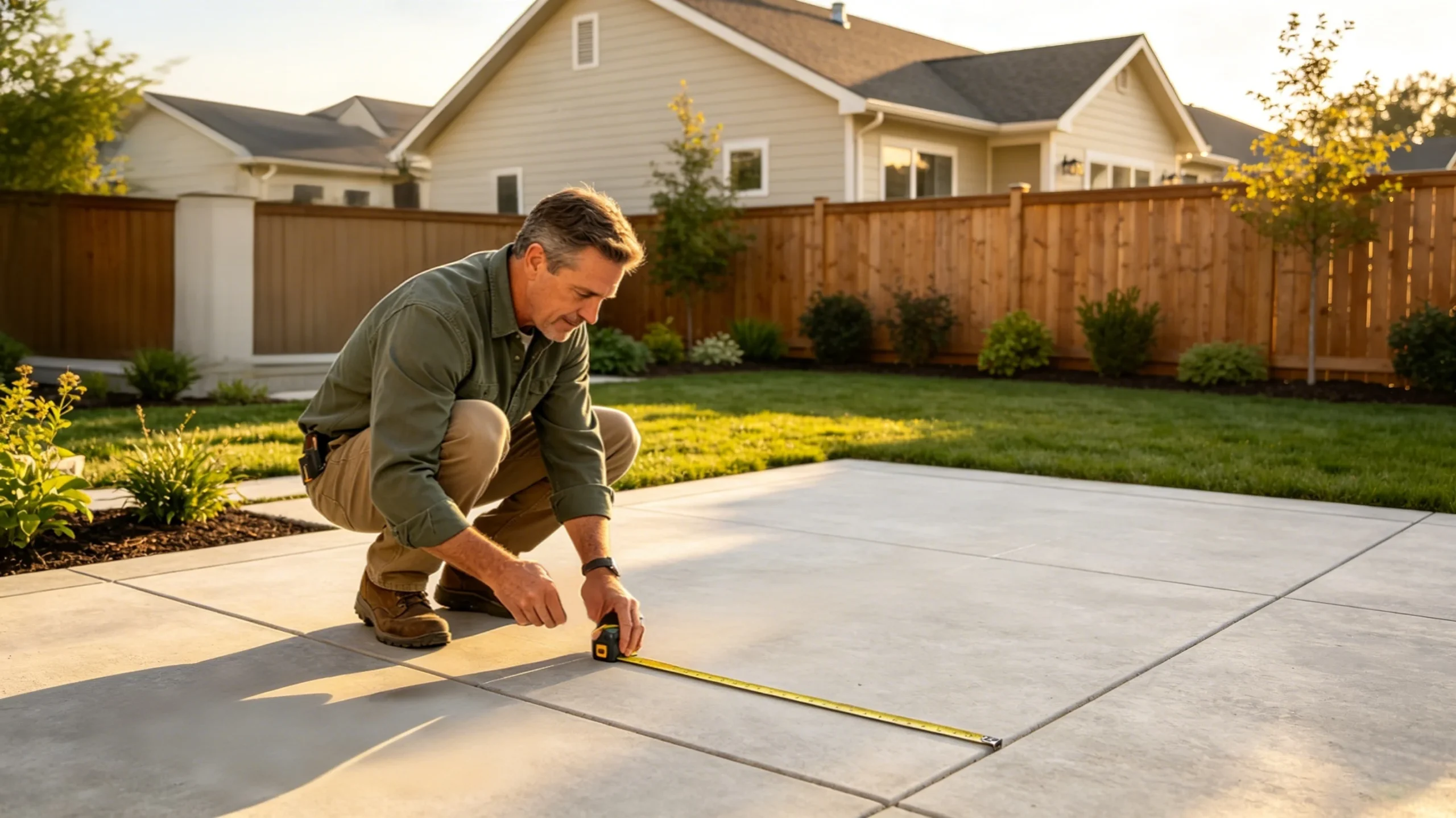
3) Measure the relevant dimensions and spans in advance to select the appropriate pergola to fit your backyard, patio, deck, and walls

A man is measuring the size of a concrete backyard terrace

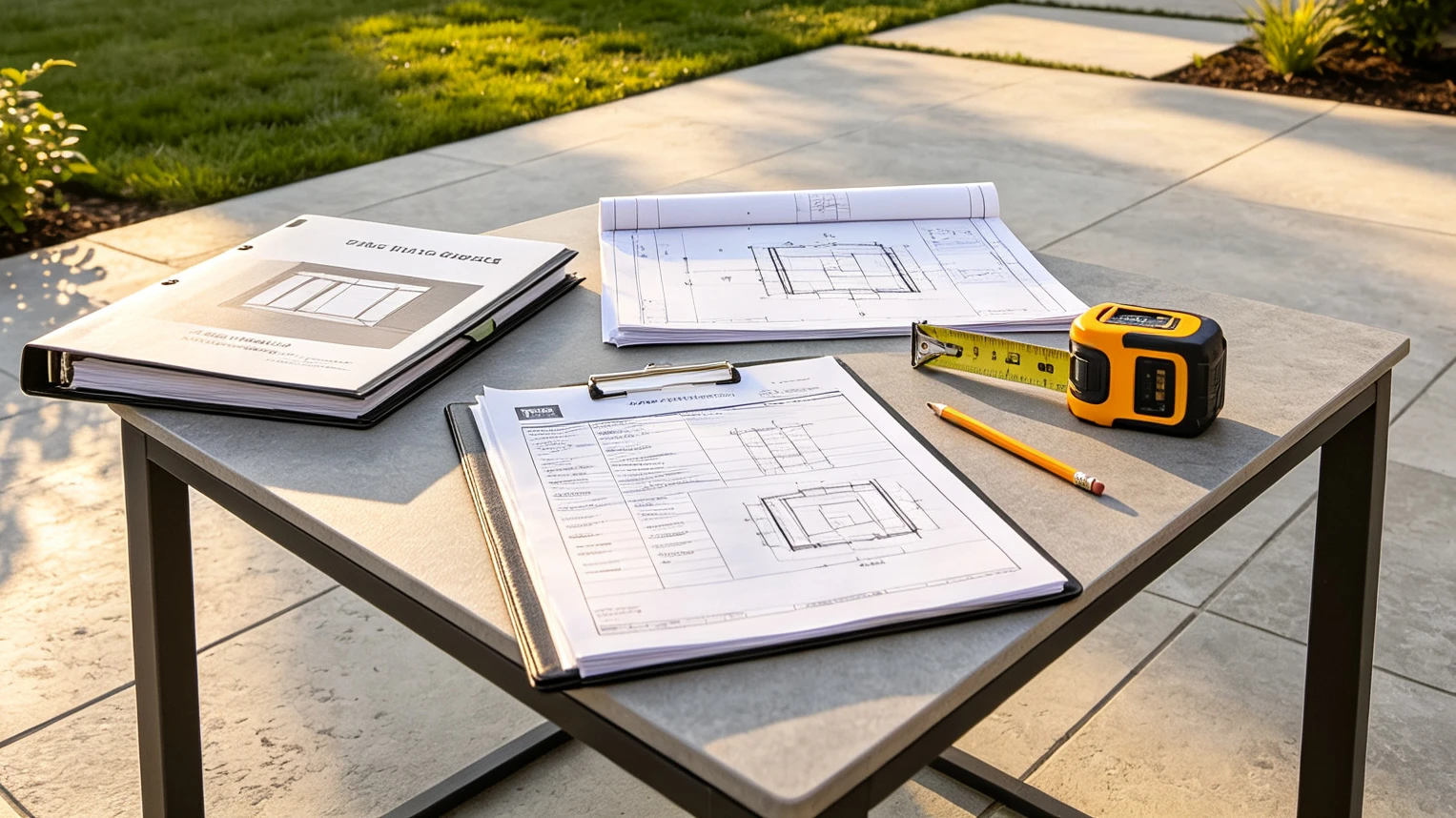
4) Engineering & Permit Support

We provide all necessary engineering and product documentation to assist you in completing your local building permit application.

Pergola construction blueprints, product documentation and measuring tools laid out on patio table for building permit application paperwork

 5) Please contact us promptly, our team will arrange customized design and installation time for you

Homeowner and contractor handshake in backyard after agreeing on aluminum pergola installation project

7. Conclusion

Whether you have a spacious backyard, a compact patio, or an elevated deck, a custom solar-louvered pergola turns any outdoor area into a functional, four-season living space.

Running entirely on self-contained solar power, Sola pergolas eliminate messy grid wiring, costly electrical permits, and safety risks. Unlike traditional wooden structures that rot and warp, our motorized aluminum frames offer adjustable shade, complete rain sealing, and decades of low-maintenance durability.

Want to see how these designs look on homes like yours? Browse our full collection of real customer case studies to draw personalized design inspiration for your property.

Back to top of page
crossmenu