Sola-Site-Logo
Search

Home » Blog » Pergola for Restaurant: How to Boost Outdoor Dining Sales

Pergola for Restaurant: How to Boost Outdoor Dining Sales

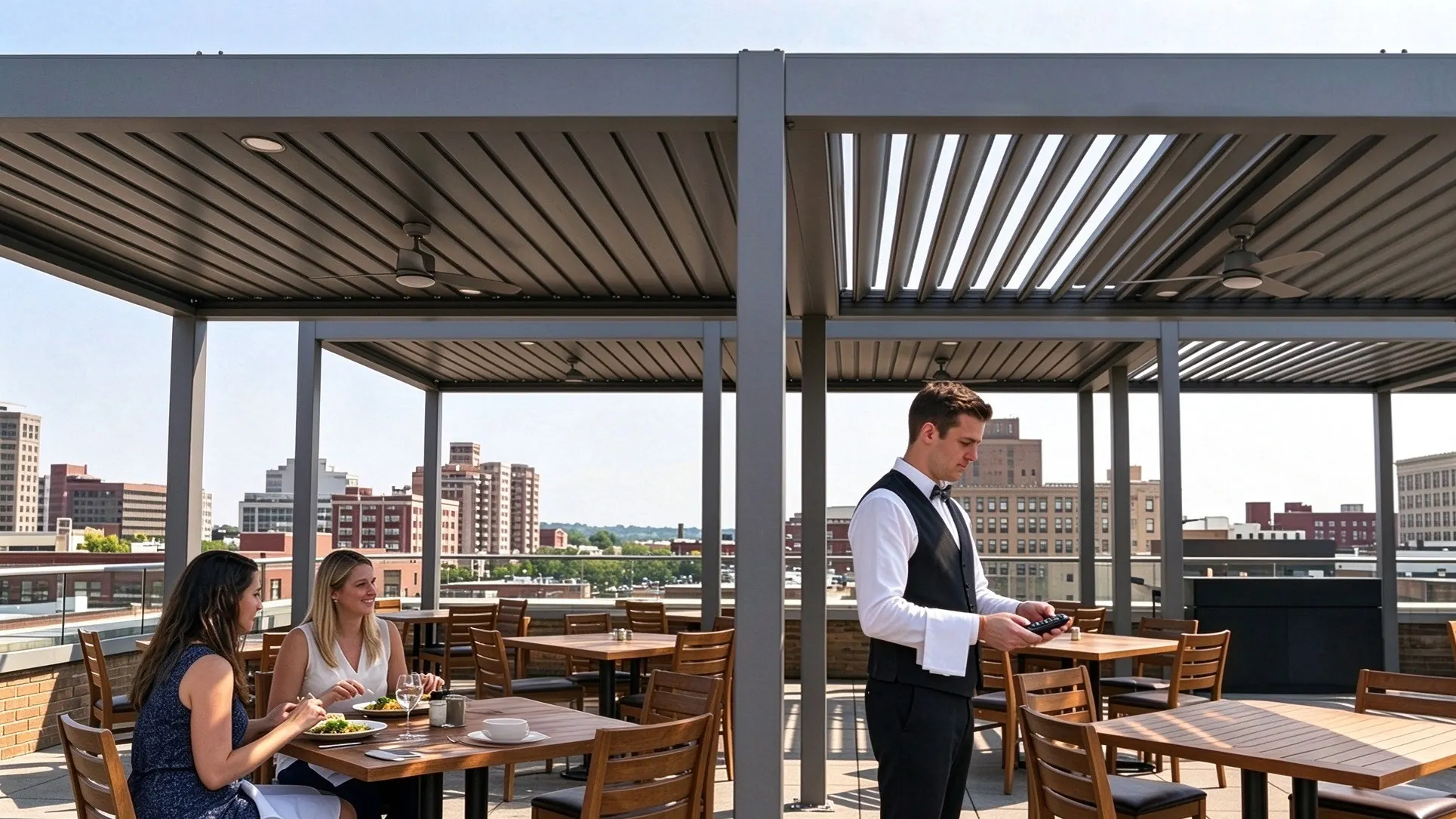
Waiter uses remote control to adjust louvered pergola shade for rooftop restaurant diners
Think about your patio on a warm Saturday night. The reservations are full, the kitchen is firing, and every table out there is making money. Now think about the same patio on a rainy Tuesday, or a 95-degree afternoon in July. It sits empty. The chairs stay stacked. That revenue simply doesn't happen.
 
Most restaurant patios only work when the weather cooperates. As a result, they generate revenue for only part of the year, even though the space already costs money to maintain.
 
A pergola for restaurant patios changes that math. With an overhead roof that opens and closes, your outdoor seating stops being "available if the weather holds" and becomes seating you can actually count on. The tables turn. The season stretches. The evenings run late. And it all adds up to revenue you can calculate before you spend a dollar.
 
If you're choosing a pergola for the first time, our restaurant pergola buying guide covers the roof types, sizing, and what to look for. Here's how that boost to outdoor dining sales works, section by section. Here's how that boost to outdoor dining sales works, section by section.
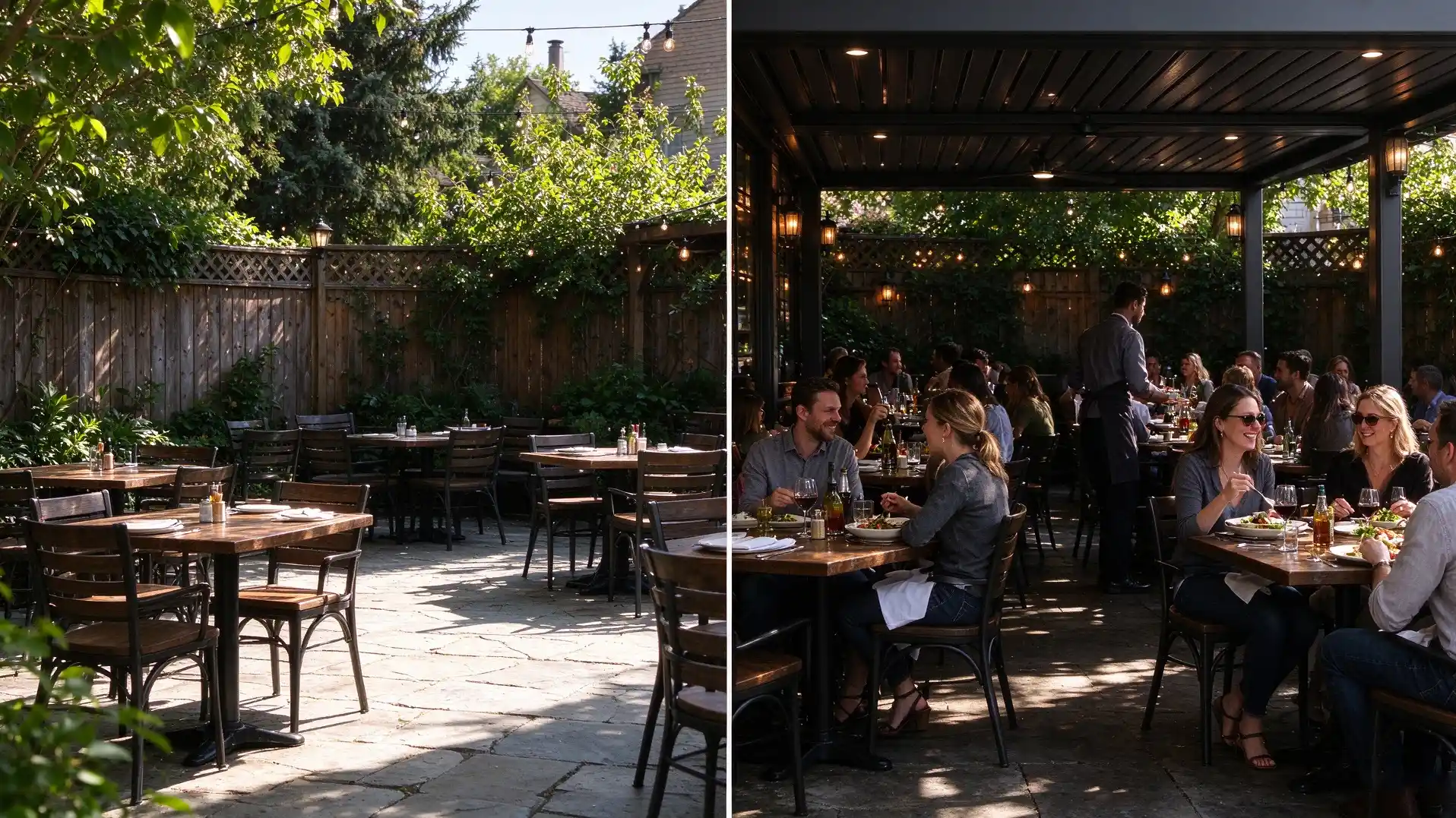
A Pergola for Restaurant Patios That Adds More Seats

restaurant patio before after motorized pergola
The fastest way to grow a restaurant's revenue is to grow the number of seats you can reliably sell. Your patio already has the space — it just doesn't have the cover.
On a hot afternoon or in a passing shower, diners won't sit under an open umbrella. They ask to move inside, or they leave. A covered patio removes that hesitation. Guests see a roof, a shaded table, and they sit.
What this means in practice:
  • A stable number of tables you can book. You're no longer guessing how many outdoor tables you can safely fill on a given night.
  • Fewer last-minute no-shows. Diners don't cancel a reservation because they checked the forecast and saw rain.
  • Cleaner service. Staff isn't scrambling to move tables indoors mid-service when a shower hits.
The result is simple: more covers per shift, every day you're open.

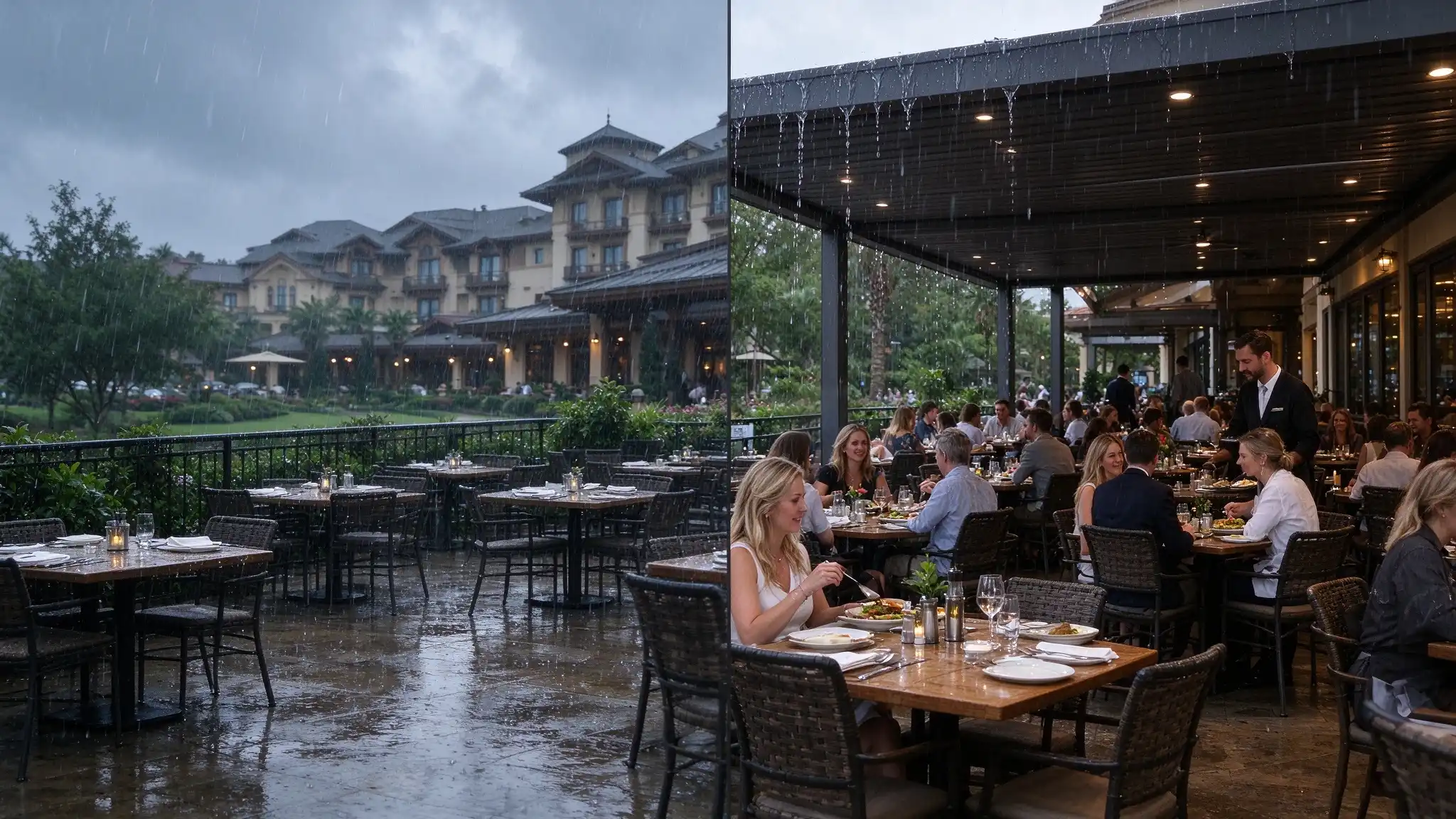
A Pergola for Restaurants That Stops Being Seasonal

restaurant patio rain before after pergola
In a four-season climate, an uncovered patio is usually usable for five months a year — or less. The rest of the time it's a liability: chairs in storage, space unused, revenue lost.
A louvered pergola changes the calendar. For example, closing the louvers helps protect diners from rain. Meanwhile, adjusting them to block direct afternoon sun keeps tables more comfortable. Open them fully on a mild day and the patio still feels open-air.
That single change turns a space you use in summer into a space you use most of the year:
  • Rain no longer closes you down. A surprise shower goes from "clear the patio" to "close the louvers."
  • Heat stops sending people away. Guests get shade, not just sun.
  • Spring and fall become usable seasons. Mild days you used to skip now work.
More usable days equals more service days. And more service days is the simplest lever a restaurant owner has.

Restaurant Pergola Evenings That Don't End at Sunset

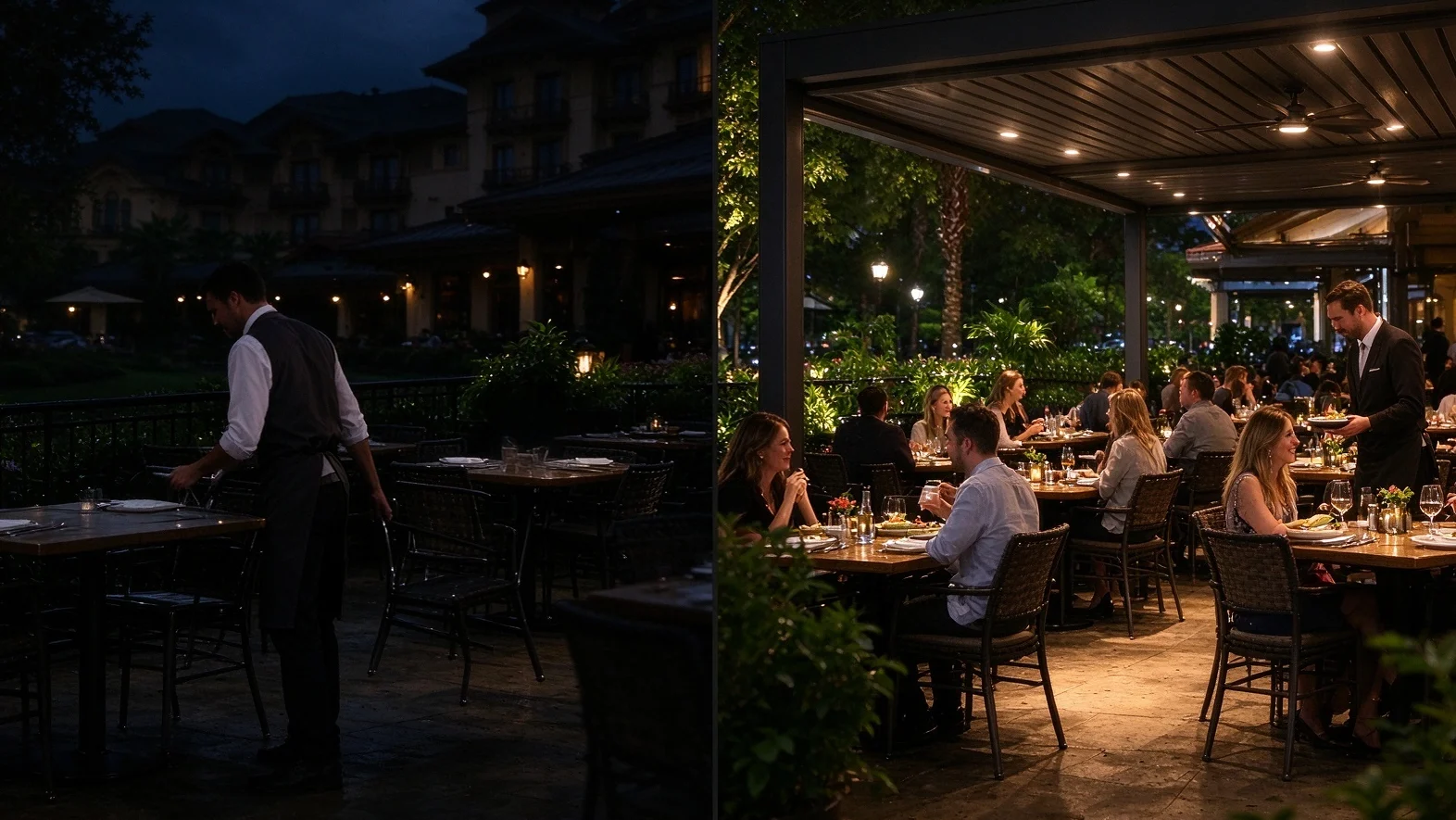
restaurant patio night before after pergola
A dark patio closes early. Without overhead light, outdoor tables are done the moment daylight fades — even though evening is usually when restaurants make their best margins.
With lighting built into the pergola frame, your patio stops ending at sunset:
  • Dinner service keeps going outdoors. Tables are lit well enough to read a menu and enjoy a meal.
  • Late-night drinks become a real service. A defined, protected space is the ideal setting for a cocktail after dinner.
  • Every table has a second shift. The same footprint that did lunch can host after-hours business.
For many owners, this is the difference between a patio that empties at 8 p.m. and one that stays busy well past that.

Outdoor Dining Revenue: Guests Who Linger, Order More, and Come Back

restaurant patio under motorized louvered pergola guests taking photos enjoying drinks shaded outdoor dining
Comfort is quiet, but it's measurable. When diners aren't squinting in glare, swatting at bugs, or shivering in a draft, they stay longer. Longer stays mean more orders — the extra coffee, the dessert, the second glass of wine.
A well-designed pergola creates that comfort:
  • Adjustable shade keeps the sun off without turning the space into a cave.
  • Open louvers keep air moving, so the patio stays pleasant in summer.
  • Integrated lighting sets the mood — bright enough to serve, warm enough to feel inviting.
And comfortable guests tend to post photos. A striking patio is free marketing that runs every night you're open.

Restaurant Pergola ROI

You don't need a complicated spreadsheet to estimate your pergola's return. Instead, start with your patio's actual numbers, including table count, average spending and additional service days. Here's the simple calculator — fill in what applies to you.

Step 1: How many tables does the covered area add?
A covered patio lets you keep tables out that you'd normally pull in. Say that's 6 tables.
 
Step 2: What does each table earn per seating?
Average ticket per table. Say $60.
 
Step 3: How many seatings a day?
Lunch and dinner. Say 2.
So: 6 tables × $60 × 2 seatings = $720 per day from that covered area.
 
Step 4: How many days a month are you open?
Say 25. That's $720 × 25 = $18,000 per month.
 
Step 5: How many months did the cover actually add — and at what occupancy?
If the patio was usable 5 months a year and is now usable most of the year, that's real extra revenue. But those added tables won't fill 100% of the time — most patios run at 60–75% occupancy. At a realistic 70%: $18,000 × 5 months × 70% = $63,000 in new annual revenue.
 
Step 6: Subtract the operating cost.
A pergola's lights, fans, and motor run every day you're open. A hardwired setup adds a monthly electric bill; a solar-powered pergola runs them off the roof panels for free. If going solar saves $120 a month, that's $120 × 12 = $1,440 a year you keep instead of spending.
The number that matters: $63,000 − $1,440 = $61,560 in net new annual revenue — before installation cost. Run the numbers with your own patio below.

Patio ROI Calculator

Enter your patio's numbers to see what a pergola could generate.

$
%
$

Real Restaurant Pergola Cases

Here's what this looks like in two real installations.
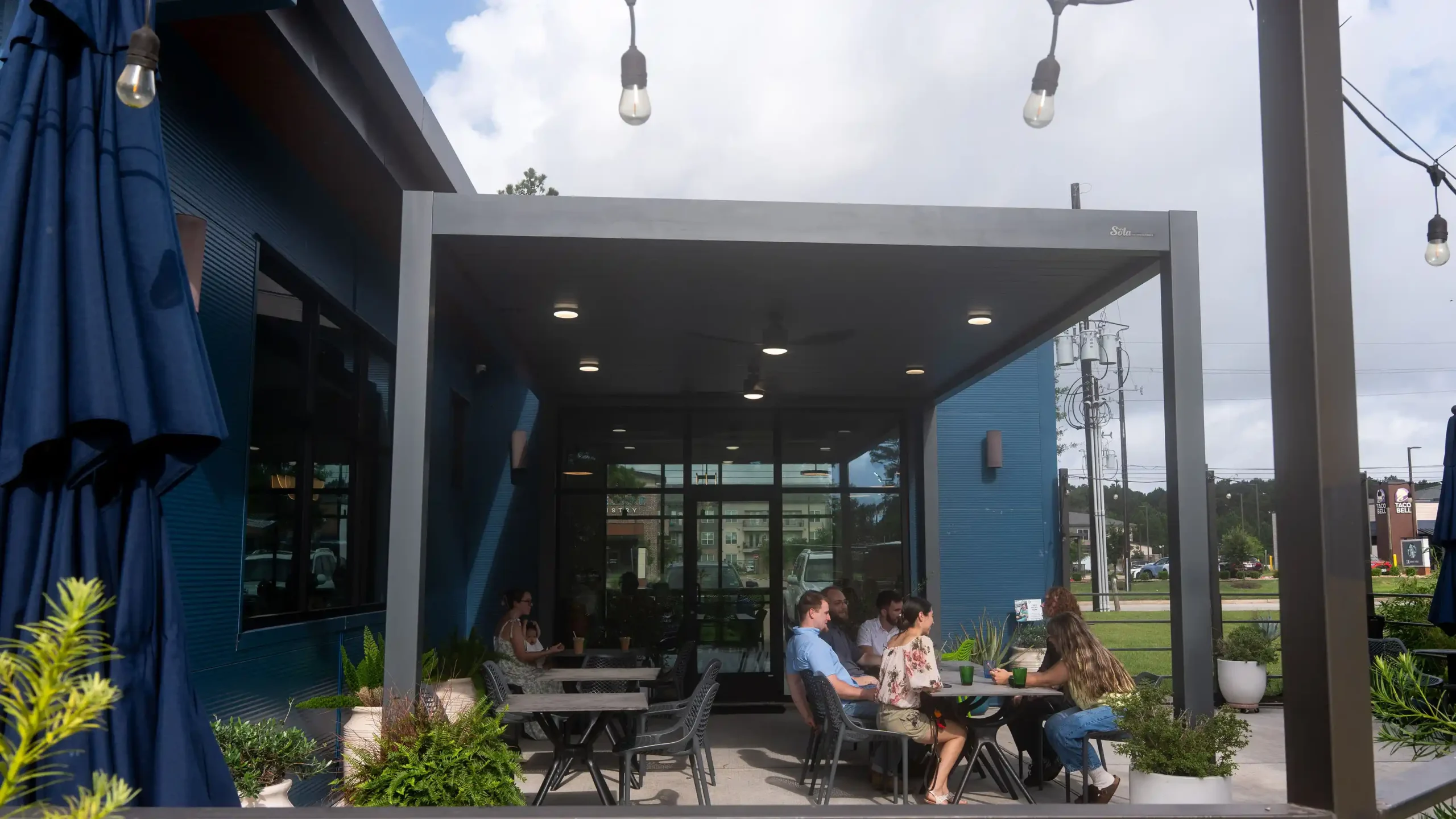
exterior shot cafe patio covered by dark framed solar pergola customers dining blue building background
 
Cafe ZunZun — Cypress, TX  View the project
 
A cafe patio that relied on umbrellas. On Texas summer afternoons, guests left early because the shade didn't hold. Sola installed a 13 ft × 21 ft motorized solar pergola over the patio.
 
The result: reliable shade through the hottest part of the day. Guests sit comfortably, linger over coffee, and stay longer than they used to. The umbrella problem — and the early departures — went away.
 
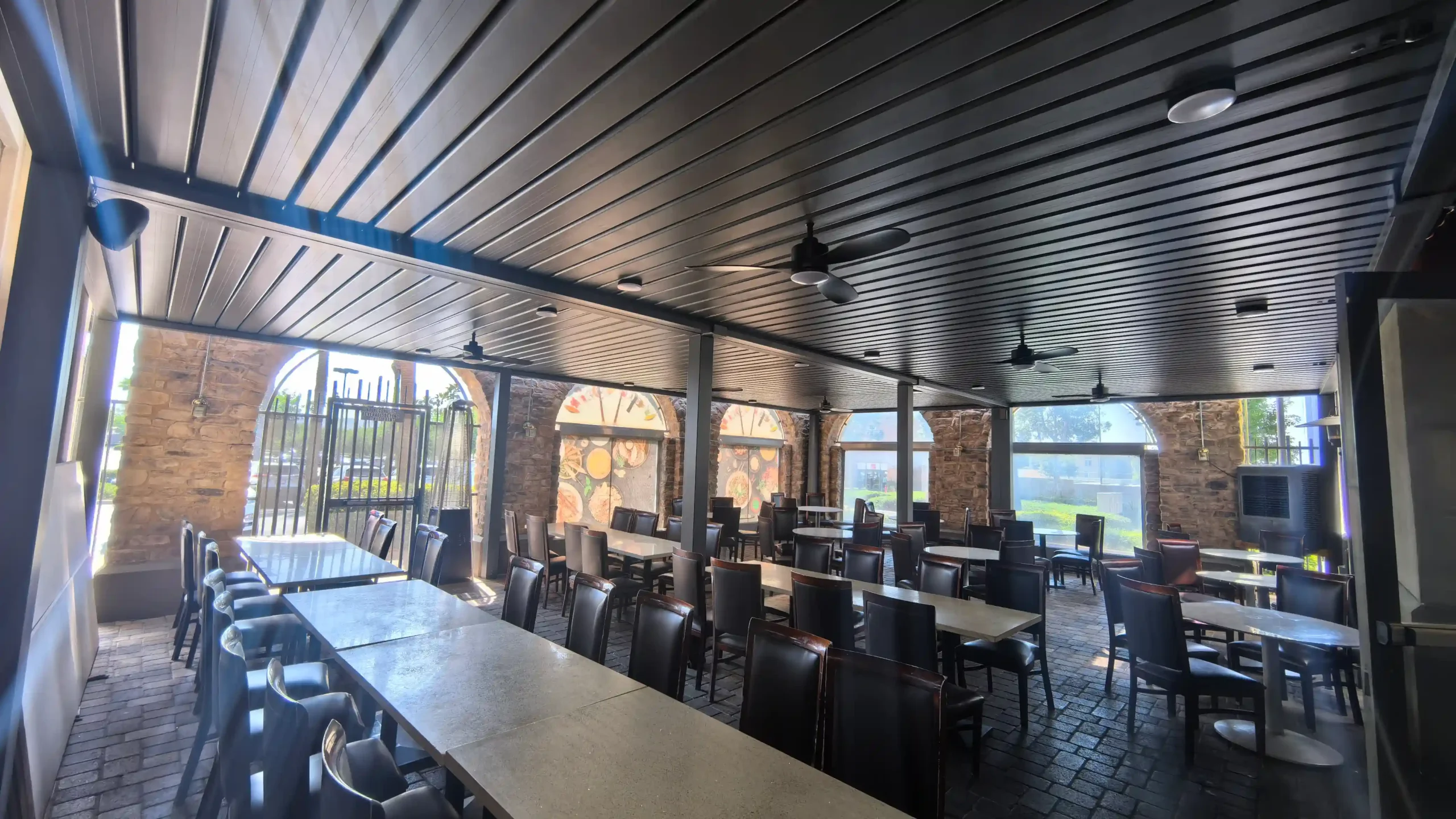
Commercial patio pergola details: built-in ceiling fan and LED lights
 
Buffet Star Restaurant — Los Angeles, CA  View the project
 
A patio fully exposed to sun, rain, and wind. Sola installed four 10 ft × 14 ft solar pergolas, equipped with electric shutters and ceiling fans.
 
The result: an all-weather dining area. The restaurant now serves its patio year-round instead of only in fair weather.

Before You Buy a Restaurant Pergola: What Tells You It'll Last

A pergola is a long-term asset — so the real question isn't just "how much does it add," it's "how long will it keep adding." A structure built to last keeps that outdoor dining revenue coming year after year, with no surprise replacements. That's what turns a one-time purchase into a steady, predictable investment.
Here's what separates one that lasts from one that doesn't:
  • Wind and snow load ratings. Ask for certified numbers, not a vague "heavy duty." A commercial pergola engineered for your region's wind and snow loads won't fail on you in the first big storm — which means the seating it protects keeps earning.
  • Frame material and finish. An aluminum frame with a marine-grade powder coat resists rust and needs no repainting. Less maintenance, fewer costs, and a structure that keeps working season after season — instead of wearing out a few years in.
  • Structural warranty. A 10-year structural warranty is the manufacturer putting their money where their engineering is. It's a clear sign the pergola is designed to be a lasting part of your business, not a temporary fix.
Choose a durable commercial pergola and the payback you calculated isn't a hope — it's a plan. The cheaper option might seem to save money upfront, but it's the one that stops earning when it fails. A pergola built to last keeps earning for you long after.

FAQs About Pergolas for Restaurant Patios

How long does a pergola take to pay for itself?

It depends on your patio's covers, ticket size, and how many months the cover adds. In the framework above, a busy patio can see its investment justified within the first year or two — and everything after that is incremental revenue.

Do I need a permit for a restaurant pergola?

Most commercial structures require a permit, and requirements vary by city. A pergola supplier experienced with commercial work can advise on local rules and provide the structural details your permitting office asks for.

Will a solar pergola work on cloudy days or at night?

Yes. Solar pergolas store energy in batteries, so lights, fans, and the louver motor keep working through cloudy days and into the evening — with no connection to your building's electrical system.

Freestanding or wall-mounted — which is better for a restaurant?

It depends on your space. A wall-mounted pergola saves floor space on a narrow patio; a freestanding one offers more layout flexibility. A good supplier will recommend based on your actual patio, not a default.

How do I get a price for my patio?

Pergola pricing depends on size, features, and installation. The straightforward way is to request a quote with your patio dimensions.

Conclusion

A pergola for restaurant patios isn't a decoration. It's an operating decision — one that adds seats, stretches the season, extends your evenings, and gives you a revenue number you can calculate before you spend. The space you already pay for finally earns its keep.
 
If you're ready to see what a commercial pergola could do for your patio, explore commercial pergola options or request a quote with your patio dimensions today.
Back to top of page
crossmenu