Sola-Site-Logo
Search

Home » Blog » Attached vs Freestanding Pergola: Which Is Right for Your Backyard?

Attached vs Freestanding Pergola: Which Is Right for Your Backyard?

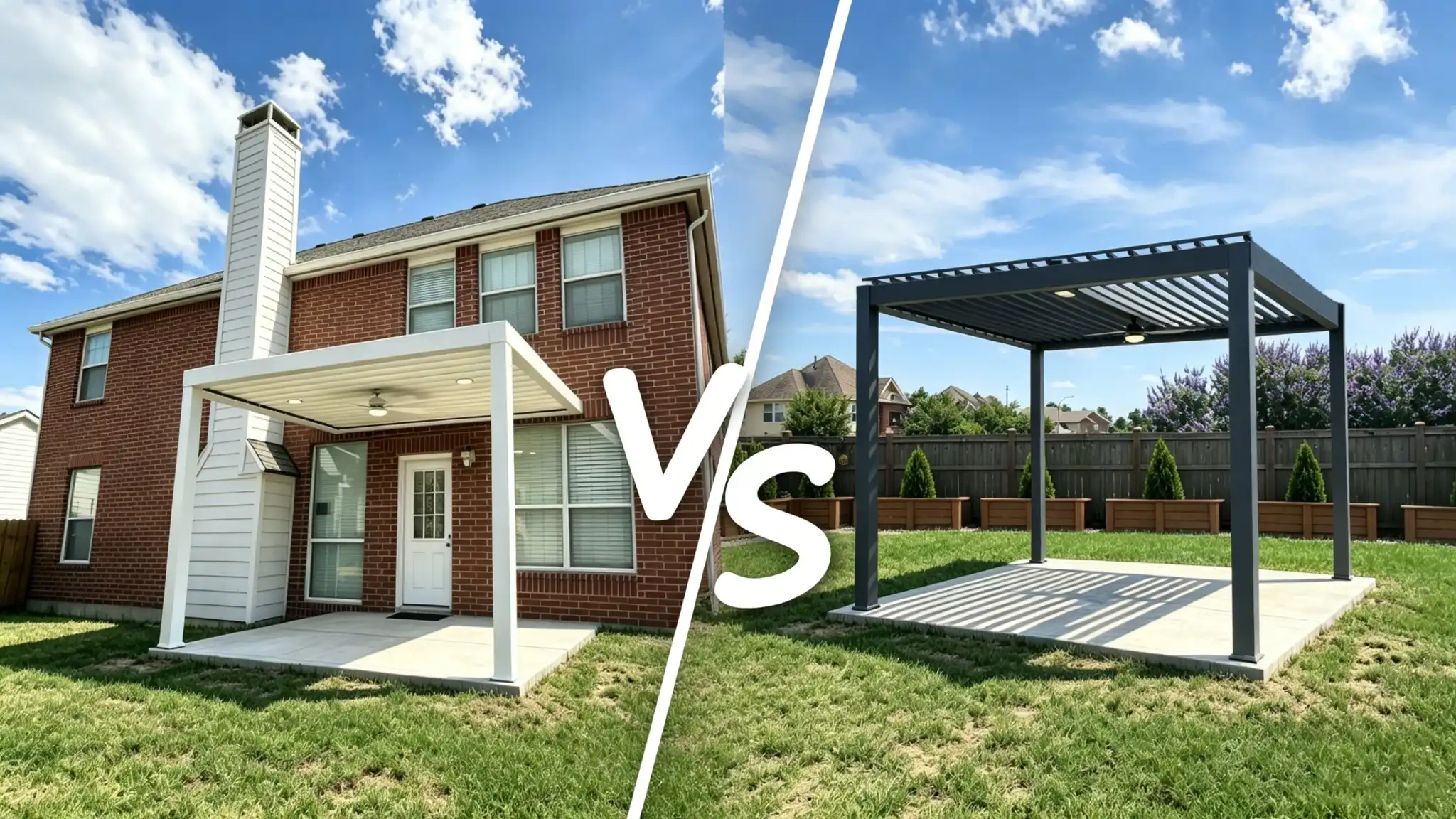
attached pergola vs freestanding pergola backyard comparison

Imagine stepping out your back door on a Saturday afternoon. You want shade over your patio, somewhere to put a grill, a dining table, maybe a few lounge chairs. The pergola catalogs show you two options: one bolted to your house, one standing on its own four posts. Which one actually works for your backyard?

This isn't a trivial decision. The wrong choice means either wasting space on a tiny patio, drilling into a wall that can't support the load, or ending up with four posts blocking every walking path. And once it's installed, switching means starting over.

We've installed dozens of solar louvered pergolas across Texas — both wall-mounted and freestanding. In this guide, we break down the real differences: what each one costs, what installation involves, what permits you'll need, and when each one actually makes sense. No generic comparison tables — just the questions that actually decide it.
Quick Answer: Attached or Freestanding?

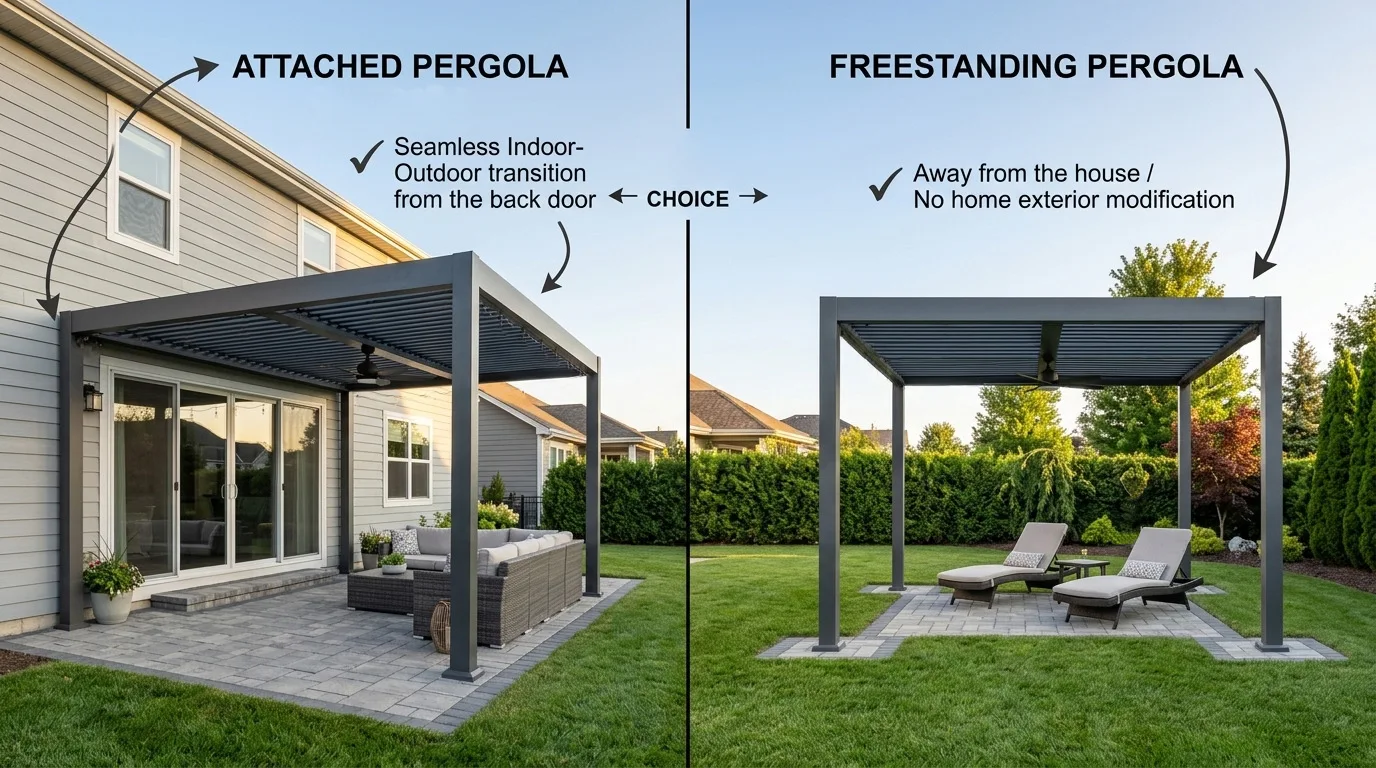
Short answer: Choose an attached pergola if your patio sits right outside your back door and you want a seamless indoor-outdoor transition. Choose a freestanding pergola if your best outdoor spot is away from the house, or if you don't want to modify your home's exterior.

Both can use the same premium materials — aluminum frame, louvered roof, solar power, built-in lights and fans. The attachment method doesn't determine what the pergola looks like or how comfortable it is. It determines where it goes and what installation involves.

The rest of this guide breaks down the real differences: structure, cost, permits, drainage, and when each one actually makes sense.

What's the Actual Difference?

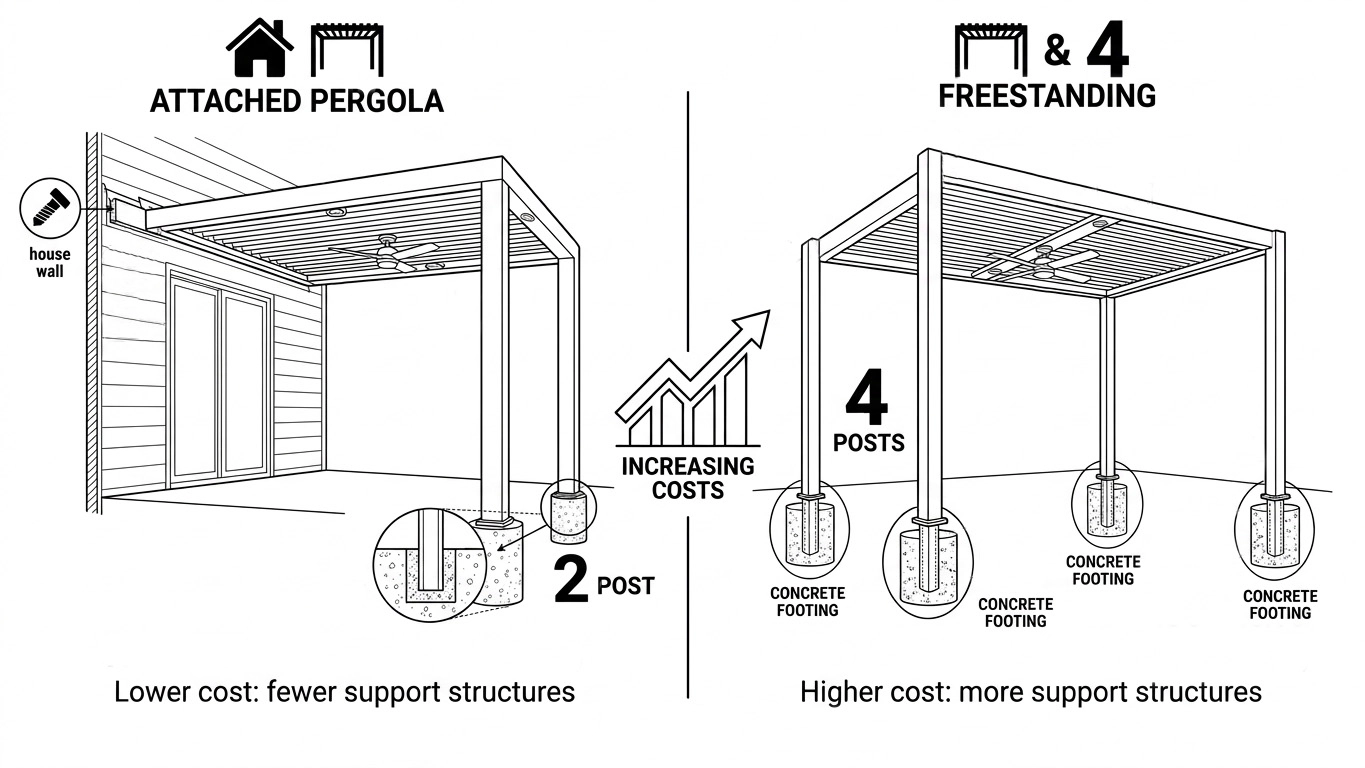
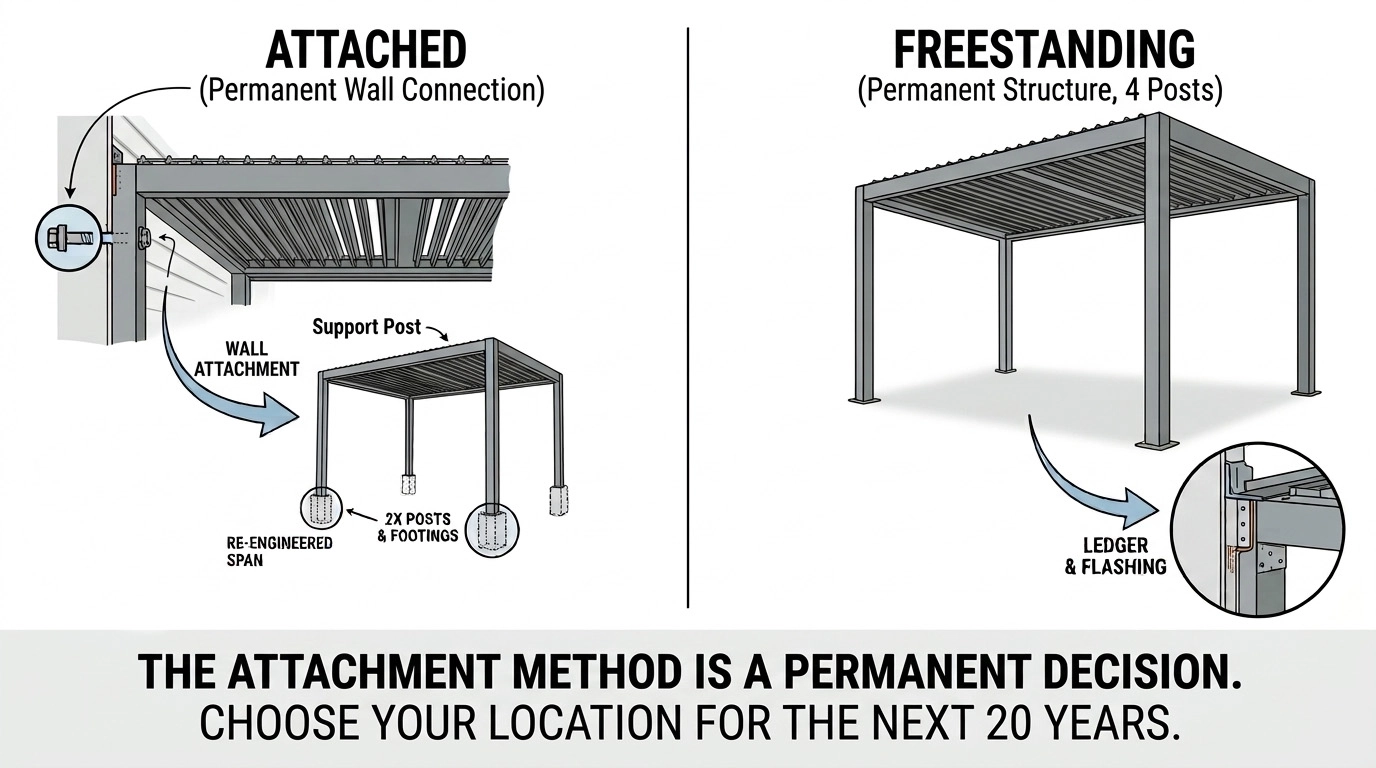
An attached pergola (also called a wall-mounted or house-attached pergola) bolts to your home's exterior wall on one side. It uses two outer posts on the open side. The house itself supports one edge of the structure.

A freestanding pergola stands on its own with four or more posts. It doesn't connect to your house at all. It can go anywhere in your yard — over a patio, by a pool, next to a fire pit, or in a garden corner.

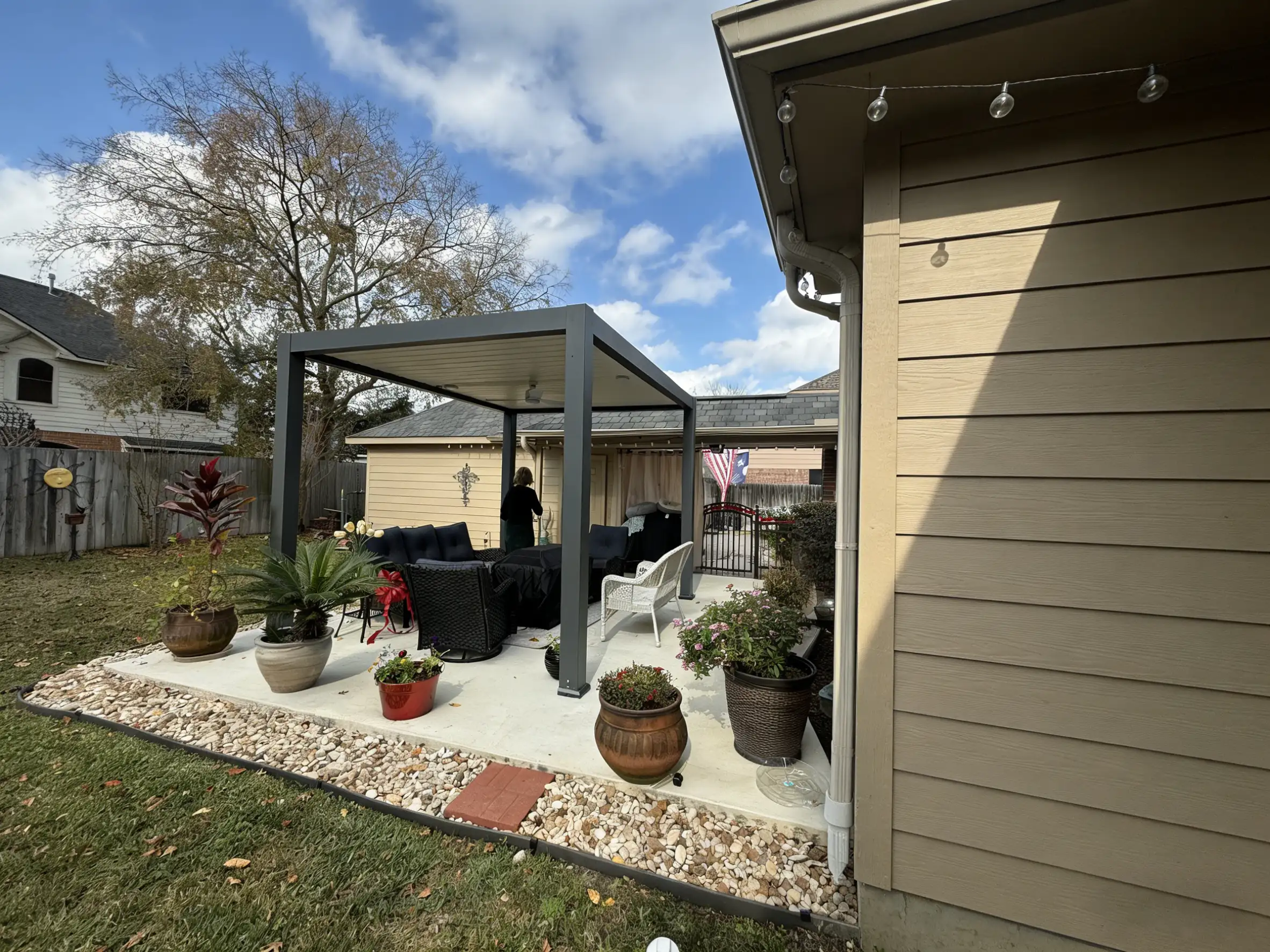
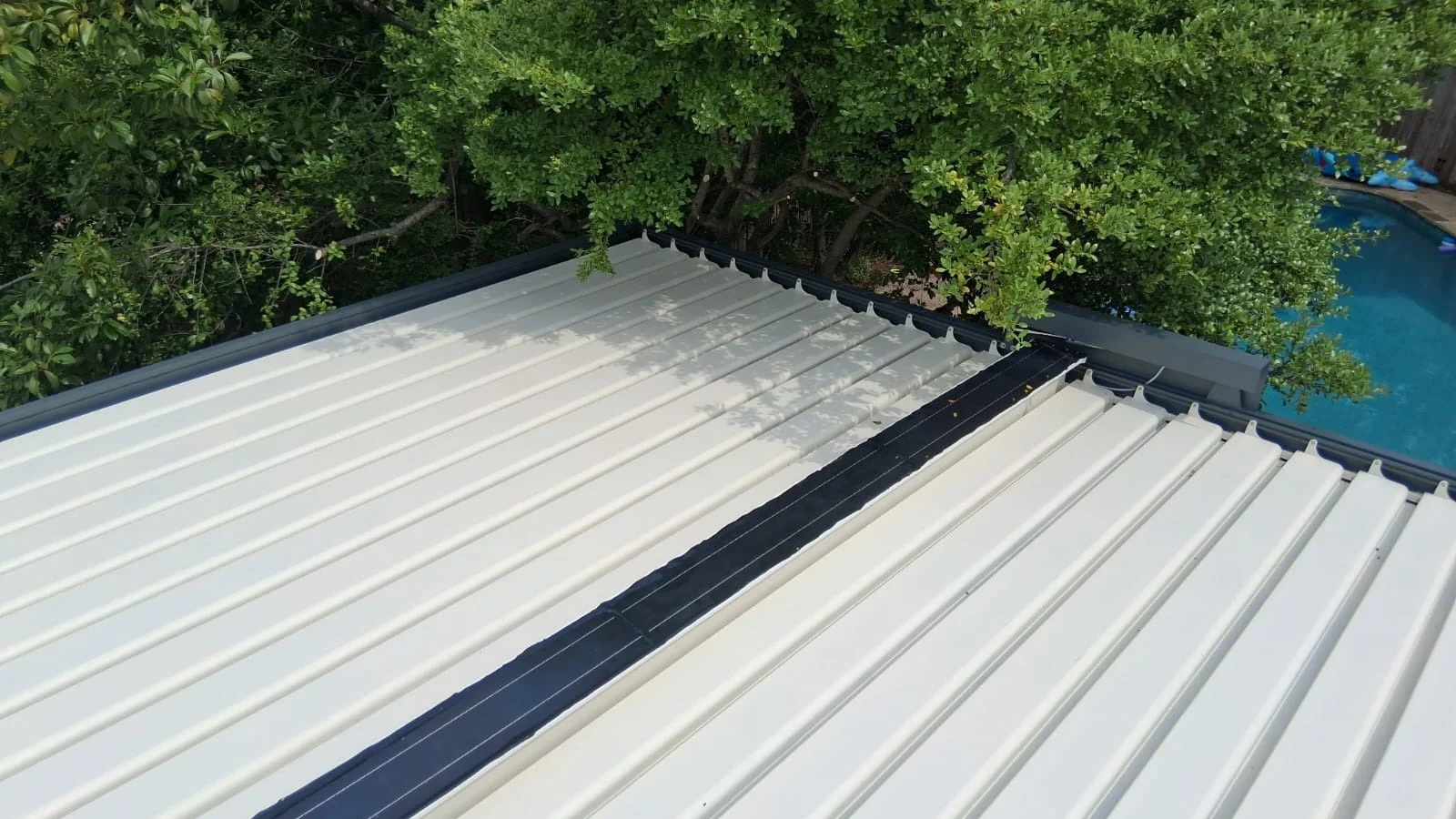
top view of adjustable louvered aluminum pergola roof backyard pool area
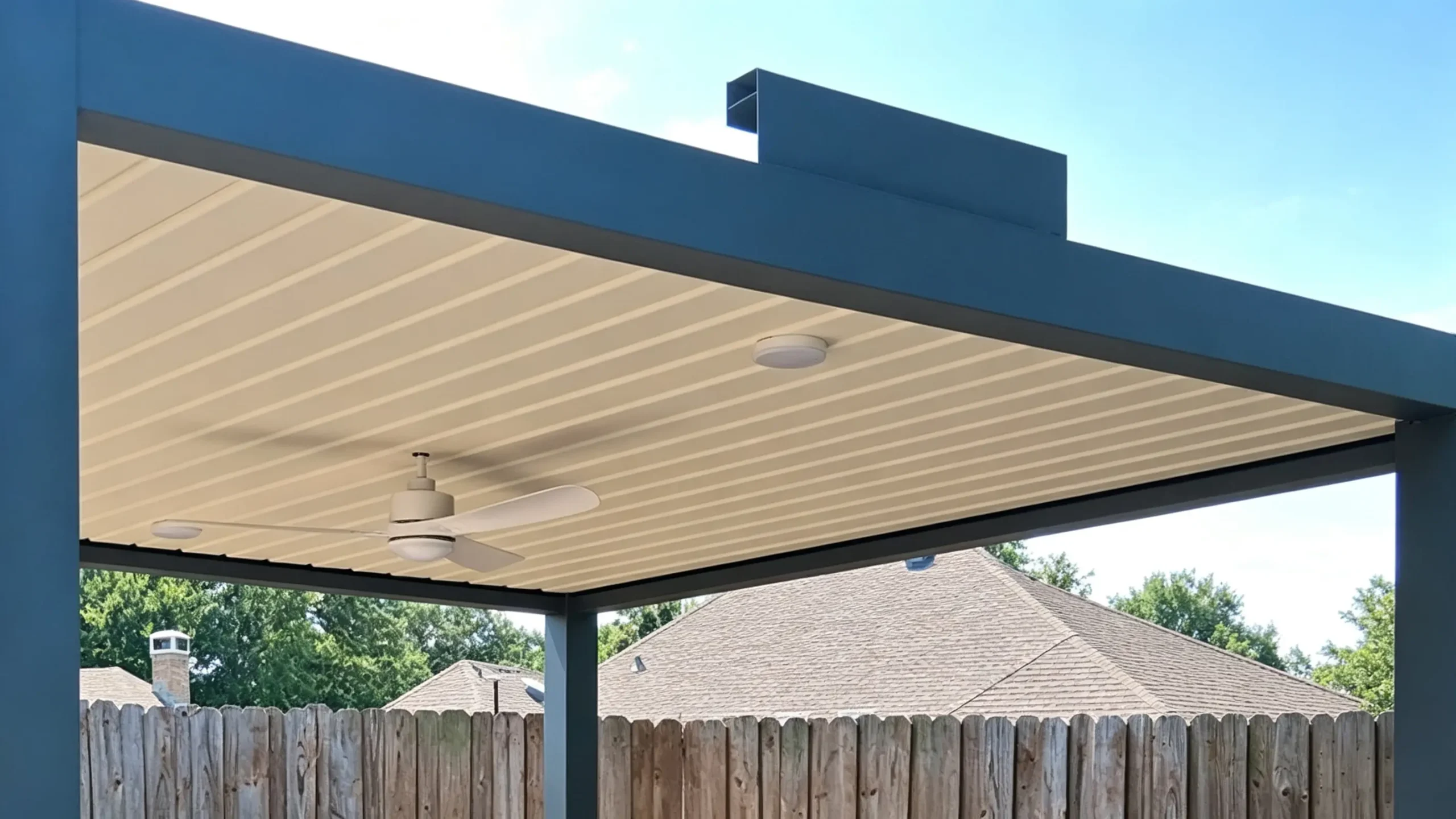
louvered pergola interior ceiling fan and lighting

One thing both styles have in common: the roof type matters more than the attachment method. An open-slatted attached pergola and an open-slatted freestanding pergola give you the same dappled shade — just in different locations. But step up to a motorized louvered roof, and the experience changes entirely: adjustable sun, rain protection, built-in lights and fans. Whether you choose attached or freestanding, a solar louvered roof is the upgrade that actually changes how often you use your outdoor space.

For more on how attached pergolas actually mount to your wall, see our guide on how to attach a pergola to your house.

Answer These 4 Questions

To determine which installation method is suitable for your house and answer directly:

Q1: Where do you actually spend time outside?

  • Right outside the back door? Attached. You'll walk straight from kitchen to shaded space.
  • Deeper in the yard — by a pool, fire pit, or garden corner? Freestanding.

Q2: Do you have clear wall space — at least 4 feet without windows or doors?

  • Yes. Attached works. The ledger needs a solid wall to bolt into.
  • No, the wall is mostly glass and doors. Freestanding, or a smaller attached section that fits.

Q3: Is your yard tight?

  • Yes. Would two extra posts block walking space? Attached. It only needs 2 outer posts.
  • No. Do you have room? Either works.

Q4: Are you comfortable modifying your house exterior?

  • Yes. Drilling into siding, flashing, ledger installation? Attached is fine.
  • No. Would you rather keep the walls intact? Freestanding.

If you answered mostly "attached" on 1–3 but "no" on Q4, that's a conflict — read the installation section below before deciding.

Cost: What You'll Actually Pay

Attached pergolas are usually 10–20% cheaper than the same size freestanding model — fewer posts, fewer concrete footings, less hardware. Here are rough budget ranges for the US market:

Material / Roof TypeAttached (Installed)Freestanding (Installed)
Wood DIY kit$1,500–$3,000$2,000–$4,500
Aluminum fixed roof$4,000–$8,000$5,000–$10,000
Solar louvered roof$8,000–$15,000$10,000–$20,000+

What drives the price difference: A freestanding pergola needs four posts instead of two, plus four concrete footings instead of two. The wall connection on an attached unit requires a ledger board, flashing, and sometimes a professional wall assessment — but that's still cheaper than two extra post footings.

Exact pricing depends on size, options, local labor, and installation complexity. Request a quote for a precise estimate for your specific space.

Installation & Permits

Attached pergola:

  • Requires a wall ledger board, proper flashing, and drainage gap
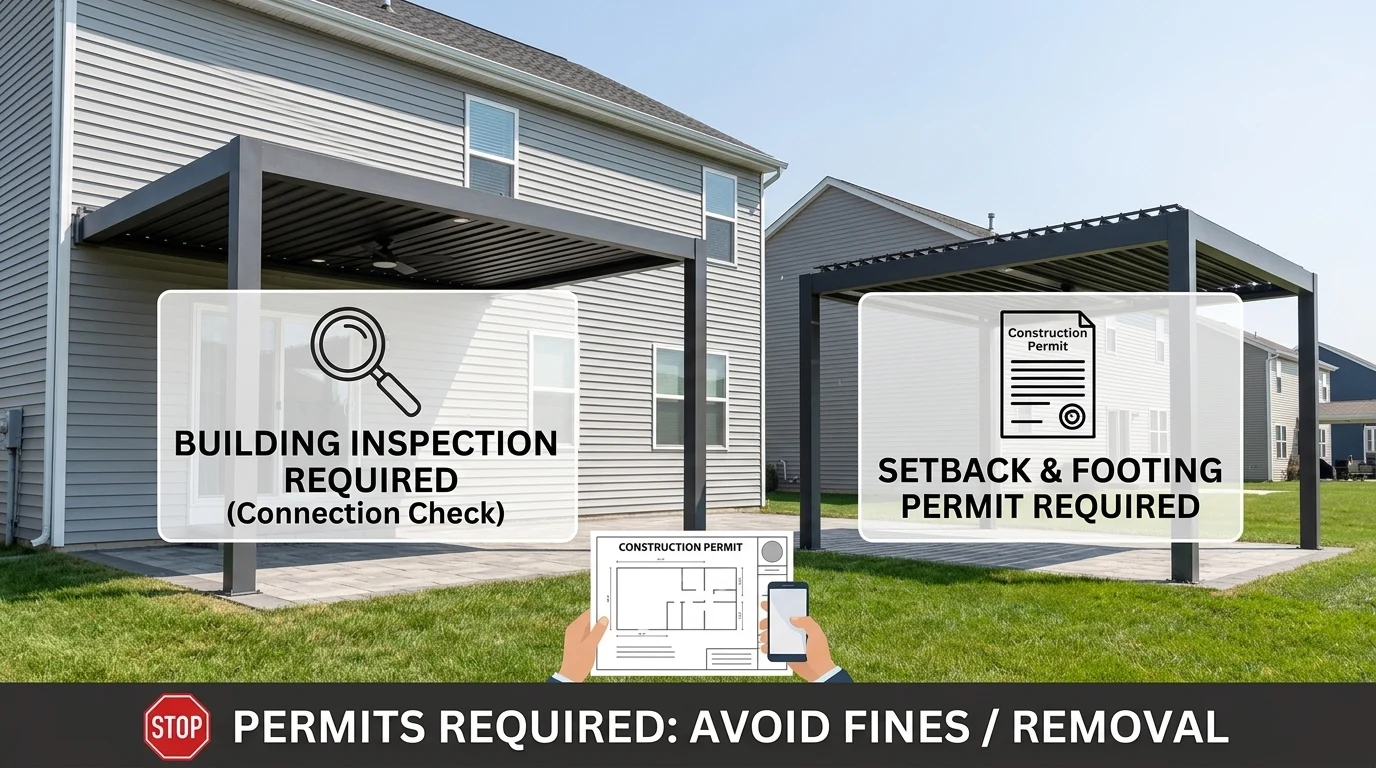
  • Building permits are almost always required — attaching to your home is classified as a structural alteration, not a freestanding accessory structure
  • A professional installer is recommended for the wall connection (waterproofing is not DIY-level work)
  • Two outer post footings below the frost line

Freestanding pergola:

  • No wall work, no flashing, no risk to your home's exterior
  • Permits are still required in most jurisdictions, but the review is usually simpler — they focus on footings and setbacks rather than wall penetration
  • Four post footings below the frost line
  • Installation is more straightforward: set posts, level, bolt frame

Permit reality check: Regardless of which type you choose, call your local building department before you start. Wall-mounted pergolas get closer scrutiny because they connect to the home. Freestanding pergolas still need permits for footings and setbacks — skipping them means fines and possible forced removal.

When an Attached Pergola Makes Sense

An attached pergola is the right choice when your daily outdoor life revolves around the back door. You step from your kitchen or living room directly into shade — no crossing open sun, no walking across the lawn.

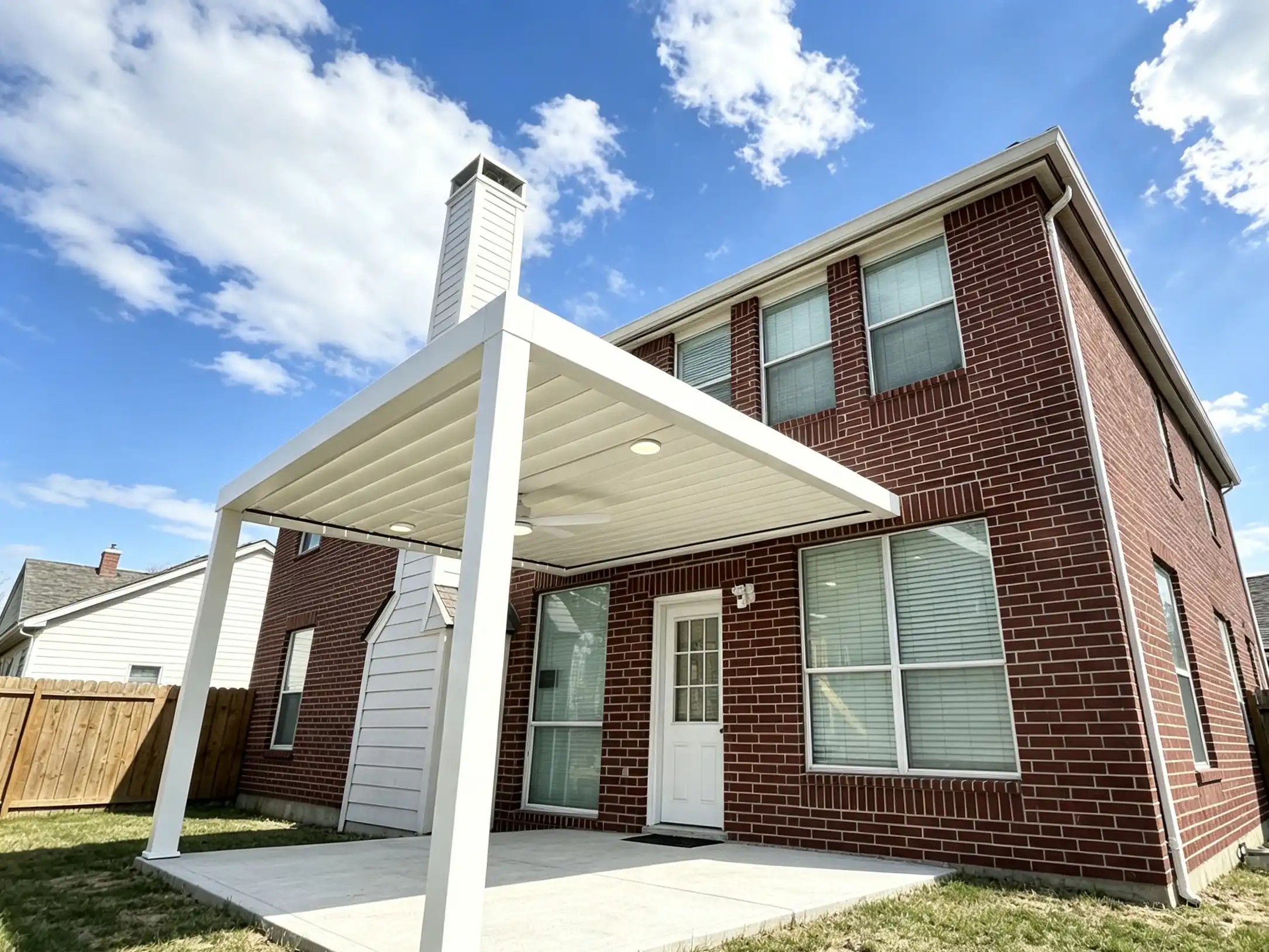
Real installation: 10x14 White Wall-Mounted Pergola, Houston, TX

The homeowners had a small patio directly outside their red brick exterior wall. A freestanding pergola would have wasted two inner posts on a tight space. The wall-mounted design eliminated those posts, giving them the entire patio as usable seating. The white frame and louvered roof match the home's trim, and the solar louvered system adjusts for Texas sun — opening for light, closing for rain.

Result: A seamless indoor-outdoor dining space on a patio that previously got too hot to use.

Key reasons to choose attached:

  • Your patio is right outside your back door
  • You want the cheapest option per square foot of shade
  • You have clear wall space with wood studs or masonry backing
  • You want the structure to look like it was always part of the house

For a full breakdown of wall attachment methods, see our wall-mounted pergola buying guide.

When a Freestanding Pergola Makes Sense

A freestanding pergola is the right choice when your best outdoor spot isn't against the house — or when you don't want to drill into your exterior walls.

Real installation: 10x10 Freestanding Louvered Pergola, Houston, TX

The Hall family wanted a dedicated outdoor retreat in their backyard. Their old wooden pergola offered no rain protection and looked dated. We installed a 10x10 freestanding solar louvered pergola with a gray aluminum frame and white adjustable louvers. Solar-powered fan and LED lights let them use the space at night without any electrical work. The four-post design sits on a concrete pad in the middle of their backyard, away from the house.

Result: A private backyard lounge for evening relaxation — no wall penetration, no wiring, and the structure can stay or go with the homeowner.

Key reasons to choose freestanding:

  • Your best seating area is in the middle of the yard, by a pool, or near a fire pit
  • Your back wall is mostly sliding glass doors and windows — nowhere to bolt a ledger
  • You don't want to modify your home's exterior
  • You might want to reposition or expand later
  • You want to keep the option of removing it when you sell

Can You Switch Later?

Short answer: not without significant rework.

Converting an attached pergola to freestanding means adding two more posts, two more concrete footings, and engineering the span to work without wall support. It's essentially a new project.

Converting a freestanding pergola to attached means removing the wall-side posts, adding a ledger board, flashing, and wall connection. Also a major rework.

Think of it this way: the attachment method is a permanent decision, not a temporary setup. Choose based on where you'll actually use the space for the next 20 years.

FAQs

Which is cheaper — attached or freestanding?

Attached pergolas are typically 10–20% cheaper for the same size because they use two fewer posts and two fewer concrete footings. The wall connection adds some cost (ledger board, flashing, professional installation), but it's still less than two extra post footings.

Can I put a freestanding pergola on an existing concrete patio?

Yes. As long as the slab is at least 4 inches thick and in good condition, you can bolt the freestanding posts directly to the surface with base anchors. No new footings needed.

Does an attached pergola add more home value?

It can. An attached pergola that looks integrated with the home's architecture — matching colors, clean lines, proper flashing — adds functional outdoor living space that home buyers notice. A freestanding pergola adds value too, but it's seen more as a landscape feature than a home improvement.

Which is better for high wind areas?

Both perform equally well when properly engineered. Attached pergolas have the advantage of the home itself as additional bracing. Freestanding pergolas need adequately sized footings and post anchors to resist wind uplift. A quality aluminum louvered pergola like Sola is rated for 130 mph wind when properly anchored.

Can I get a solar louvered roof on either attached or freestanding?

Yes. Solar louvered roofs are available on both attachment types. The solar panels, motor, lights, and fan are all integrated into the roof frame — the attachment method doesn't affect the roof system. A freestanding solar louvered pergola works just as well as an attached one.

Do I need a permit for either type?

Almost always, yes. Attached pergolas are almost universally treated as structural alterations to the home. Freestanding pergolas still need permits for footings and setbacks in most jurisdictions. Call your local building department before you start.

Can a freestanding pergola be moved?

Technically yes — disassemble the frame, remove the posts, and reassemble at a new location. But the concrete footings stay behind. If you poured a new patio pad, that also stays. So "movable" means the frame comes with you, but the foundation doesn't.

Which is better for a small backyard?

Attached, almost always. A freestanding pergola needs four posts and full clearance on all sides. An attached pergola uses your house as one wall, so it only needs two outer posts — leaving more room to move around.

How deep do footings need to be?

Below your local frost line — no exceptions. Frost depth ranges from 0 inches in southern Florida to 60+ inches in northern Minnesota. See our wall-mounted pergola buying guide for the full frost depth table by region.

Conclusion

The attached vs freestanding question isn't about which one looks better or which one costs less. It's about where you actually want to spend time outside.

If your life revolves around the back door — kitchen, patio dining, grill area — go attached. It's cheaper, it saves space, and it creates a seamless indoor-outdoor flow.

If your favorite spot is deeper in the yard, by a pool or fire pit, or if you don't want to drill into your home's exterior, go freestanding. You keep your walls intact and get to place shade exactly where you want it.

Either way, the roof type matters more than the attachment method. A solar louvered roof — adjustable shade, rain protection, built-in lights and fans, zero electrical work — is what turns a basic shade structure into an outdoor room you'll actually use. Browse our solar louvered pergolas to see which configuration fits your space.

Back to top of page
crossmenu