Sola-Site-Logo
Search

Home » Blog » Restaurant Pergola: Ideas, Benefits & Buying Guide (2026)

Restaurant Pergola: Ideas, Benefits & Buying Guide (2026)

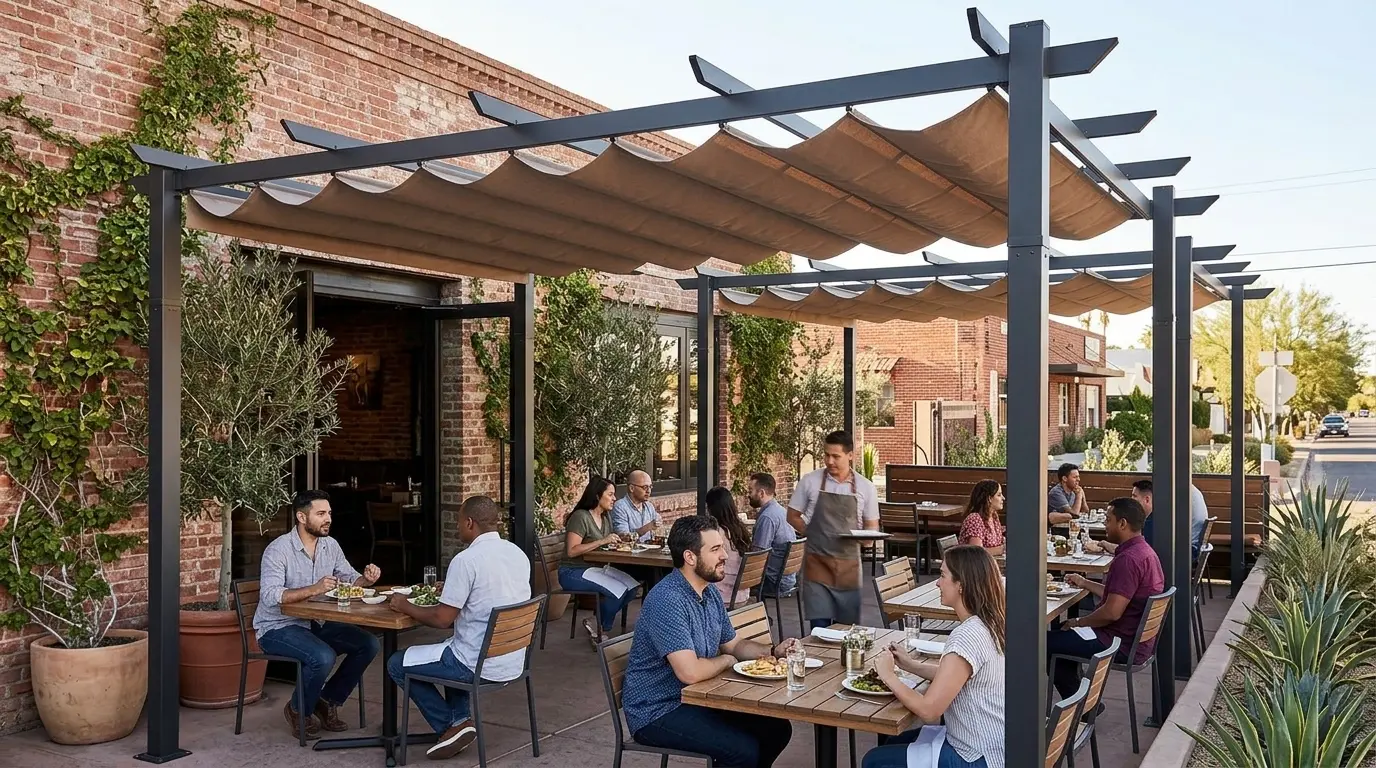
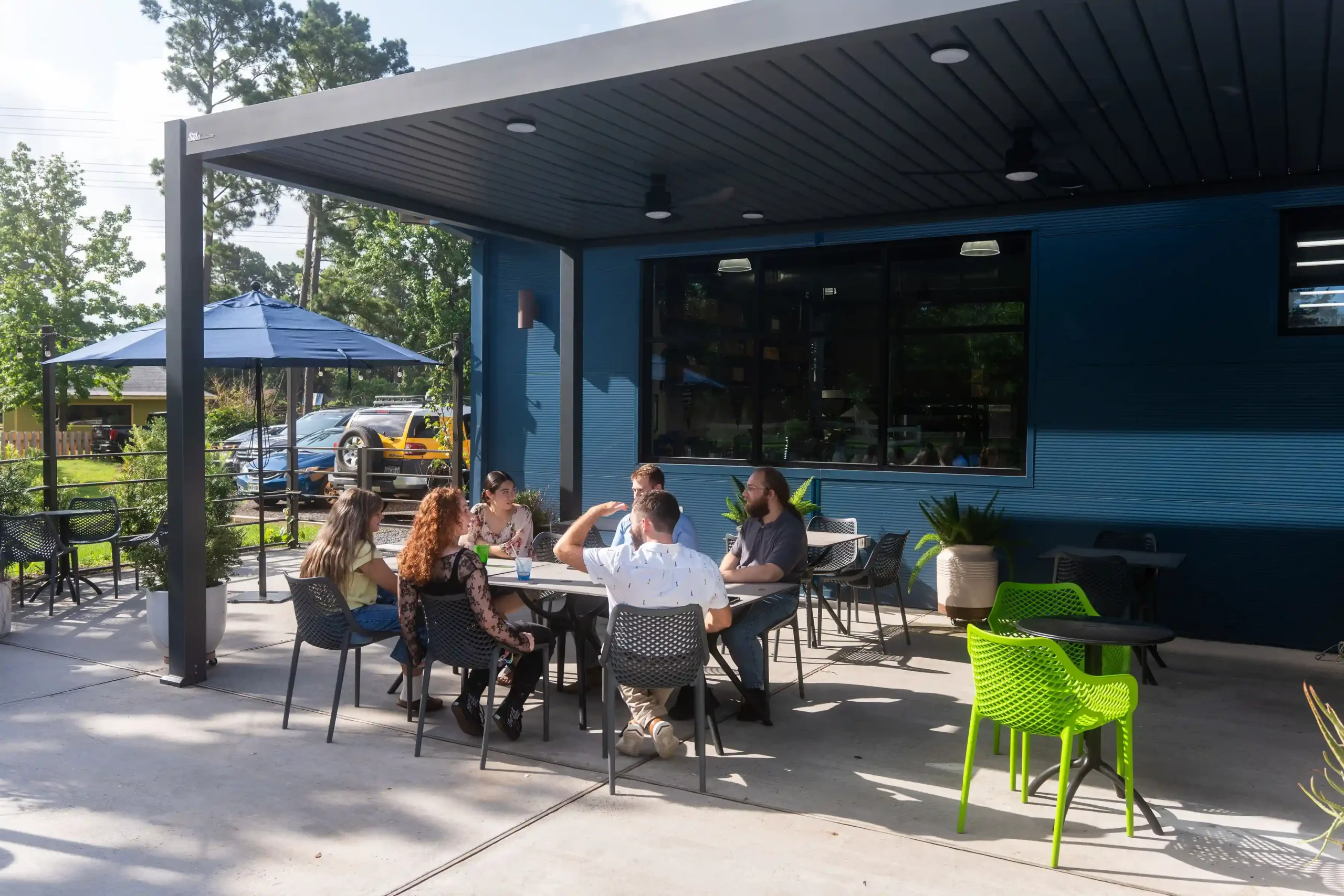
Commercial patio pergola with privacy screens: private restaurant dining zone
Picture your patio on a busy Friday evening: every table full, guests lingering over dessert, and a warm glow overhead as the sun drops. Now imagine the same scene on a rainy afternoon or a scorching July day — half the tables empty because there's no shelter.
That gap between what your patio could be and what it is is exactly what a restaurant pergola solves. A covered, climate-controlled outdoor space turns weather-dependent seating into a year-round revenue stream.
But not all pergolas are built for the demands of a working restaurant. Choosing the wrong one means leaks during service, motors that fail mid-season, or a structure that never gets approved. This guide walks you through the roof types, the business case, the buying criteria, and the compliance steps — with real commercial projects to show what actually works.
Why Your Restaurant Needs a Pergola for Outdoor Dining

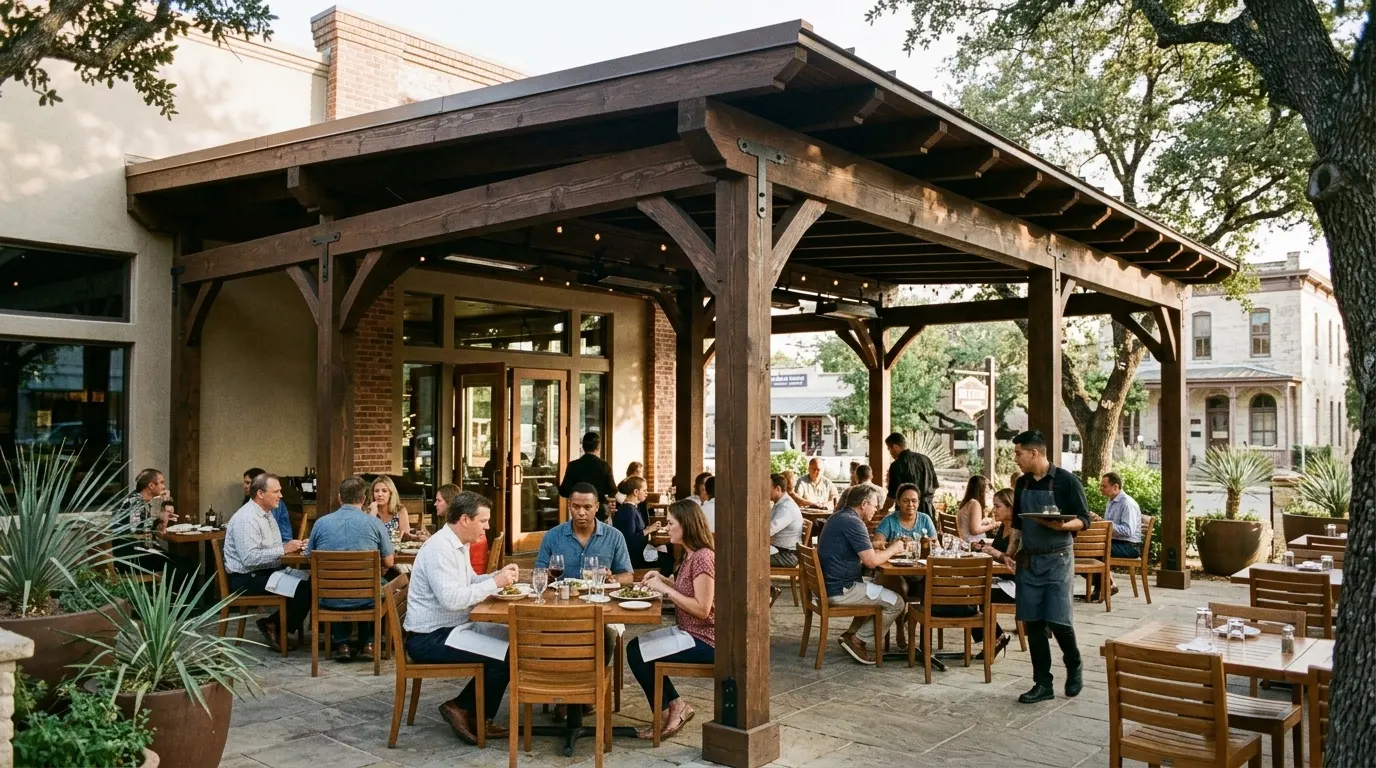
A covered patio is no longer a nice-to-have. Diners now expect it.
Consumer research consistently shows a strong preference for restaurants that offer outdoor seating — and that preference is highest among the younger customers who drive evening traffic. In climates with real summers, harsh sun, or unpredictable rain, an uncovered patio loses bookings on exactly the days when demand is highest.
A motorized louvered restaurant pergola changes that in three ways:
  • It extends your service season. Rain or shine, guests stay dry and comfortable. Many operators report doubling their reliable outdoor trading days compared to an open patio.
  • It protects your investment. Sun can fade furniture and heat tables to unusable levels. Weather protection keeps your outdoor furniture and equipment working for years, not one summer.
  • It signals quality. A well-designed covered patio photographs beautifully, earns better reviews, and justifies premium pricing on outdoor tables.
The result isn't just comfort — it's capacity. A covered patio lets you seat guests who would otherwise be turned away or moved indoors on marginal-weather days.

Restaurant Pergola Roof Types: Which One Fits Your Patio

Not every roof system behaves the same. Here's how the main options compare for a commercial setting.

Fixed Roof Pergola

fixed roof pergola restaurant outdoor dining solid permanent roof full sun rain protection no moving parts
A permanent solid roof offers the most reliable protection and the simplest operation — no moving parts to manage during service. It blocks sun and rain completely, but it also blocks open sky, and it offers no way to let heat escape on warm days. For venues that want maximum coverage with zero operational complexity, a fixed roof is the dependable choice.

Retractable Fabric Canopy

retractable fabric canopy pergola restaurant patio rolls back for open sky fabric shade and light rain protection
A fabric canopy rolls back to open the sky and extends for shelter. It's lighter and often more affordable upfront, and fabric options can match brand colors. But fabric weathers faster than metal, offers limited insulation, and still requires manual or motorized management. Best suited to venues where the open-air feel is the main draw and budget is a priority.

Motorized Louvered Pergola

 
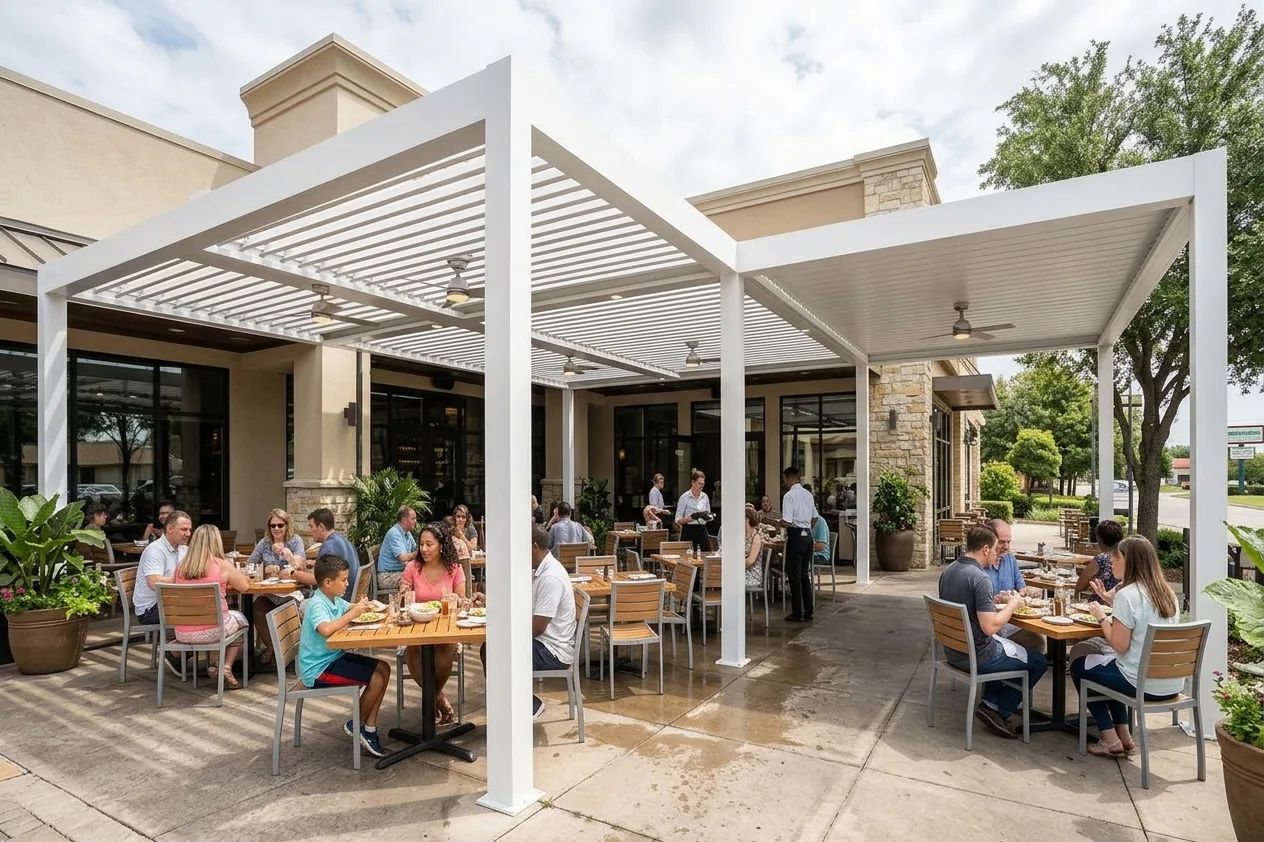
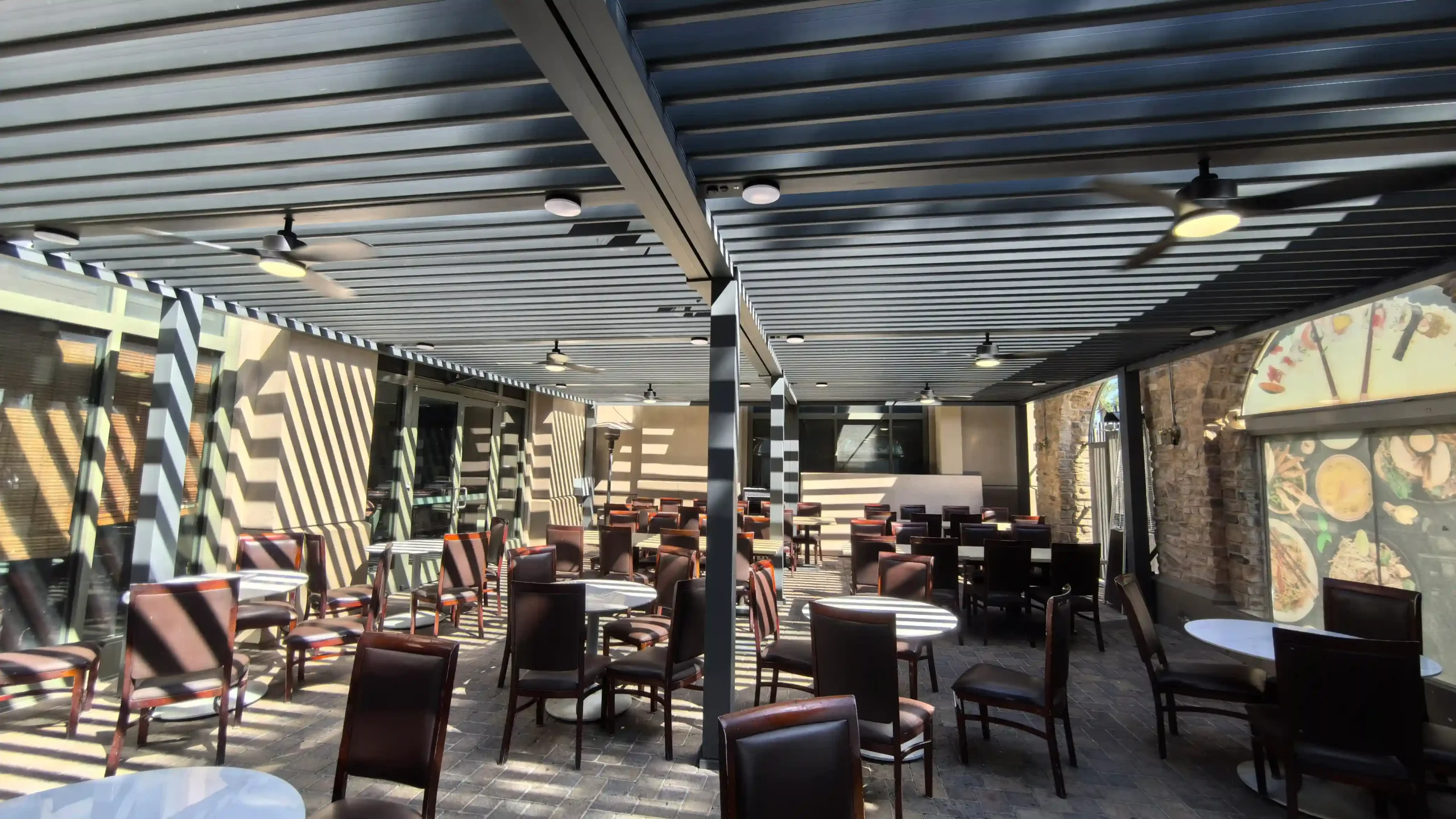
Motorized louvered aluminum pergola for restaurant outdoor patio, adjustable louvers open for airflow or close
This is the system most restaurants and cafés end up choosing — and the reason is control. Motorized aluminum louvers rotate from fully open to fully closed:
  • Open for bright, breezy service on perfect days.
  • Partially tilted to block harsh midday sun while keeping airflow.
  • Closed to form a watertight roof during rain, with hidden gutters channeling water away from diners.
Because you can adapt to weather in under a minute — without staff touching a ladder — the louvered roof maximizes usable seating across more days than any static option. Premium systems add integrated LED lighting and ceiling fans, so the space works comfortably from lunch through late dinner.
 
Which should you pick?
If your patio is a seasonal bonus and budget is tight, a fixed or fabric roof may suffice.
If you plan to run outdoor seating as a serious revenue line year-round, a motorized louvered pergola is the most versatile investment.


The Business Case: Restaurant Pergola ROI

The real reason to install a restaurant pergola isn't aesthetics — it's the numbers.

More Covers, More Revenue

Every seat you add is potential revenue, and a covered patio lets you add seats that stay usable. A single pergola section over a typical patio can accommodate roughly a dozen additional covers depending on your table layout. Multiply that by your average check, your table turns, and your operating days, and the incremental revenue compounds quickly.
 

Higher Average Checks Outdoors

Outdoor dining typically commands a premium. Guests linger longer, order more drinks, and accept slightly higher prices for the experience. Restaurants with quality covered patios regularly report outdoor checks running meaningfully above indoor equivalents — not because the menu costs more, but because the experience justifies it.
 

The Cost Advantage of Solar Power

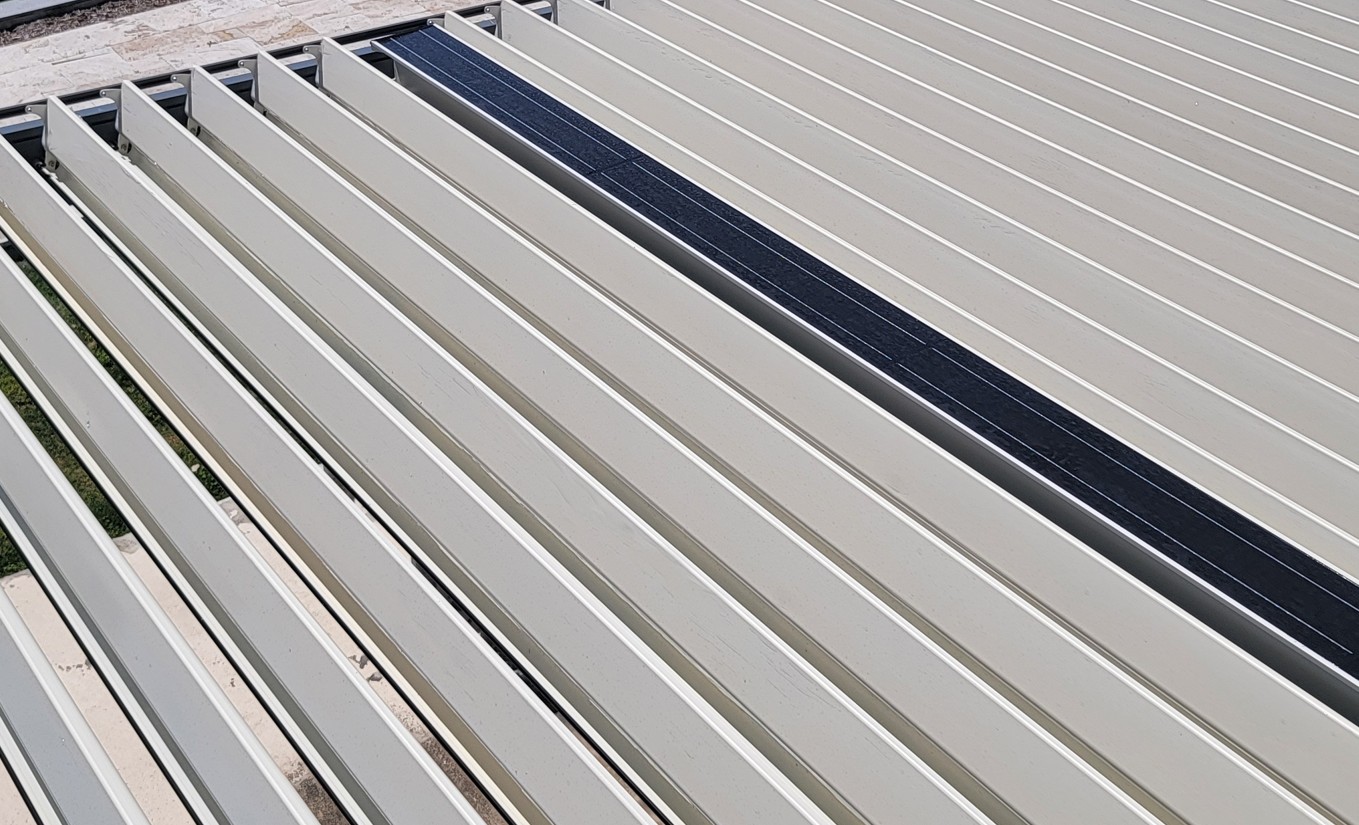
solar powered motorized louvered pergola roof top view with integrated solar panels
Buffet Star Patio Actual Photo 3
Most motorized louvered systems need wiring — an electrician, conduit runs, and ongoing electricity bills for the motor, lights, and fans. That's real money, every month, for the life of the structure. A solar-powered system removes that entire cost.
Sola builds the solar panels directly into the roof. The motorized louvers, integrated LED lighting, and ceiling fans run on sunlight, with battery storage for evenings and cloudy days. The result:
  • Zero electrical work — no trenching, no cutting into your building, no electrician fees.
  • Zero monthly energy cost for the pergola's systems.
  • A sustainability story you can tell customers, which matters more every year.
For a business, this isn't a small detail. It's an operating expense removed entirely from your P&L.

Real-World Payback

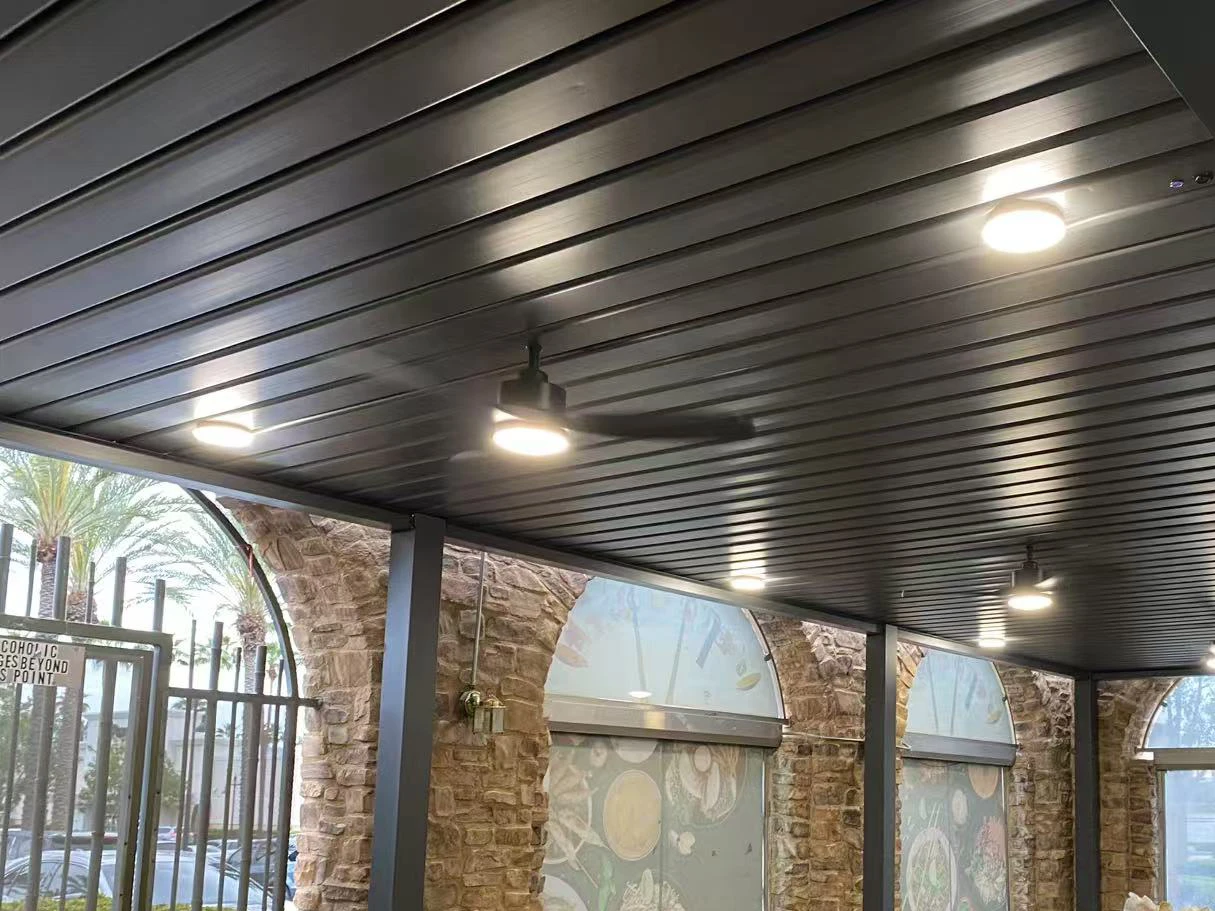
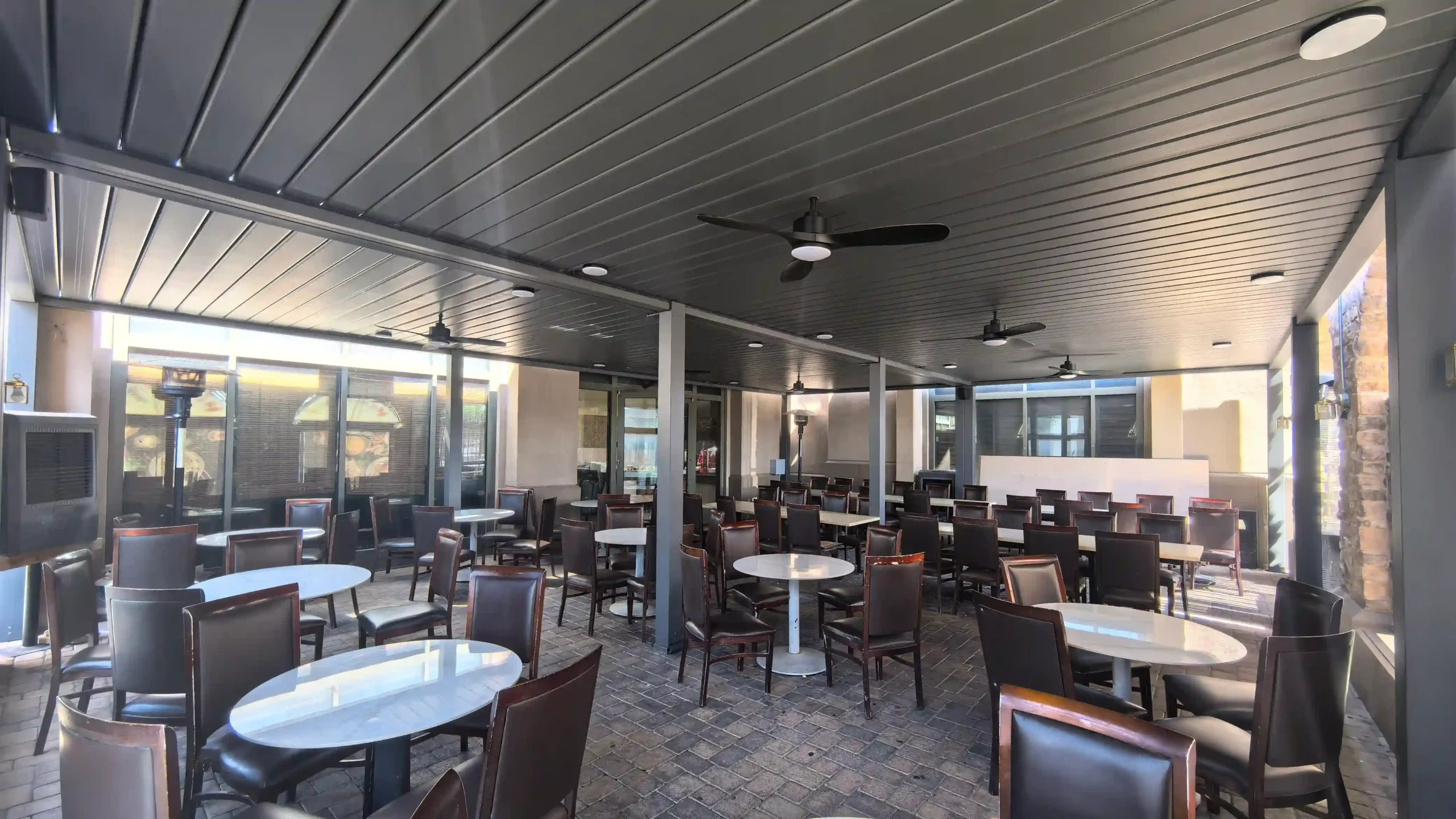
Motorized Pergola Pain Solution 2_Built-in fans boost comfort for all-day use
Gray motorized solar aluminum louvered pergola covering commercial restaurant outdoor patio with ceiling fans and dining tables
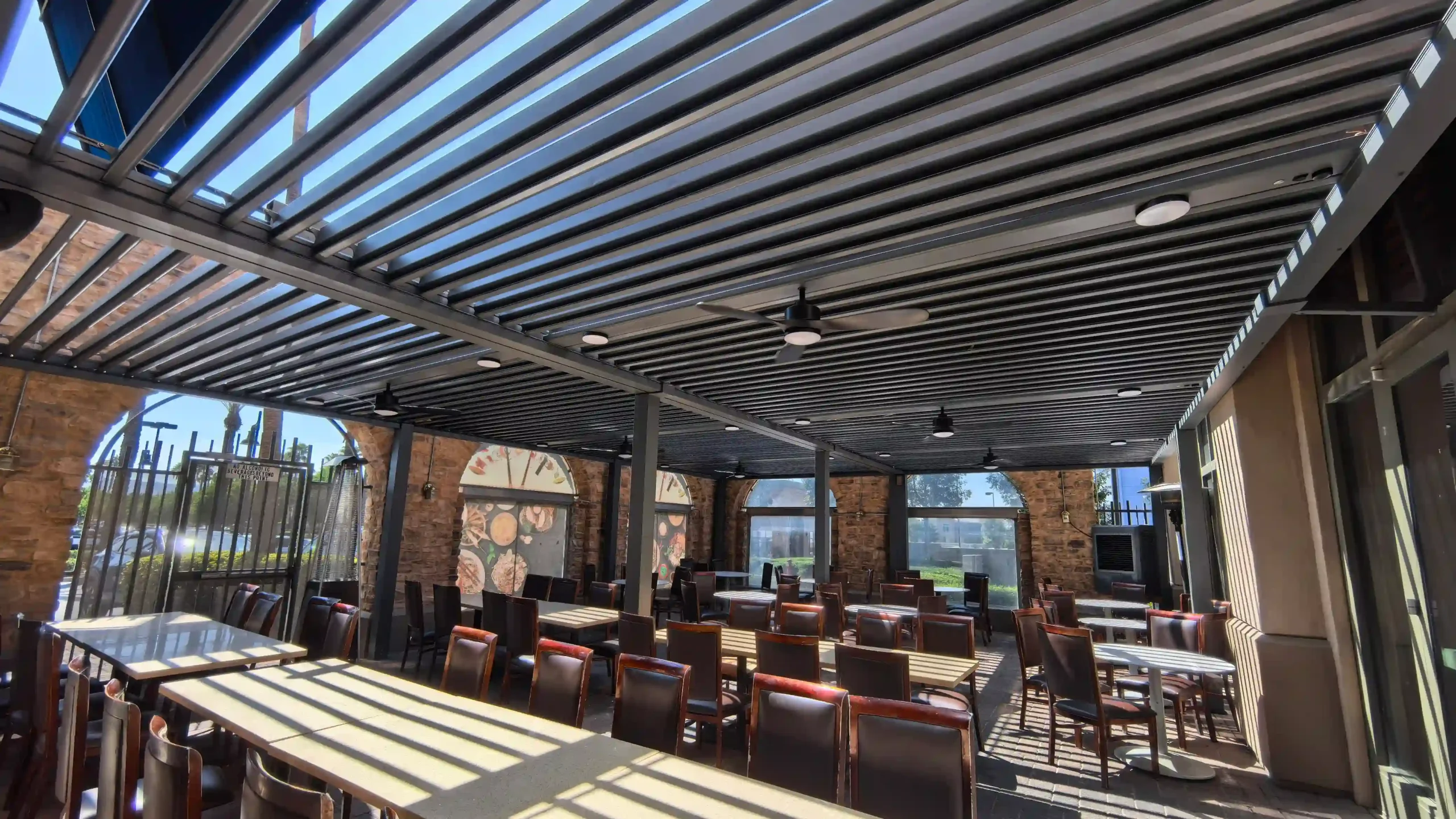
Rather than a theoretical model, here's what actual projects look like. Our clients have installed restaurant pergolas that paid for themselves through added covers and extended seasons — with solar operation removing the ongoing energy cost of running a powered pergola. You can see the results in our Cafe Zun Zun patio lounge and Buffet Star patio upgrade projects.

What to Look for in a Commercial Restaurant Pergola

Buying a pergola for a business is different from buying one for a backyard. Work through these questions before you commit.

Q1: Does the roof actually seal when closed?

Rain protection is only as good as the seal. Look for louvered systems with rubber gaskets between blades that compress into a watertight surface when closed. Ask where the water goes — premium systems channel it into hidden gutters that drain through the posts, never dumping onto your diners or walkways.
 

Q2: What are the real wind and snow ratings?

Don't accept "weatherproof" as an answer. A commercial-grade pergola should carry specific engineering ratings — for example, 130 mph wind resistance and a 30 PSF snow load — so it holds up in coastal storms and northern winters alike. If a supplier can't give you numbers, that's a red flag.
 

Q3: Who builds the frame, and how long will it last?

Commercial use means constant exposure to sun, rain, and high traffic. A powder-coated aluminum frame resists rust, fading, and corrosion — including in coastal, marine-grade environments — with no painting or sealing ever needed. That's decades of service versus a structure that needs constant upkeep.

Q4: Does the motor handle continuous restaurant use?

A residential motor may cycle a few times a day. A busy restaurant cycles its roof many more times. Specify commercial-duty motors rated for heavy daily operation, and consider redundancy so a single motor failure never forces a section closed during service.
 

Q5: Who handles installation and permits?

A commercial pergola is a project, not a product. You need a partner that provides engineering, code-compliant installation, and a professional team that minimizes disruption to your business. Ask for references from comparable commercial projects and verify them.

Restaurant Pergola Permits & Code: What Operators Must Know

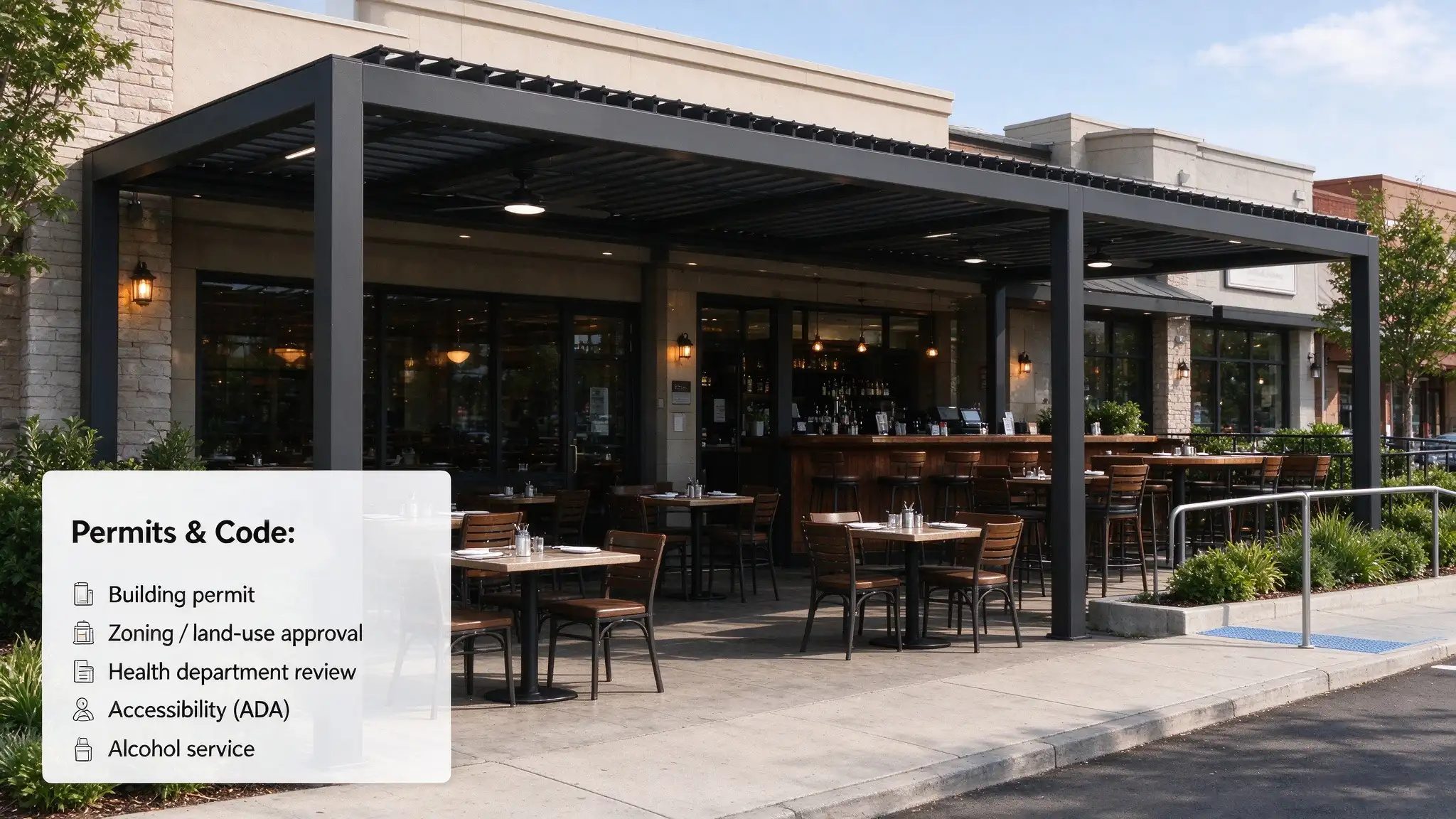
commercial motorized louvered pergola restaurant patio overlay with required permits and building codes for outdoor dining
Commercial structures face stricter rules than residential ones. Plan for these before you buy:
  • Building permit — required for most permanent structures, especially those over a size threshold. Expect stamped structural engineering for wind and snow loads in your region.
  • Zoning / land-use approval — confirms the structure meets setback and lot-coverage rules for your property.
  • Health department review — ensures drainage prevents standing water, materials are pest-proof, and outdoor food service areas meet local standards.
  • Accessibility (ADA) — accessible routes to the dining area, minimum clear pathways, and a percentage of accessible seating.
  • Alcohol service (where applicable) — if you're expanding a licensed bar or dining area into the new covered space, you may need approval to extend alcohol service.
Permit timelines vary widely by jurisdiction — from a few weeks to a couple of months. Get pre-approval clarity before ordering, and work with a supplier whose team handles engineering and permitting as part of the project.

FAQs

How much does a restaurant pergola cost?

Commercial restaurant pergolas vary widely with size, roof type, features, and installation. A small patio installation is far less than a large multi-section rooftop buildout. Motorized louvered systems with solar power and full installation sit at the premium end — but they remove the wiring, permit, and energy costs that cheaper wired systems carry. Contact us for a project-specific quote based on your patio.

Do restaurant pergolas need a permit?

Almost always, yes. Commercial structures typically require a building permit and often zoning, health, and accessibility approvals. Your supplier should help you navigate these as part of the installation.

Is a restaurant pergola waterproof?

A quality motorized louvered pergola is watertight when fully closed — rubber seals between blades and hidden drainage through the posts keep diners dry even in heavy rain. Verify the sealing and drainage design with the manufacturer rather than relying on claims.

How long does a commercial pergola last?

A powder-coated aluminum commercial pergola with quality motors typically lasts 20 years or more. The frame needs no painting or sealing; motors may need servicing after years of heavy use. It's a long-term asset, not a seasonal purchase.

Can I extend alcohol service to my new pergola area?

Possibly — but it depends on your license and local rules. Extending bar or dining service into a newly covered space often requires approval to modify your licensed premises. Check with your local authority or an alcohol-licensing specialist before building.

Conclusion

A restaurant pergola is one of the highest-ROI upgrades a food-and-beverage business can make. It extends your season, adds seats, lifts average checks, and — with a solar-powered system — cuts the ongoing operating costs of running a powered pergola.
The key is choosing a structure built for commercial demands: a watertight louvered roof, real wind and snow ratings, a marine-grade aluminum frame, commercial-duty motors, and a partner that handles engineering and permitting end to end.
If you're evaluating a pergola for your restaurant or café, explore our commercial pergola solutions and browse real restaurant and venue projects to see what's possible. Request a consultation and we'll help you size and cost the right system for your patio.
Back to top of page
crossmenu