Sola-Site-Logo
Search

Home » Blog » Wall-Mounted Pergola With Roof: Which Roof Type Is Best?

Wall-Mounted Pergola With Roof: Which Roof Type Is Best?

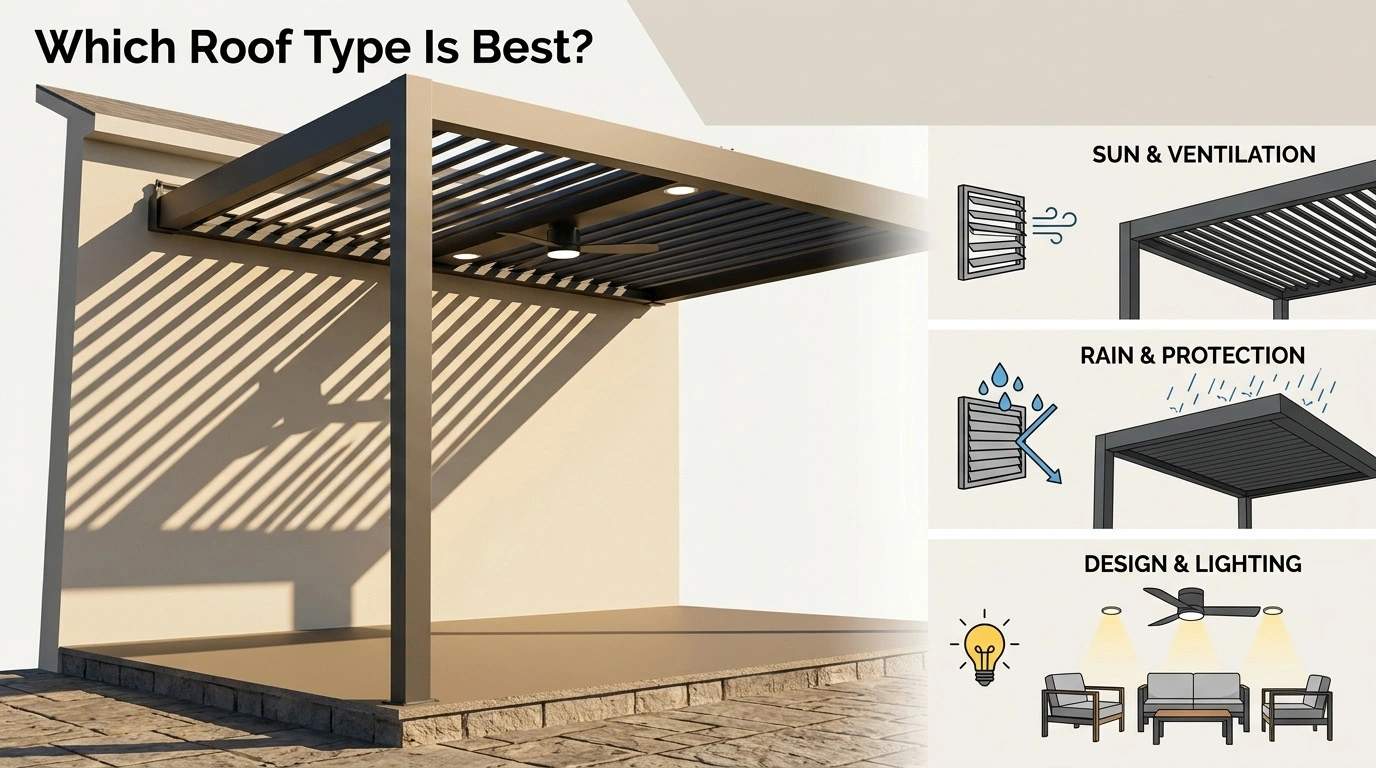
wall mounted pergola louvered roof comparison infographic showing sun ventilation rain protection and lighting features for roof type selection

For a wall-mounted pergola, a motorized aluminum louvered roof is the best all-around choice. It opens for sun, closes for rain, and drains through built-in gutters — all without touching your home's electrical system when it's solar-powered.

An open-slatted roof gives you partial shade but no rain protection. A solid or polycarbonate roof covers you permanently but can't open. A retractable fabric roof is affordable but won't stand up to heavy rain or storms. Only a louvered roof gives you both — full weather protection when closed, and an open-air feel when you want it.

This guide breaks down all five roof types, compares real-world performance, and shows you which one fits your climate, budget, and how you actually use your patio.
The 5 Roof Types for Wall-Mounted Pergolas

Not all pergola roofs are built the same. When you're attaching one to your house, the roof choice matters even more — because water running off the edge of a wall-mounted pergola lands on your foundation, not somewhere in the yard.

Here are the five roof types you'll see on the market, from least to most capable:

Open Slatted / Trellis

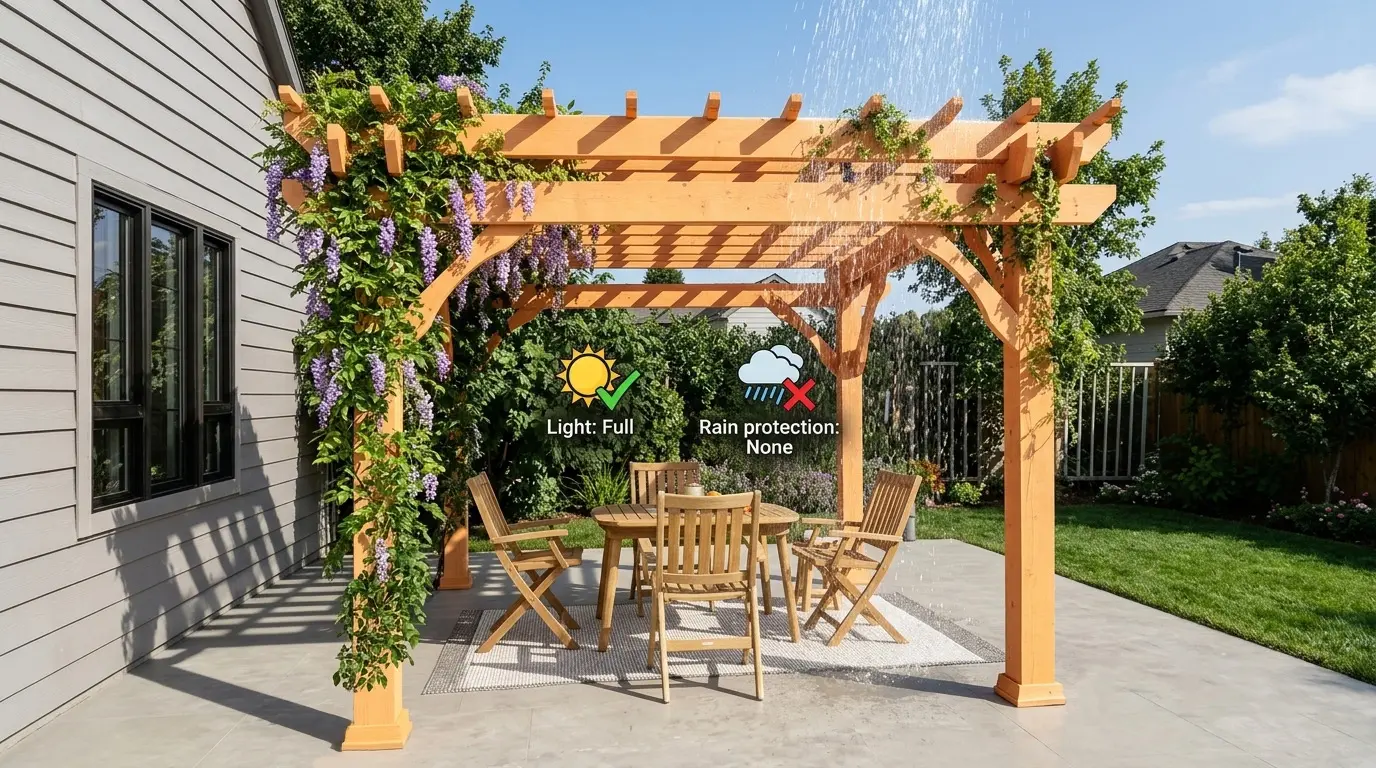
The classic pergola look — angled wood or aluminum slats spaced to create dappled shade. No rain protection at all. Water passes right through. Best for climbing plants or decorative shade, not for keeping you dry during a sudden shower.

  • Rain protection: None
  • Light: Full
  • Best for: Mild, dry climates; decorative shade; homeowners who want the classic pergola look without weather protection

Retractable Fabric Canopy

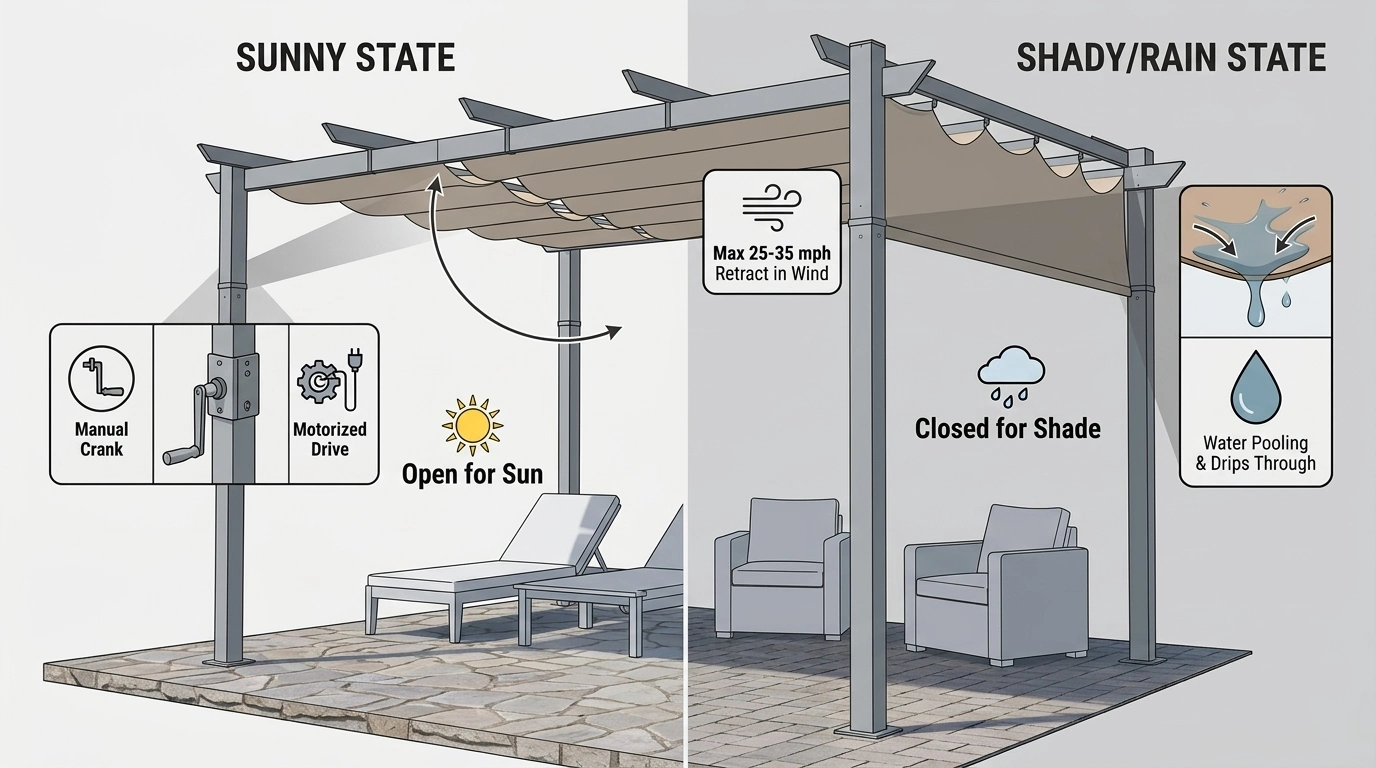
A motorized or hand-crank fabric cover that slides along tracks. Open it for sun, close it for shade. Handles light rain but not heavy downpours — heavy water pools on the fabric and eventually drips through. Must be retracted in wind above 25-35 mph or it tears.

  • Rain protection: Light rain only
  • Light: Adjustable
  • Best for: Warm, dry climates; budget-conscious buyers; temporary shade solutions

Polycarbonate

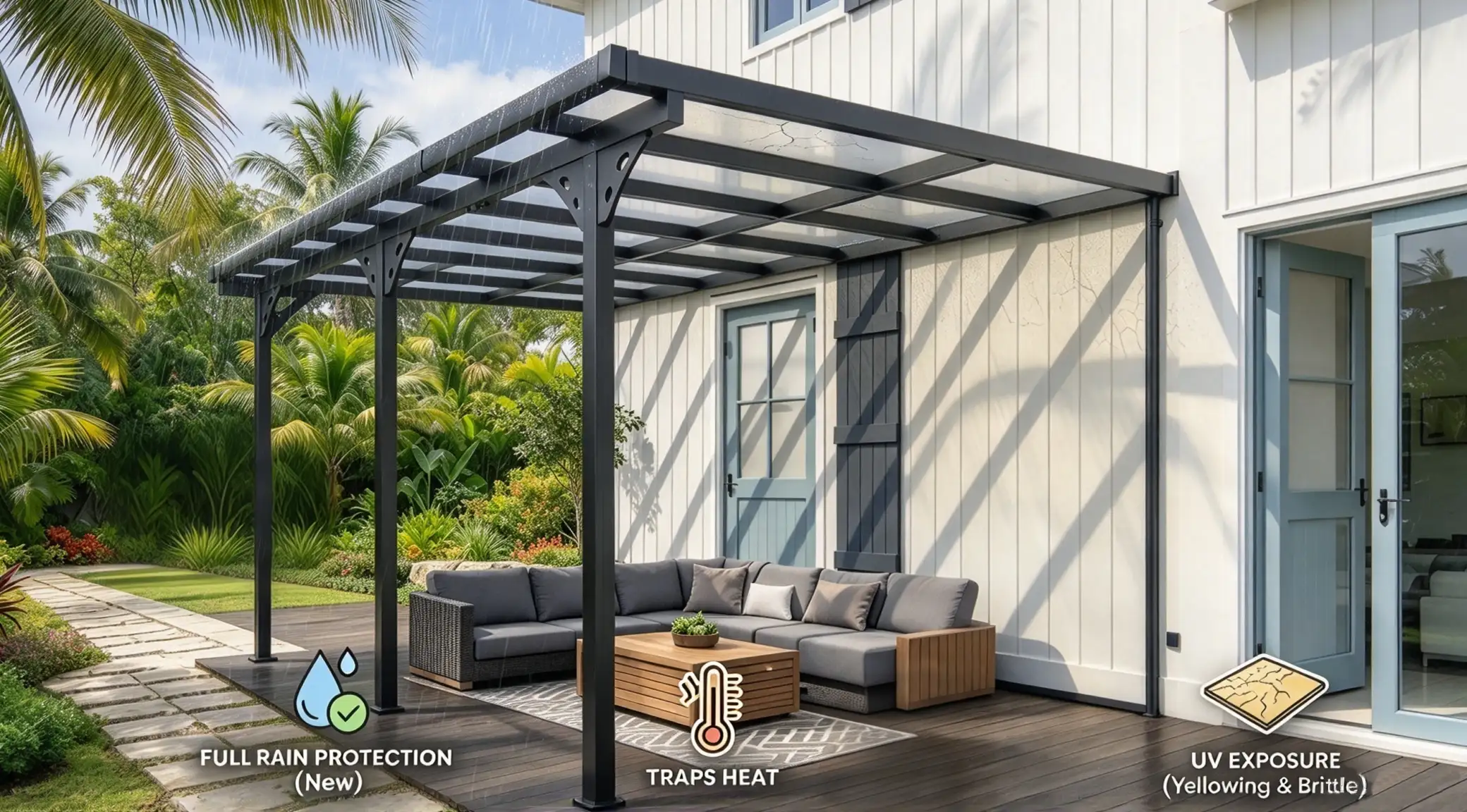
Semi-transparent plastic panels that bolt over the frame. Full rain protection when new, but the panels yellow and become brittle after 3-5 years of UV exposure. Traps heat underneath — a south-facing polycarbonate roof can feel like a greenhouse in summer.

  • Rain protection: Full (when new)
  • Light: Diffused
  • Best for: Budget projects; greenhouse-like spaces; homeowners who want light transmission

Solid Fixed Roof

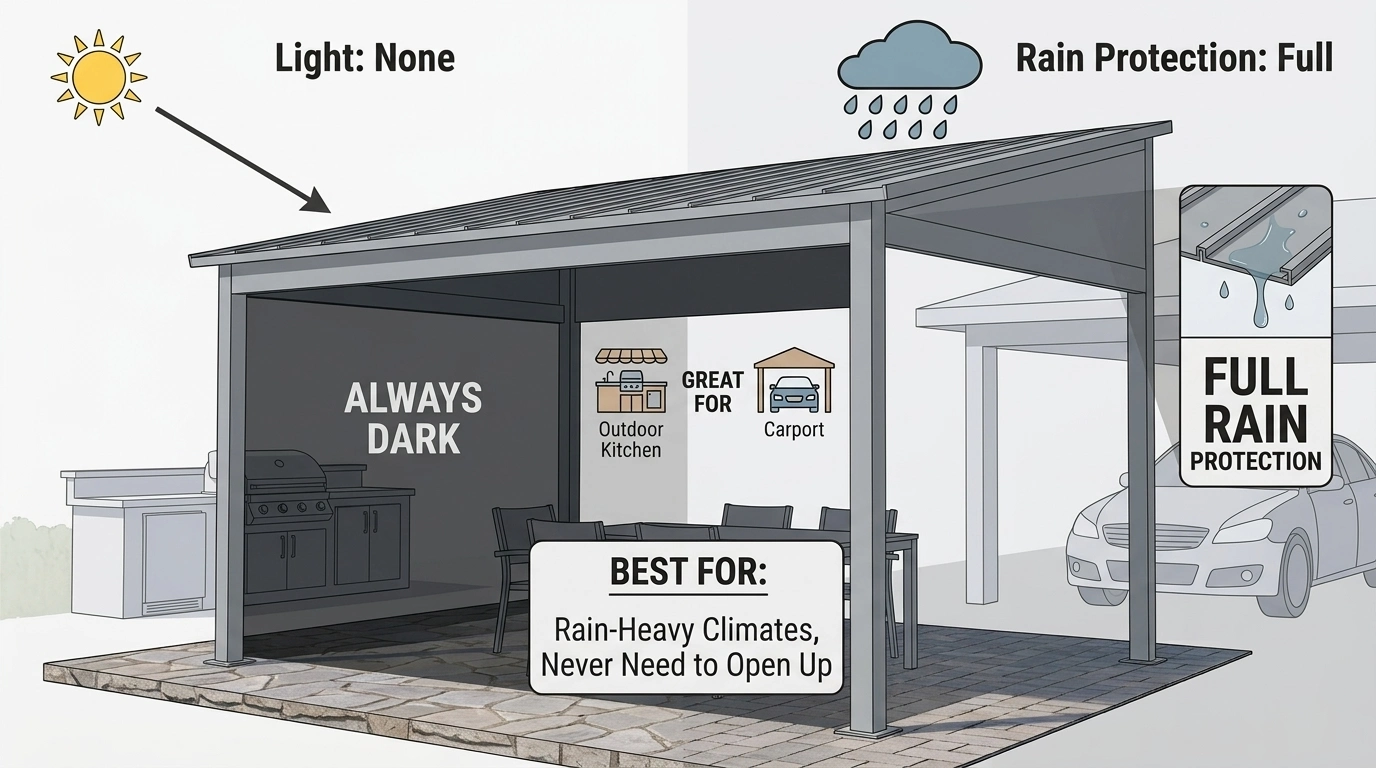
Permanent metal or aluminum panels that never open. Full rain protection, all the time. But you can't open it for sunshine — it's always shaded, always dark underneath. Great for outdoor kitchens or carports, less ideal if you want flexibility.

  • Rain protection: Full
  • Light: None
  • Best for: Outdoor kitchens; carports; rain-heavy climates where you never need to open up

Motorized Louvered Roof

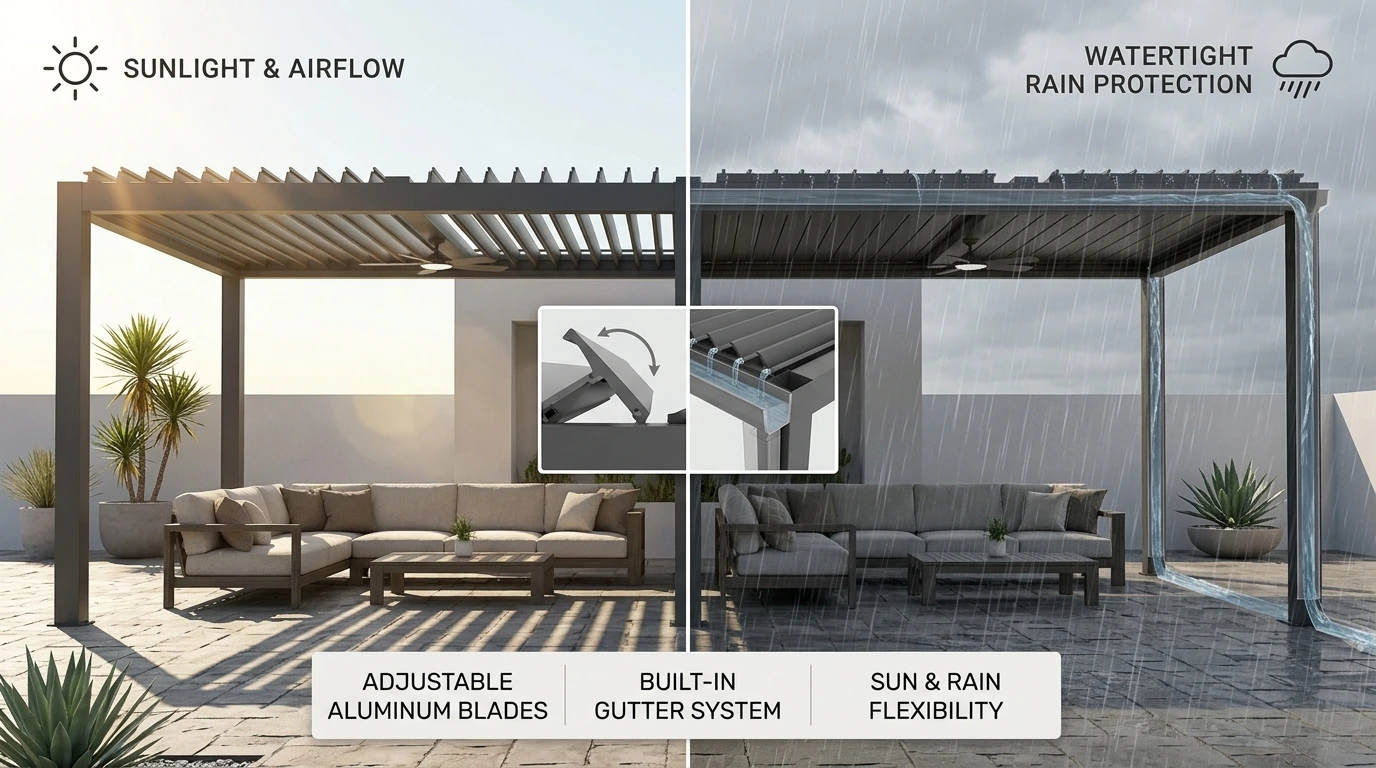
Adjustable aluminum blades that rotate from fully open (sunlight and airflow) to fully closed (watertight rain protection). Built-in gutters channel rain into the frame posts. The only roof type that does both — sun when you want it, rain protection when you need it.

  • Rain protection: Full (when closed)
  • Light: Adjustable
  • Best for: Year-round outdoor use; homeowners who want flexibility; premium outdoor living

Why Louvered Roofs Win for Wall-Mounted Installations

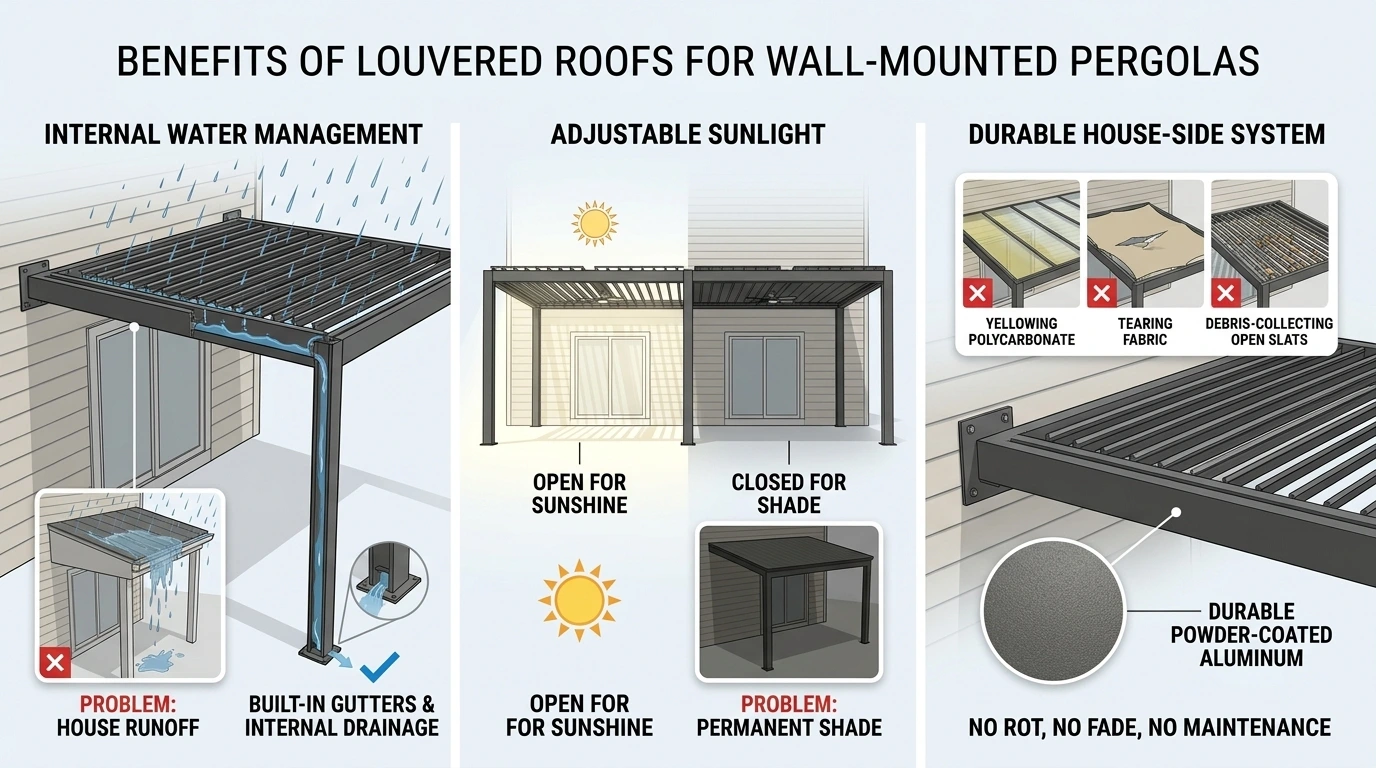
A louvered roof isn't just the best general pergola roof — it's particularly the best choice for a wall-mounted pergola, for three reasons:

1. Water management is simpler. When a roof attaches to your house, rain runoff becomes a problem. A louvered roof channels water into built-in gutters that run through the frame and drain at the base of the posts. You don't need external gutters mounted to your siding — the system handles it internally.

2. You're not stuck with permanent shade. A solid roof attached to your house means the patio is always dark — even when you want sunshine. A louvered roof opens fully, letting sunlight flood the space when you want it, and closes when the afternoon sun gets too hot.

3. It ages better against the wall. Polycarbonate yellows. Fabric tears. Open slats collect leaves. A powder-coated aluminum louvered frame doesn't rot, doesn't fade, and doesn't need maintenance — which matters when it's bolted to your house exterior, not freestanding in the yard.

For more on how wall-mounted pergolas actually attach to your house, see our guide on how to attach a pergola to your house.

Solar Louvered Roof: The Next Level Up

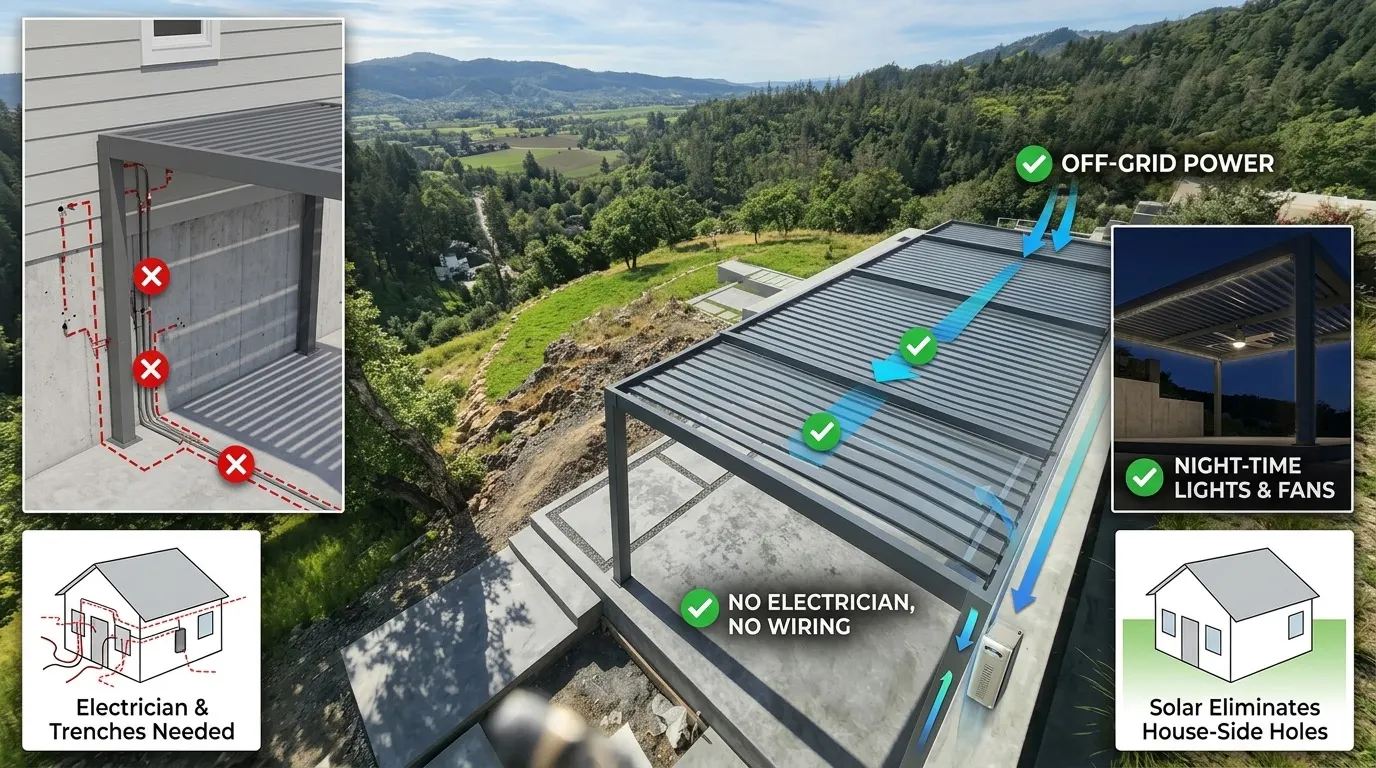
A standard louvered roof requires electrical wiring to power the motor and any lights or fans. That means hiring an electrician, running conduit, and possibly trenching across your patio.

A solar louvered roof removes all of that. Solar panels integrated into the roof capture daylight and power the louver motor, built-in LED lights, and optional ceiling fans — completely off-grid.

What you get:

  • No electrician needed
  • No wiring across your patio
  • No monthly electricity bill for the pergola
  • Lights and fans run on stored solar energy after dark

For a wall-mounted pergola specifically, this is a big advantage. Running power to a freestanding pergola in the middle of the yard is one thing. Running conduit from your house to a wall-mounted pergola means cutting into your siding and drilling through exterior walls — more holes, more potential leak points, more cost. Solar eliminates that entire problem.

How to Choose Your Roof Type

Skip the product catalogs. Answer these three questions:

Q1: What's your climate?

  • Rain-heavy (Pacific Northwest, Southeast): You need full rain protection. Louvered or solid only. Fabric won't hold up.
  • Snow country (Midwest, Northeast, Mountain West): Look for snow load rating. Quality aluminum louvered systems handle 30+ PSF — enough for most winter conditions across the US. Polycarbonate and fabric won't survive heavy snow.
  • Sun-heavy and dry (Arizona, Southern California): All roof types work. The question is whether you want adjustability. A louvered roof opens for morning breeze and closes for afternoon heat.
  • Hurricane zone (Florida, Gulf Coast): Look for a 120+ mph wind rating. Fabric roofs are not an option.

Q2: What's your budget?

Q3: How do you actually use the space?

  • Dining and relaxing on summer evenings? Louvered roof — open for stars, close for bugs and light rain.
  • Outdoor kitchen with a built-in grill? Solid roof — permanent cover protects appliances.
  • Just need basic shade? Open slatted or budget fabric — simple and affordable.

Real Installation: Solar Louvered Wall-Mounted Pergola

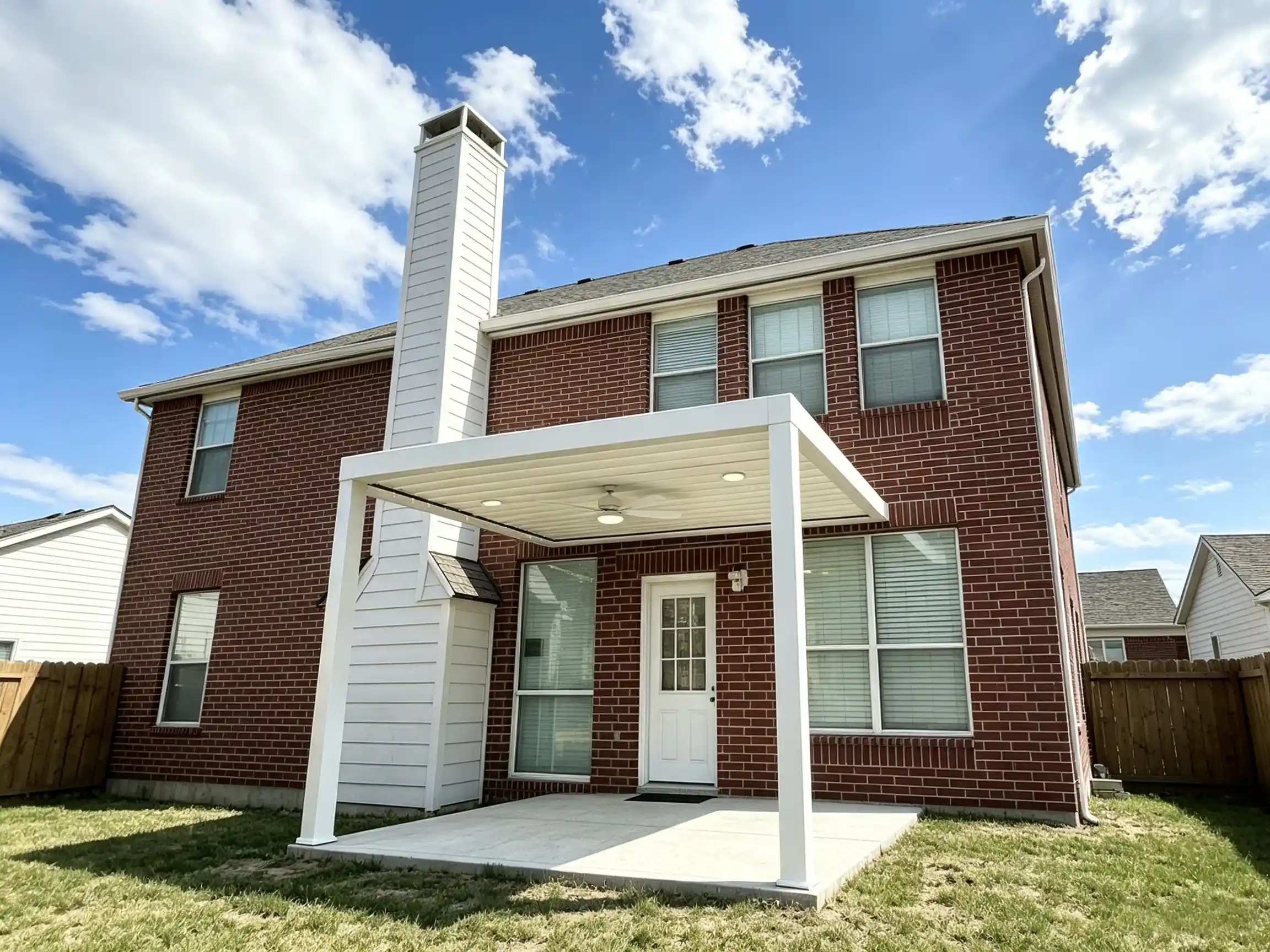
10x14 White Wall-Mounted Solar Louvered Pergola, Houston, TX

The homeowners had a small concrete patio directly outside their red brick exterior wall. They wanted a covered outdoor dining space that could handle Houston's sudden summer downpours and brutal midday sun.

A wall-mounted solar louvered pergola was the natural choice. The white frame matches the home's trim. The motorized louvers rotate from fully open (morning coffee with sunlight) to fully closed (afternoon thunderstorms). Integrated solar panels power the louvers and built-in lights — no electrician, no wiring across the patio. The built-in gutter system channels rain into the frame posts and drains at the base, keeping water away from the foundation.

Result: A seamless indoor-outdoor dining space used from March through November, with zero electrical work and zero monthly electricity cost.

For more real installations, see our pergola case studies.

Cost Breakdown

Here's what each roof type costs on a wall-mounted pergola, installed:

Roof TypeAttached (Installed)Best For
Open slatted (wood DIY kit)$1,500–$3,000Decorative shade, climbing plants
Retractable fabric$2,500–$6,000Light shade, mild climates
Polycarbonate$3,000–$7,000Budget rain cover, greenhouses
Solid fixed aluminum$4,000–$9,000Outdoor kitchens, carports
Motorized louvered (manual)$6,000–$12,000Adjustable sun and rain
Solar motorized louvered$8,000–$15,000+Premium off-grid outdoor living

What drives the price: A solar louvered roof costs more upfront, but it eliminates the electrician, wiring, and monthly electricity cost. Over 10 years, the solar system pays for itself — and the aluminum frame outlasts wood by decades.

Exact pricing depends on size, options, local labor, and installation complexity. Request a quote for a precise estimate for your specific space.

FAQs

Can you add a roof to an existing wall-mounted pergola?

Technically yes, but it depends on the frame. Most wood or budget aluminum pergolas aren't engineered to support the extra weight of a louvered roof system. It's usually cheaper to install a new, fully-engineered pergola with the roof included than to retrofit an existing one.

Do wall-mounted pergolas with roofs need permits?

Almost always, yes. Because the structure attaches to your house and adds a roof system, it's classified as a structural alteration, not a simple accessory. Call your local building department before you start.

How do louvered pergolas drain rain?

Quality aluminum louvered pergolas have integrated gutter channels built into the frame. When the louvers close, rain runs into the gutter channels, flows down through the hollow frame posts, and drains at the base. No external gutters needed, and no water dripping off the edges.

What's the snow load rating for an aluminum louvered pergola?

Premium aluminum louvered pergolas are typically rated for 30 PSF of snow load — enough for most winter conditions across the US. The exact rating depends on size, span, and engineering. Always confirm the snow load rating with the manufacturer for your specific region.

Can a solar louvered pergola work without wiring to my house?

Yes. That's the whole point. Solar panels on the roof capture daylight and power the louver motor, lights, and fans. A battery stores energy for evening use. Zero connection to your home's electrical system required.

Which roof type lasts the longest?

Aluminum louvered roofs. The powder-coated frame doesn't rust, rot, or fade — 25+ year lifespan with minimal maintenance. Polycarbonate lasts 5-10 years. Retractable fabric needs replacement every 5-8 years.

Is a wall-mounted pergola with a roof better than a patio cover?

It depends. A permanent patio cover is a roof attached to your house — no posts, no open design. A louvered wall-mounted pergola has two outer posts and adjustable louvers that open. You get flexibility (open for sun, closed for rain) that a fixed patio cover can't offer. For more on the differences, see our wall-mounted pergola buying guide.

How long does installation take?

A professional team can install a solar louvered wall-mounted pergola in 3-5 hours. No electrician needed because the system runs on solar. Site prep (concrete footings for the outer posts) is the longest part.

Conclusion

A wall-mounted pergola with an open slat roof is just decoration. With a proper roof, it becomes an outdoor room you can actually use — rain or shine.

If you want the most flexible, lowest-maintenance, best-looking option, a motorized louvered roof is the answer. It adjusts to the sun, closes for rain, and lasts for decades without the maintenance of wood or the fragility of fabric.

And if you want to skip the electrician, the wiring, and the monthly bill, a solar louvered roof takes it one step further — fully off-grid, fully integrated, and ready to use the day it's installed. Browse our solar louvered wall-mounted pergolas to see which size fits your patio.

Back to top of page
crossmenu