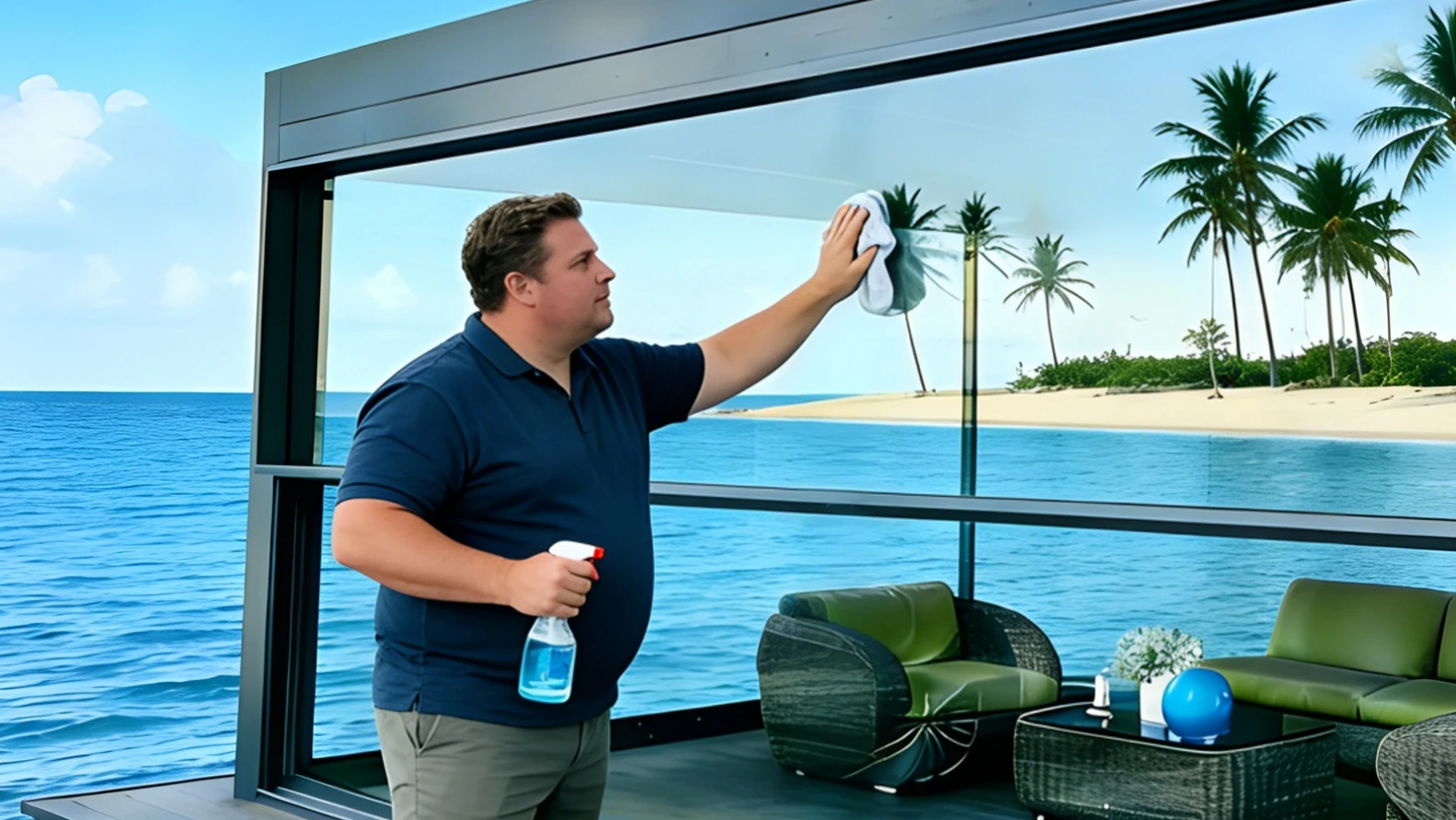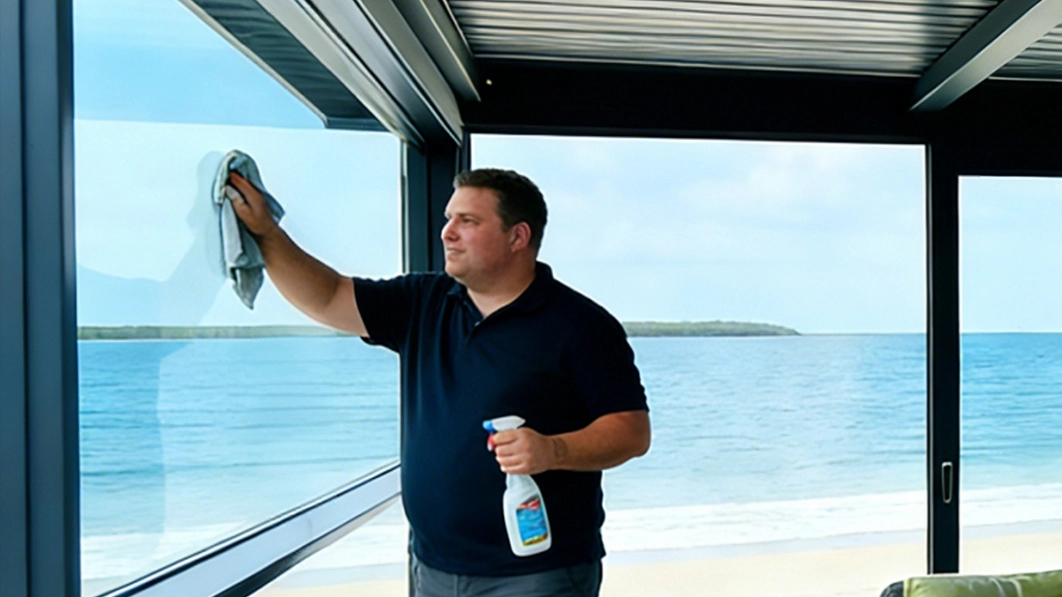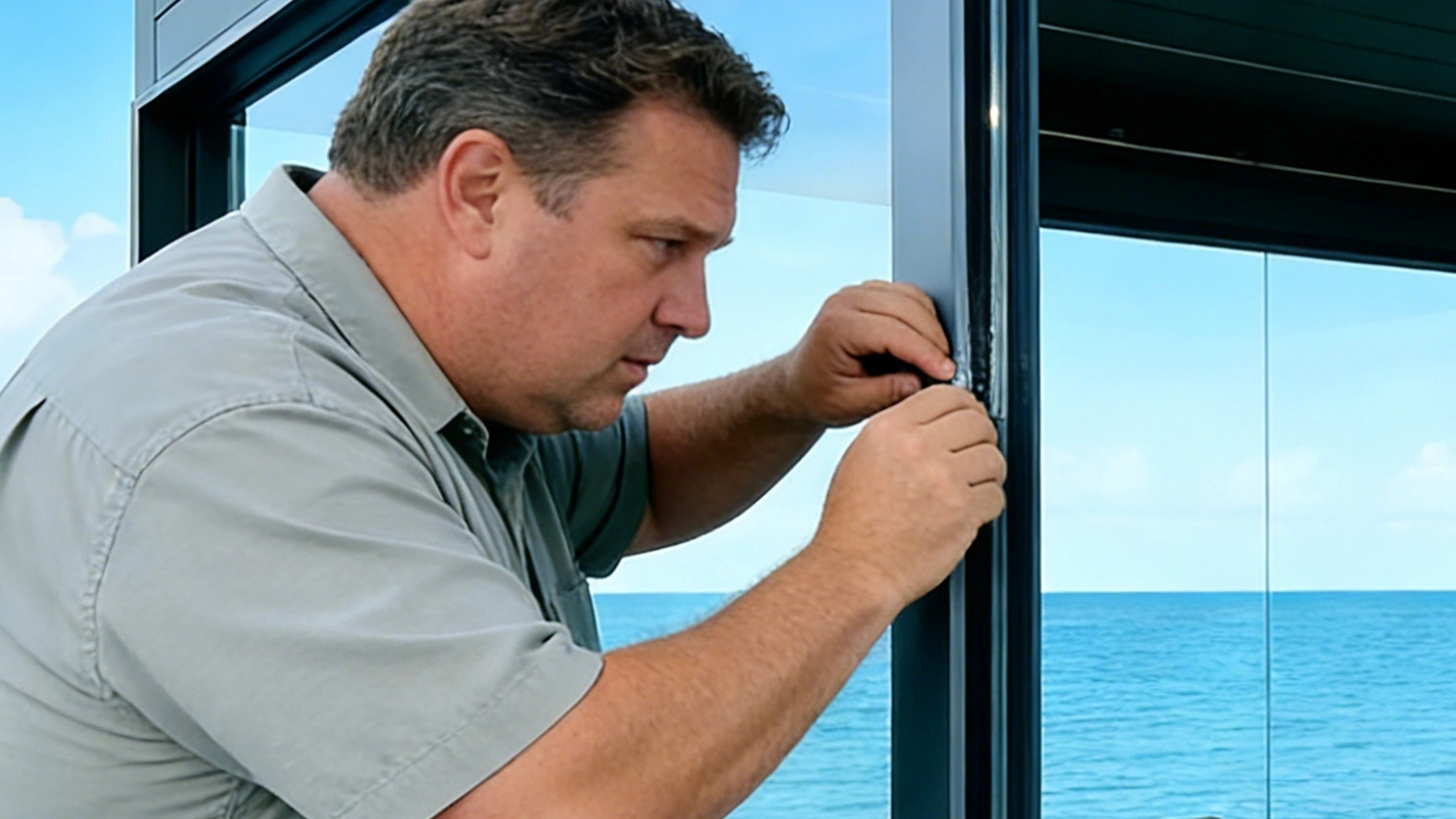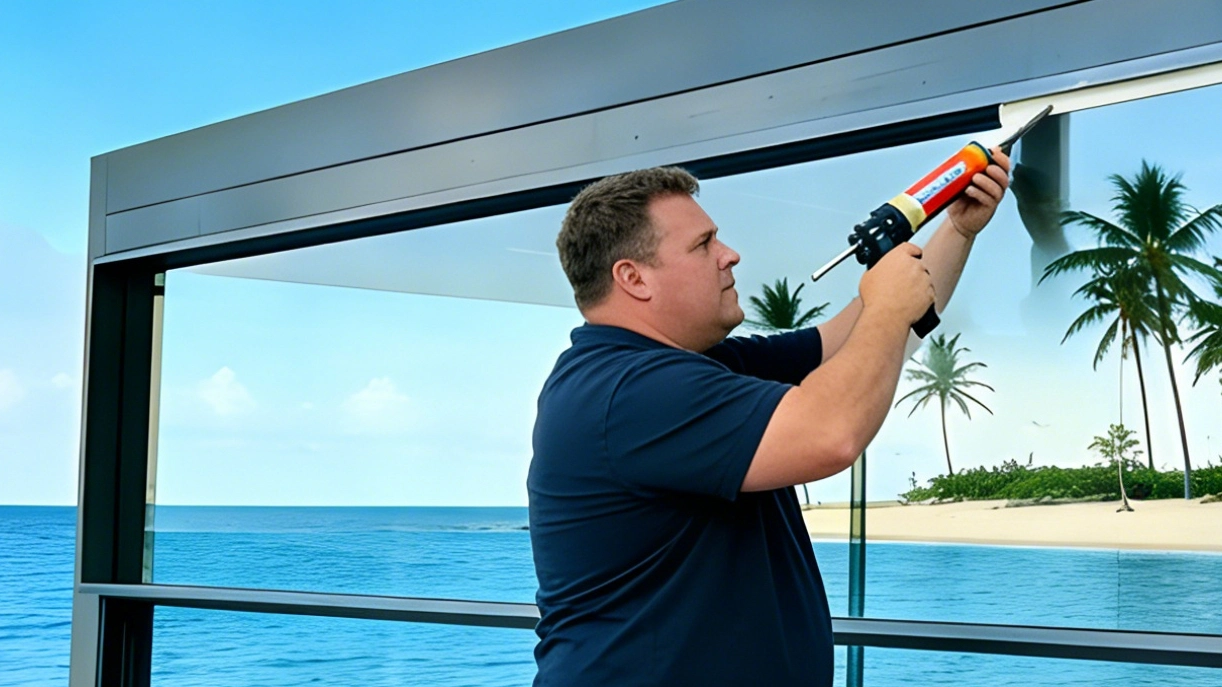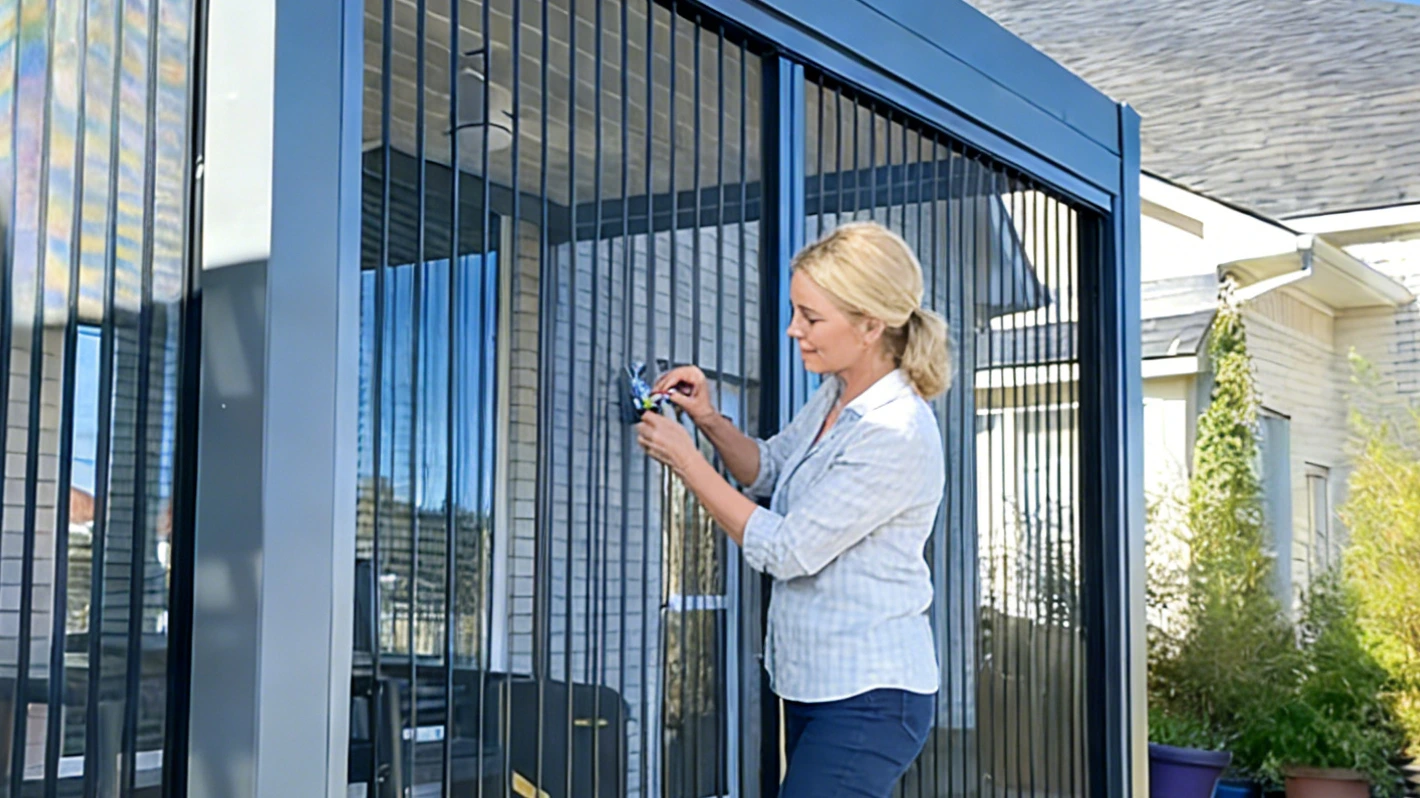
Whether your enclosed pergola features retractable screens, privacy walls, sliding glass doors, or folding screens, daily use, weather, and environmental factors will inevitably cause wear and tear on these structures. Damaged mesh screens, jammed louvers, leaking glass doors, or rusted hinges not only compromise usability but can lead to costly replacements if neglected.
This guide offers customized maintenance recommendations for popular enclosed pergola privacy solutions, including climate-adaptive techniques (coastal/harsh/mild climates) and troubleshooting solutions for common issues. If you haven't selected a privacy solution yet, please first consult our core guide, Enclosing a Pergola Ideas: Transform Your Outdoor Spaces (Complete Guide), to choose the right option. Want to see how well-maintained enclosed pergolas perform in real homes? Explore our pergola case studies to view user maintenance feedback and long-term performance demonstrations.
2. Maintenance for Pergola Privacy Screens
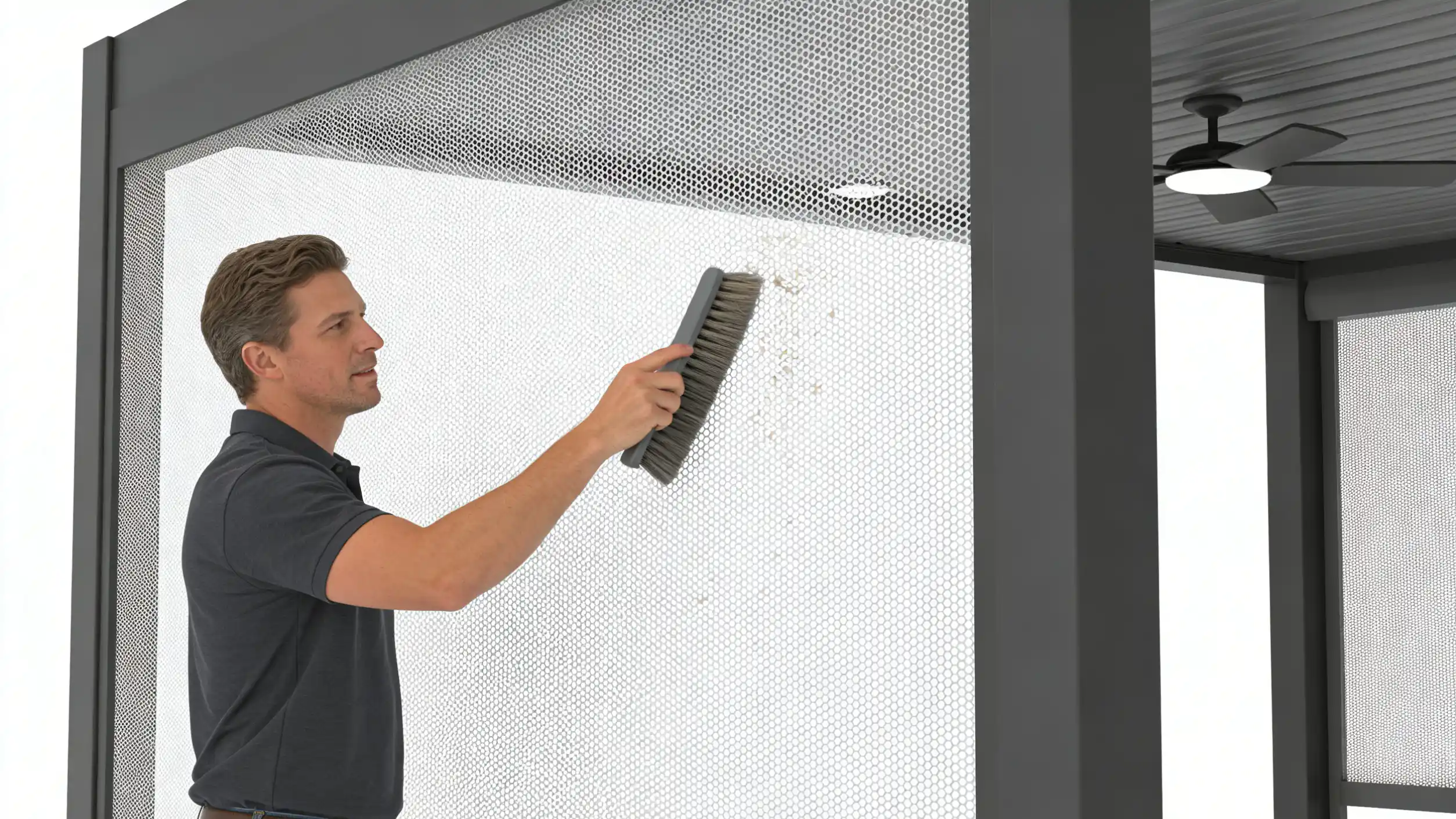
(1) Start with a
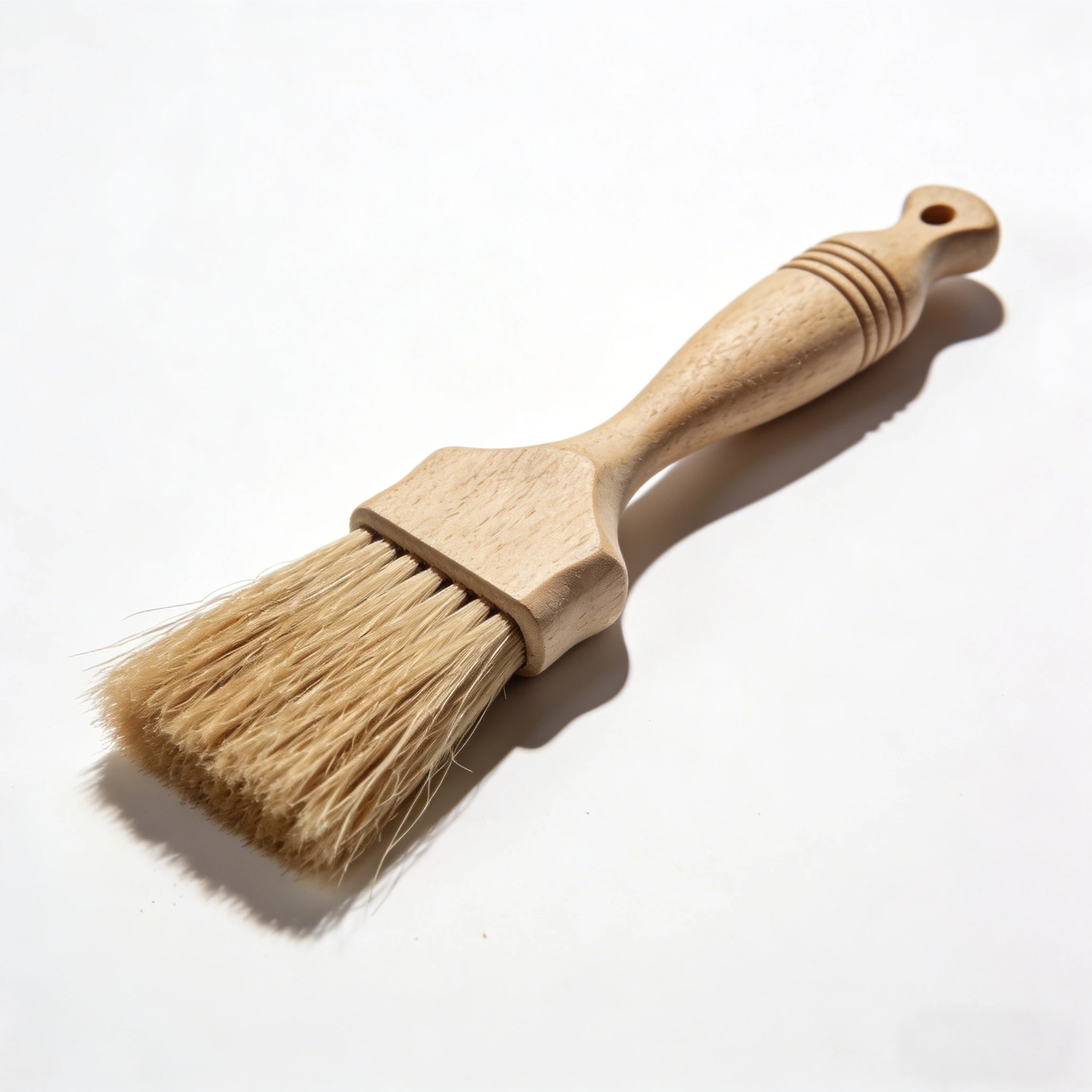
soft-bristle brush to sweep loose debris (avoid scrubbing hard, which can tear mesh).
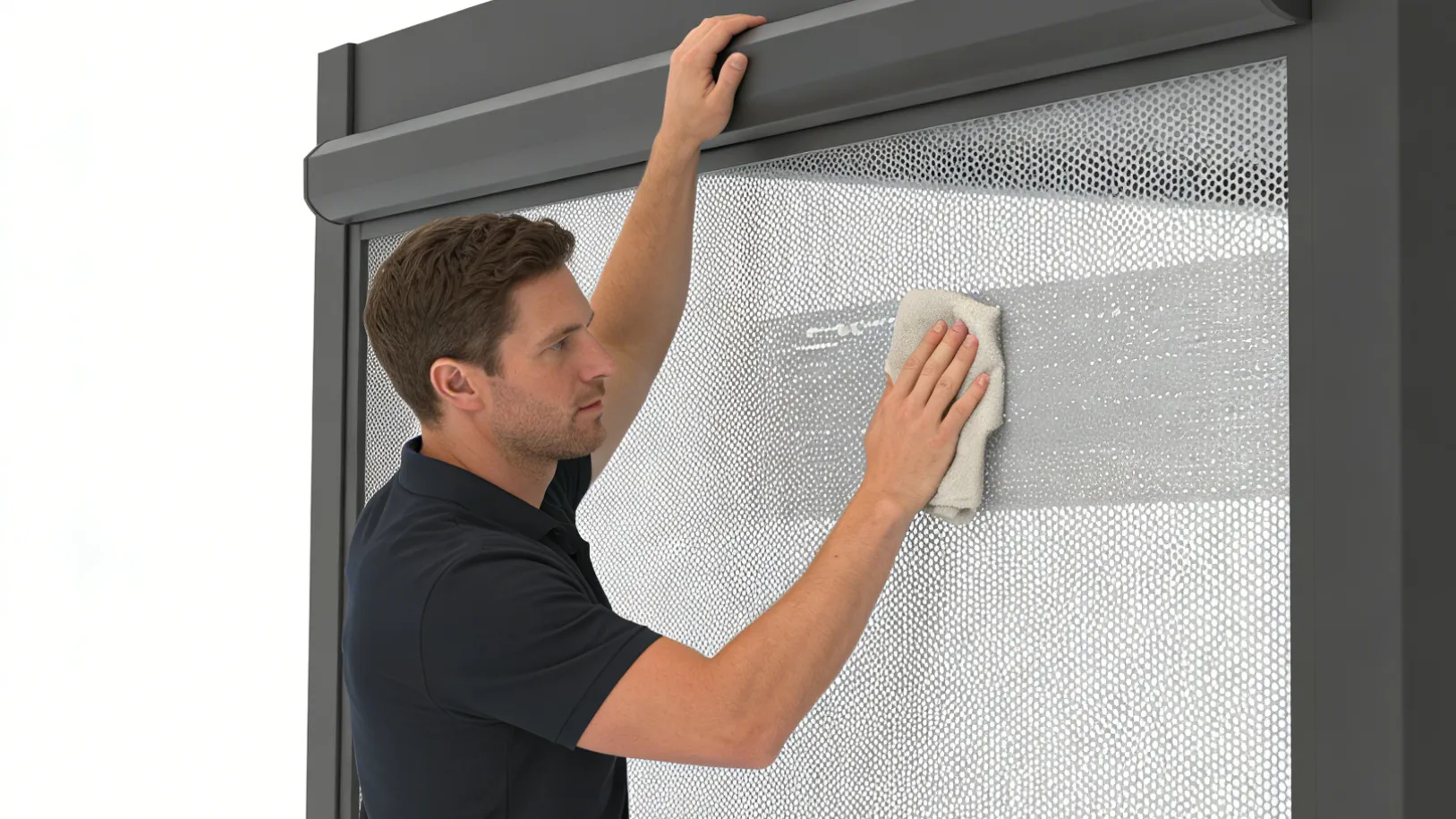
(2) Then wipe with a microfiber cloth dipped in mild soapy water.
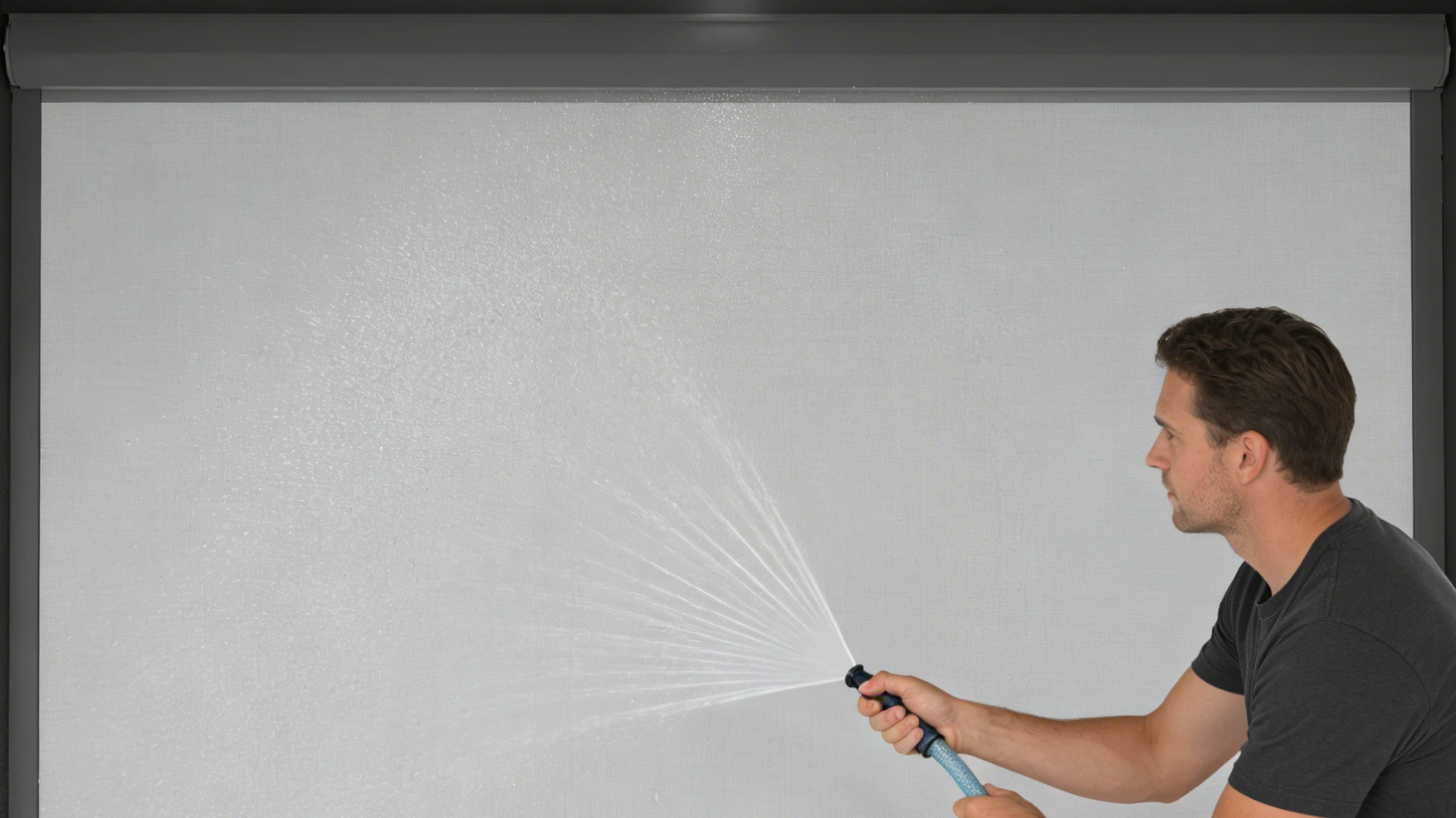
(3) Rinse lightly with a low-pressure hose (high pressure will damage mesh or fabric).
(4) Air-dry completely before rolling up to prevent mold and mildew growth—moisture trapped in rolled screens is a common cause of fabric rot.
2.2 Fabric & UV Protection
Sunlight is the biggest enemy of screen fabric—UV rays cause fading and brittleness.

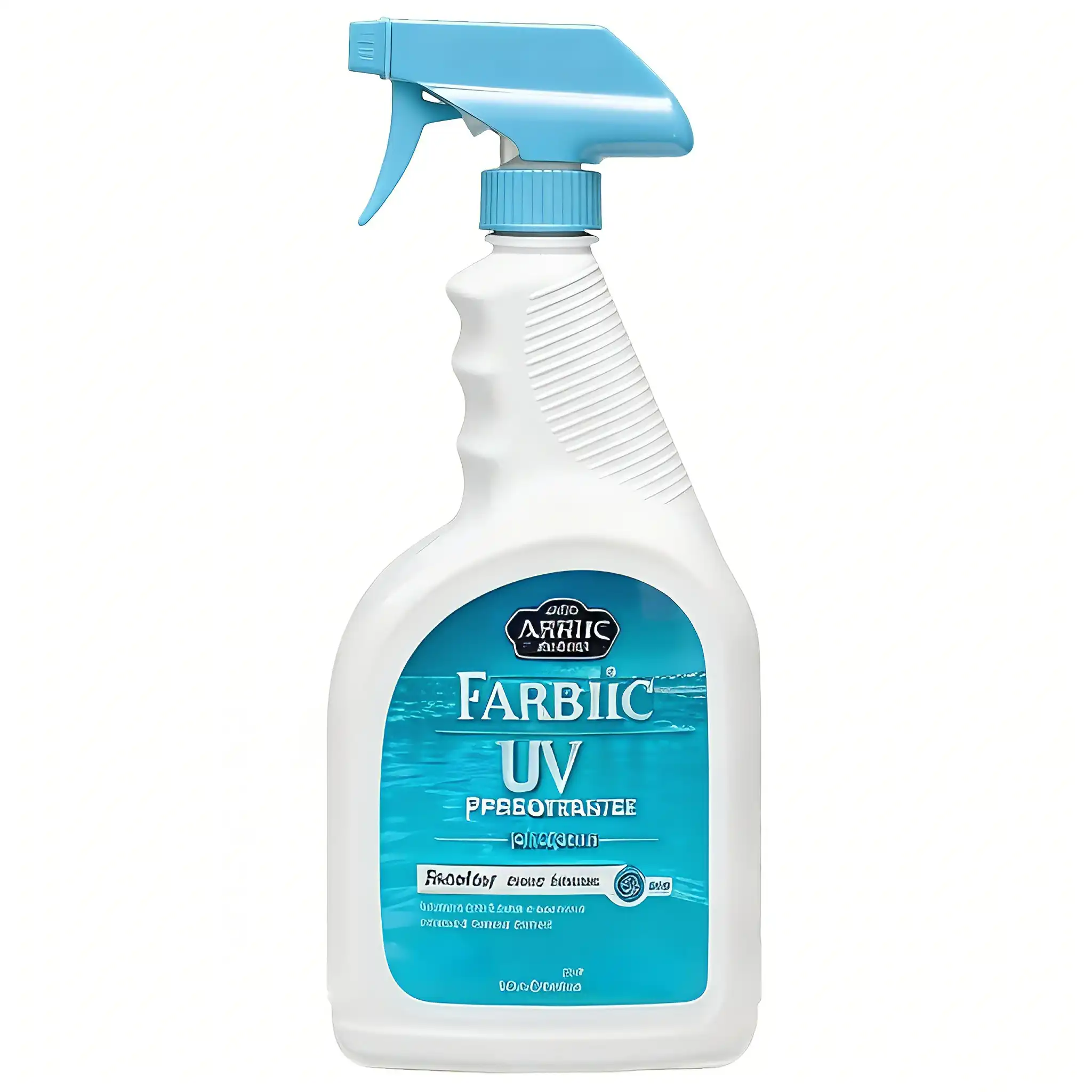
- Apply a UV-protective spray (specifically designed for outdoor fabrics) annually in spring to extend lifespan.
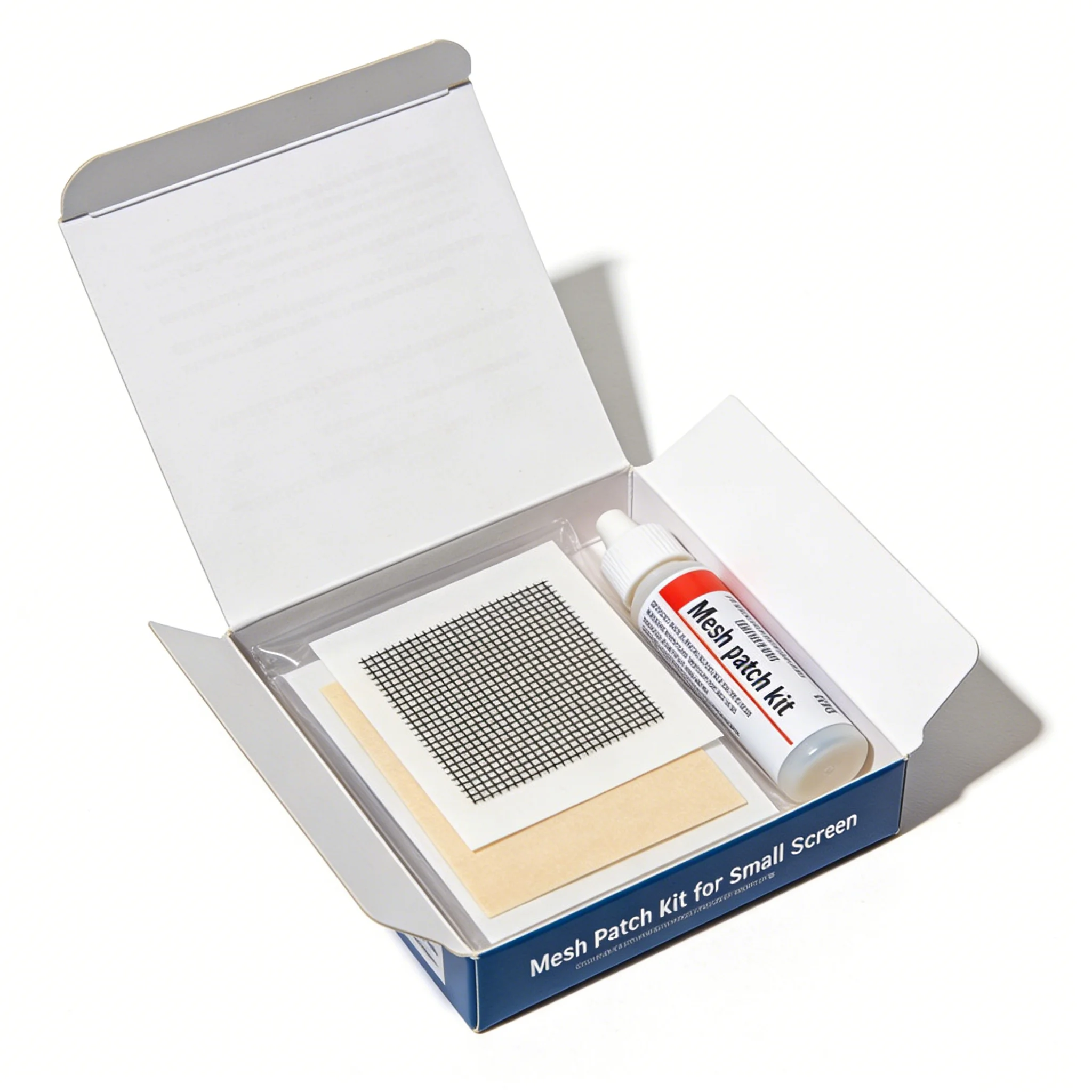
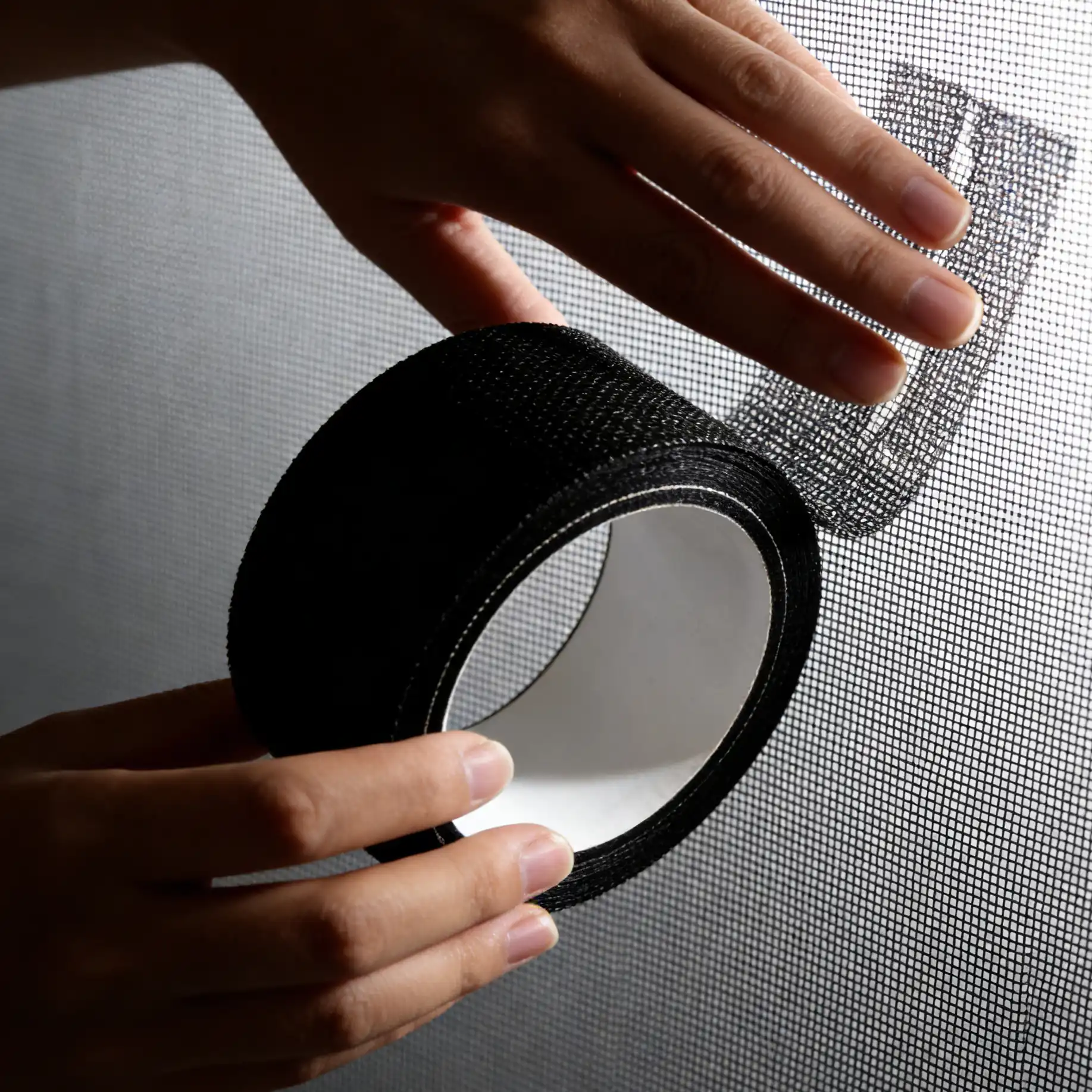
- For small tears (less than 2 inches), repair immediately with a mesh patch kit (follow the kit’s instructions to ensure a tight seal).
- For larger tears or severely faded fabric, replace the screen panel—delaying replacement can lead to further damage from wind or rain.
2.3 Electric/Solar/Manual Privacy Screen Maintenance
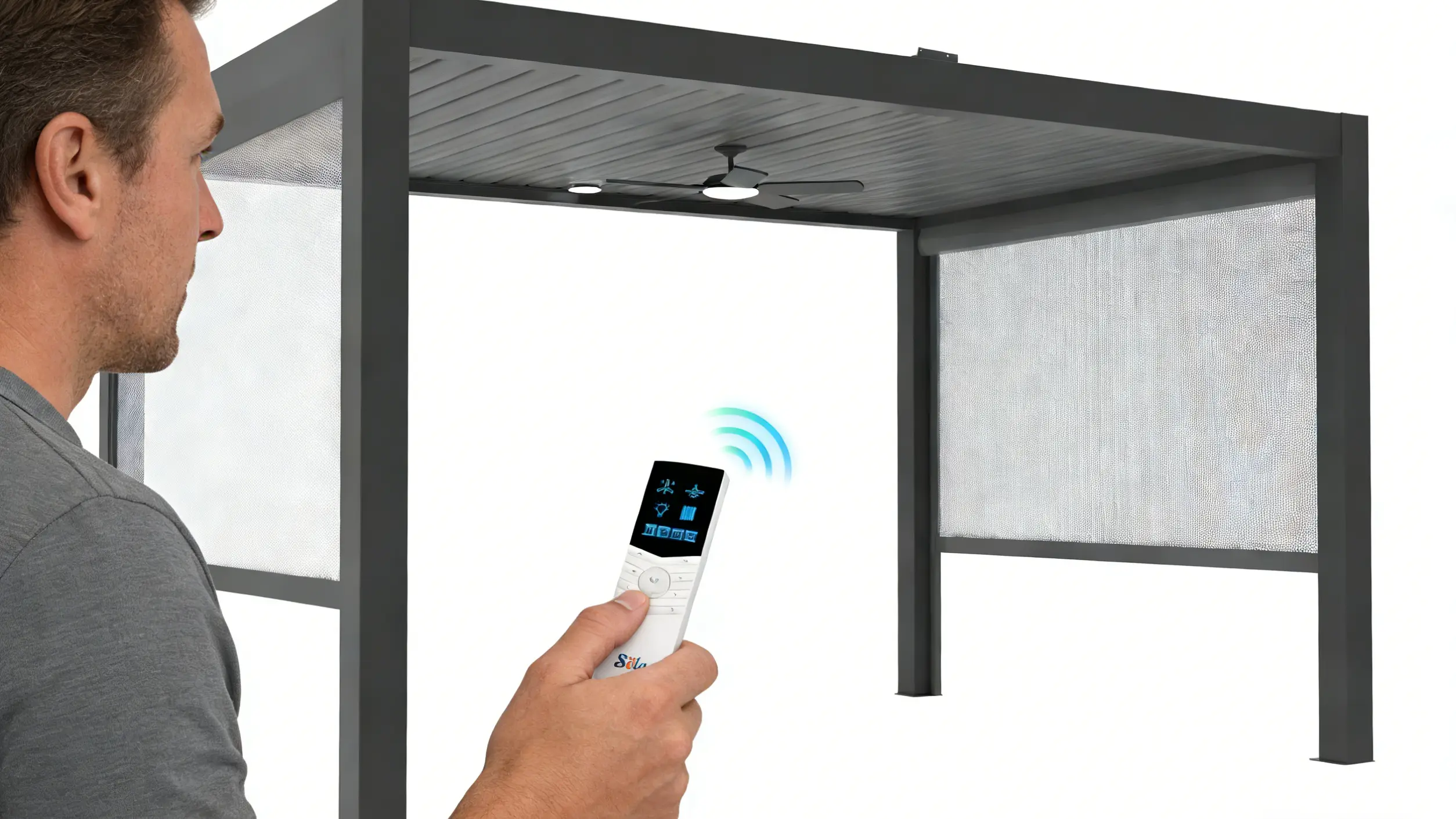
(1) Electric Privacy Screens:
- Inspect wiring quarterly for loose connections, fraying, or rodent damage.
- Wipe the motor housing with a dry cloth to remove dust.
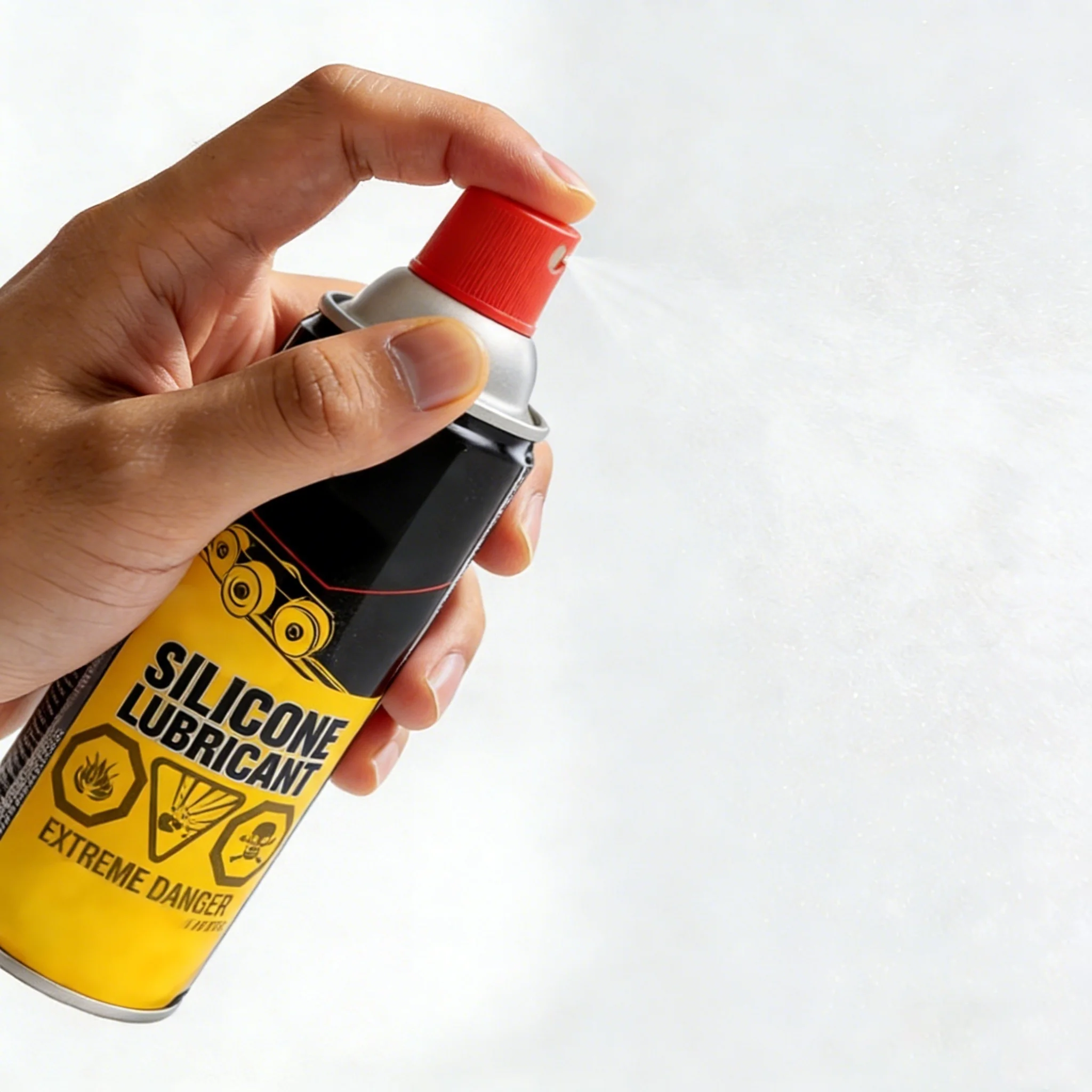
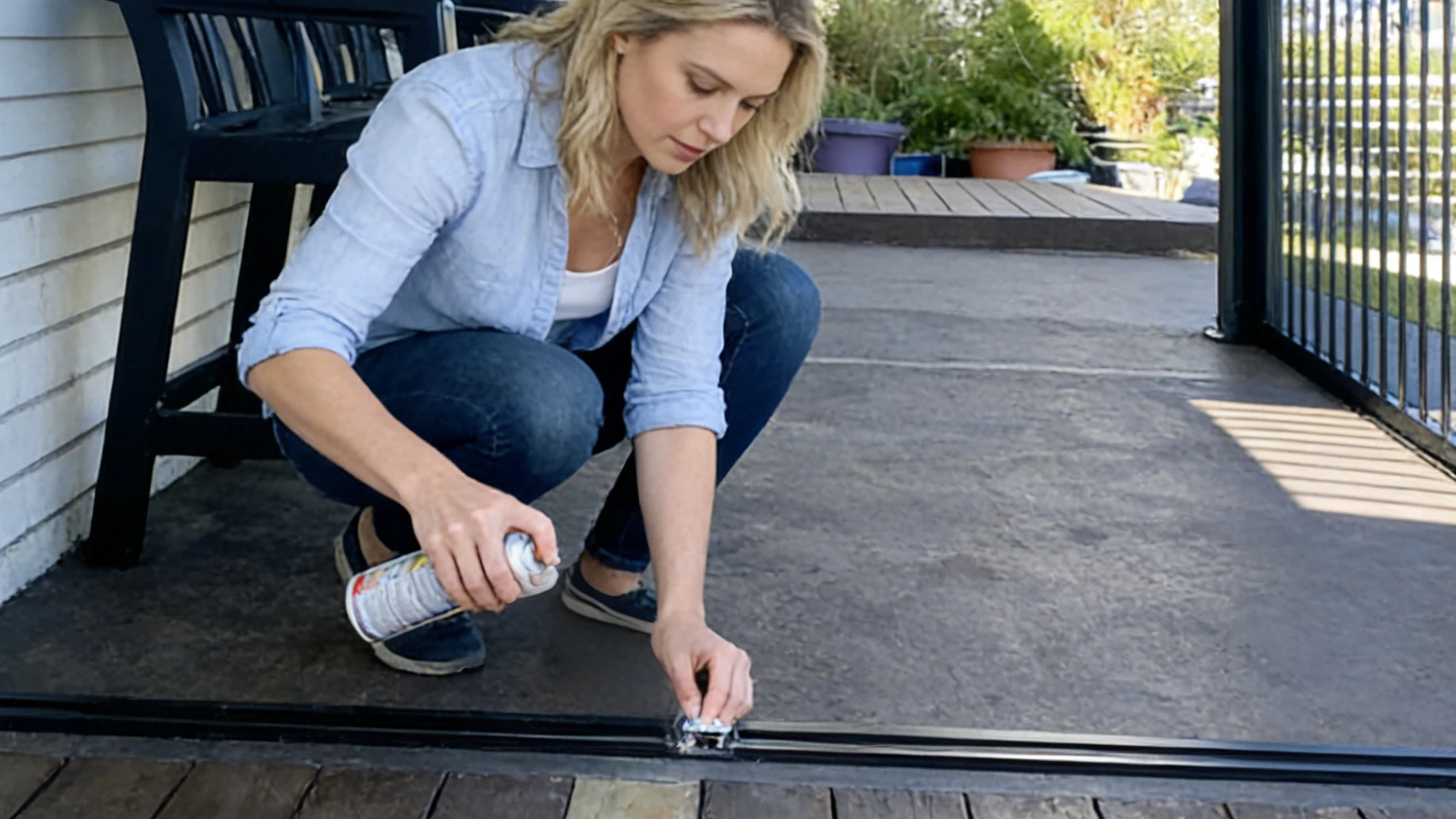
- Lubricate the roller mechanism twice a year (spring and fall) with silicone lubricant.
(2) Solar Privacy Screens:
- Wipe solar panels monthly with a dry microfiber cloth to remove dust, pollen, or bird droppings. (dirty panels reduce energy capture by up to 30%)
- Check the battery connection quarterly to ensure it’s tight and free of corrosion. If the screen moves slowly or stops unexpectedly, check the solar panel’s alignment before assuming a motor issue.
(3)Manual Privacy Screens:
- Lubricate rollers and levers twice a year with silicone lubricant to prevent jamming.
- Clean the bottom track monthly with a small brush (like a toothbrush) to remove dirt and debris.
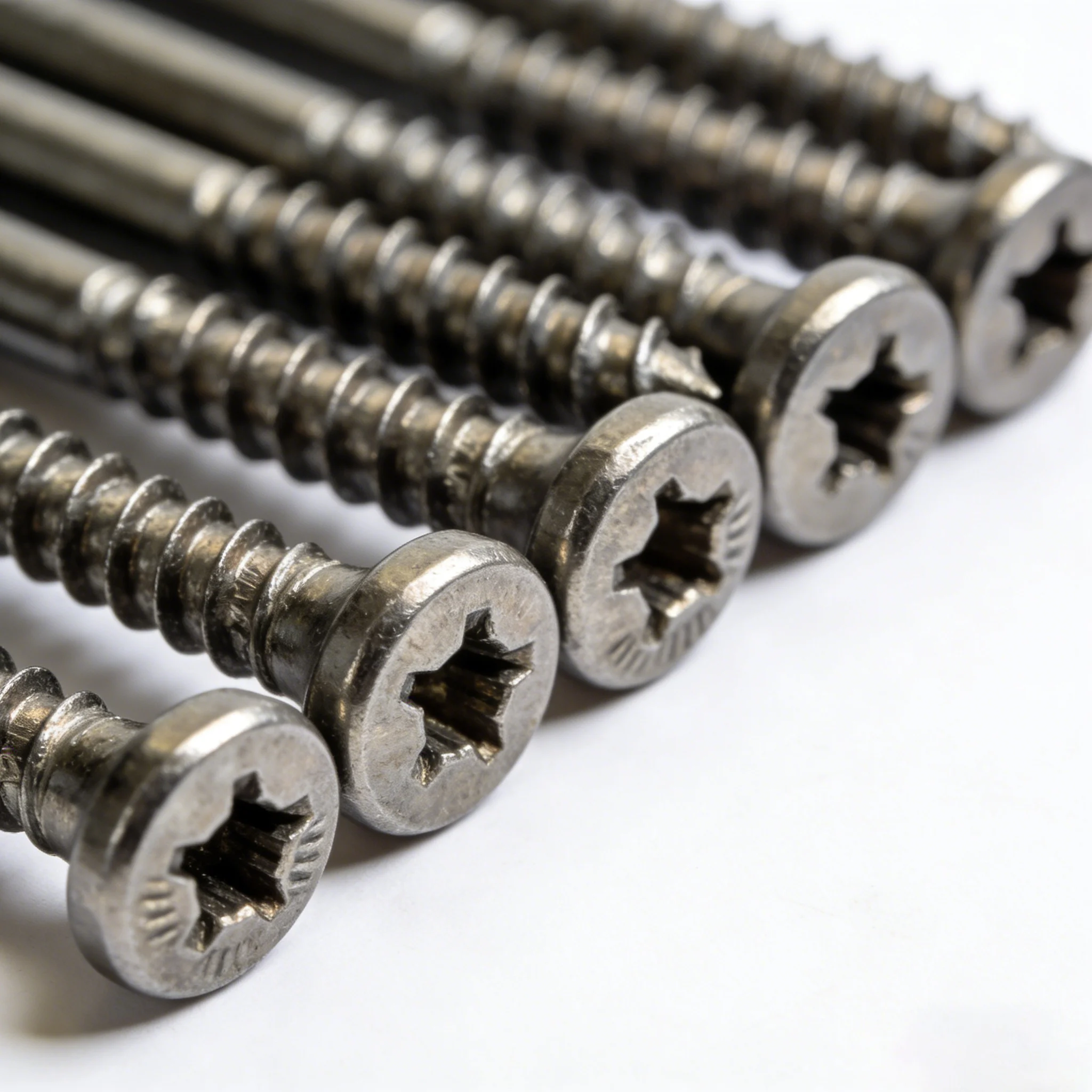
- Tighten any loose screws on the roller frame quarterly to avoid structural wobble.
3. Maintenance for Pergola Privacy Wall
3.1 Louvered Wall Care
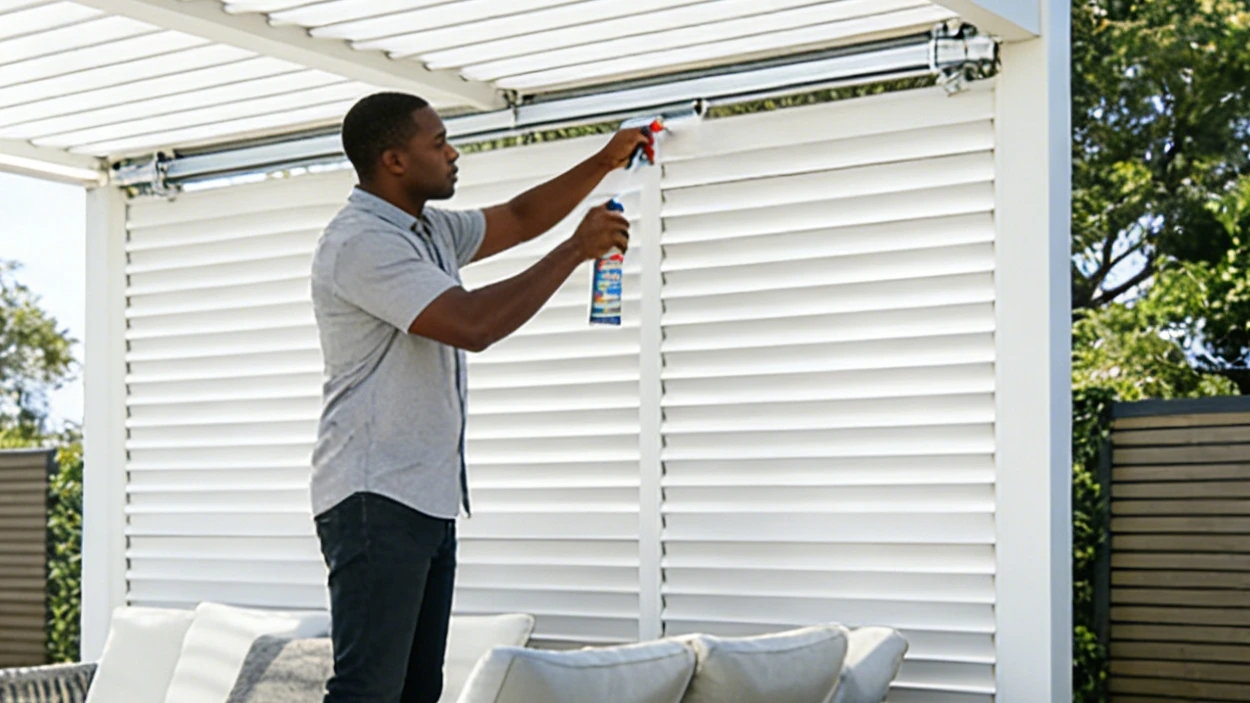
Louvered walls require regular maintenance to preserve their adjustable functionality.
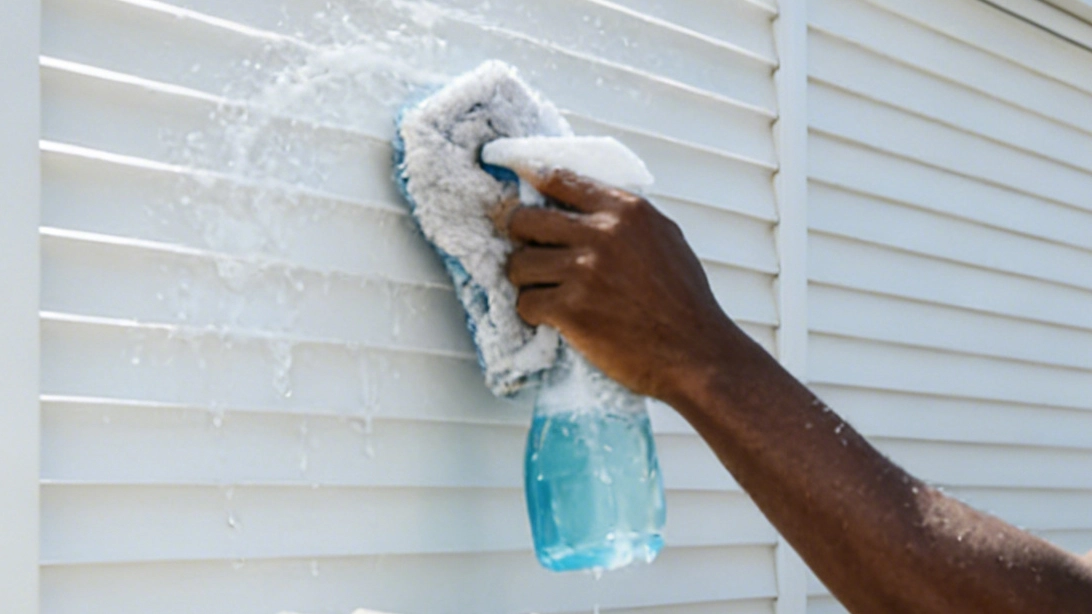
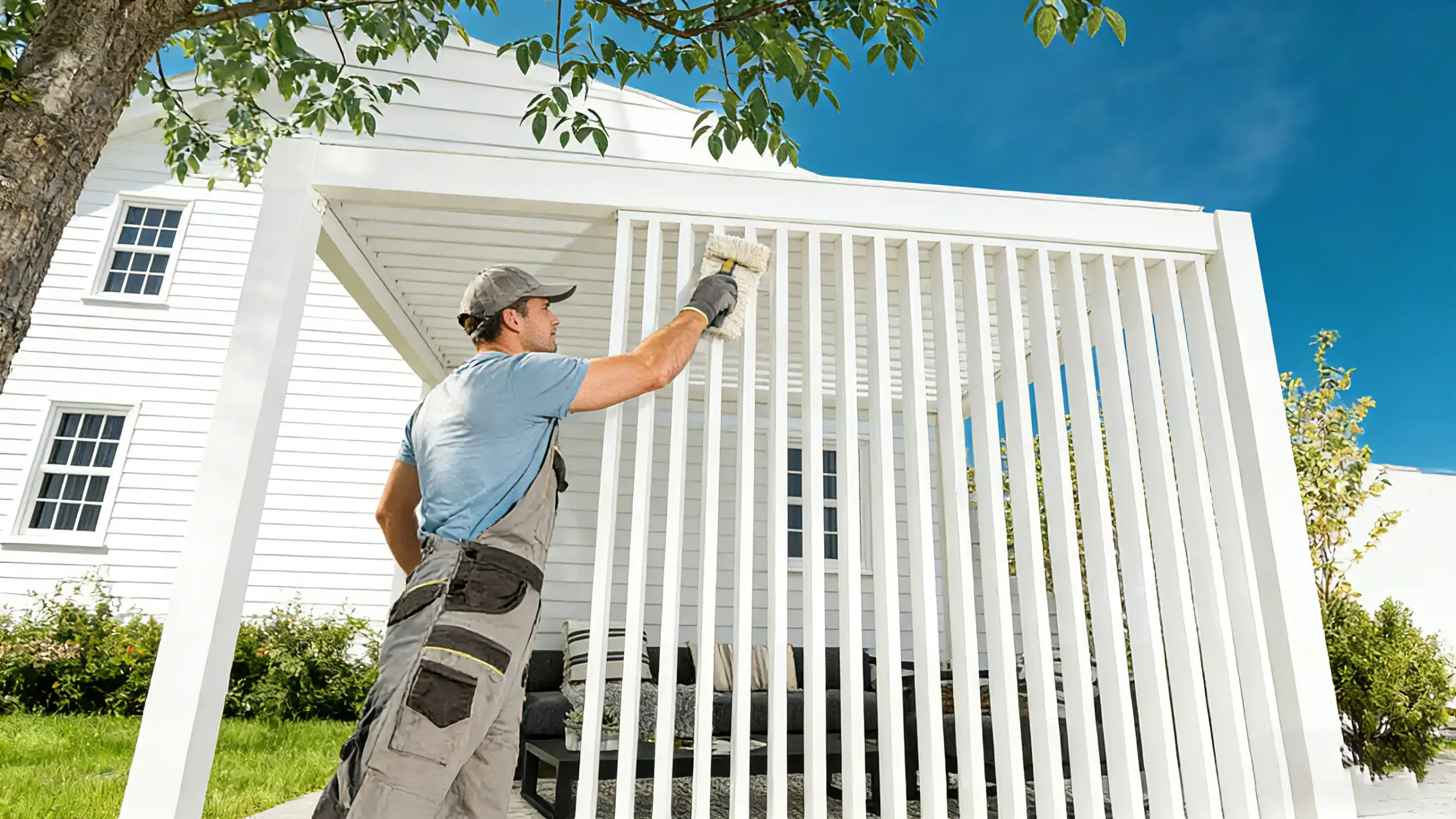
(1) Wipe the slats with a microfiber cloth dampened in mild soapy water.
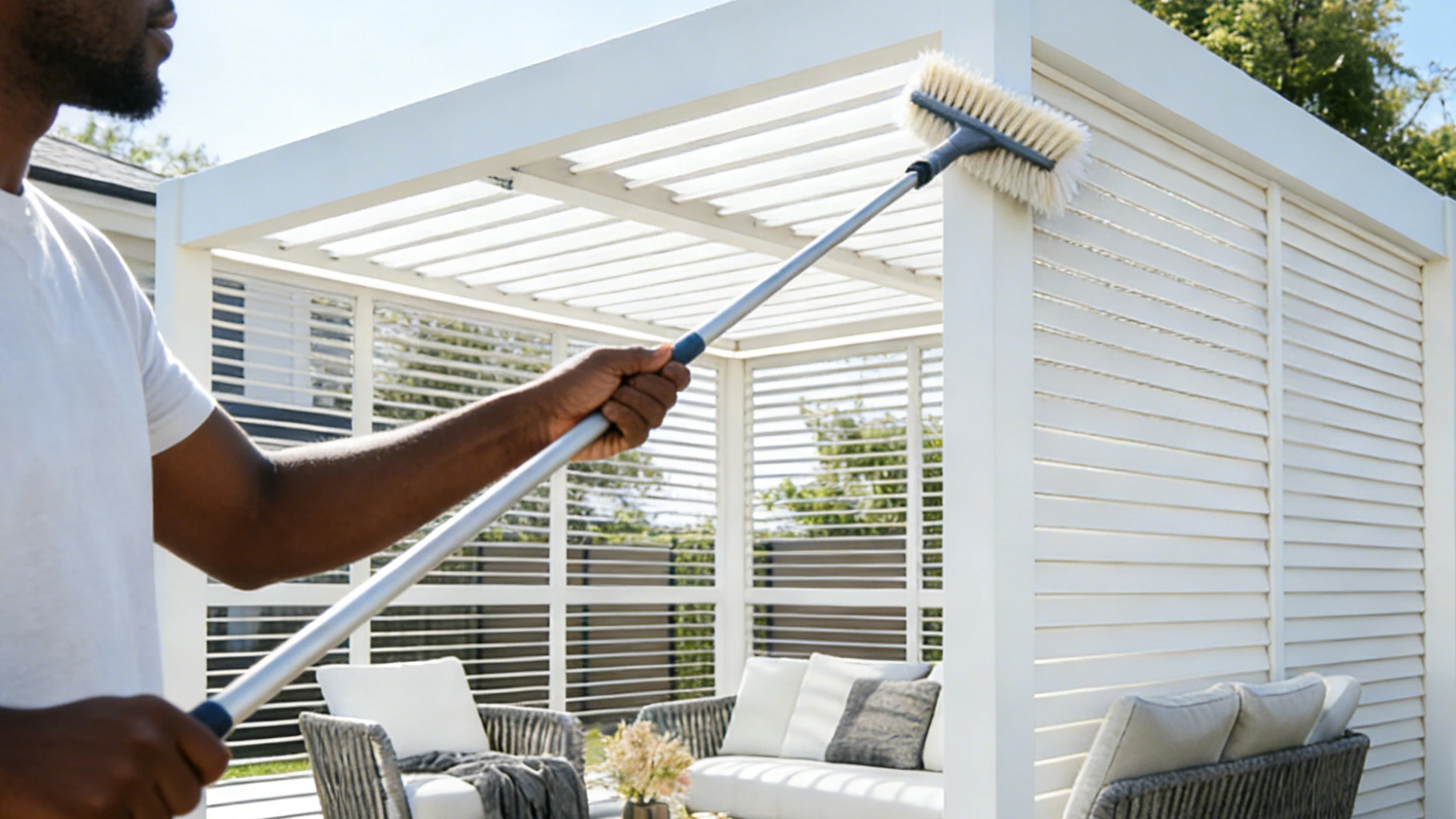
(2) Use a long-handled soft-bristle brush to clean hard-to-reach areas.
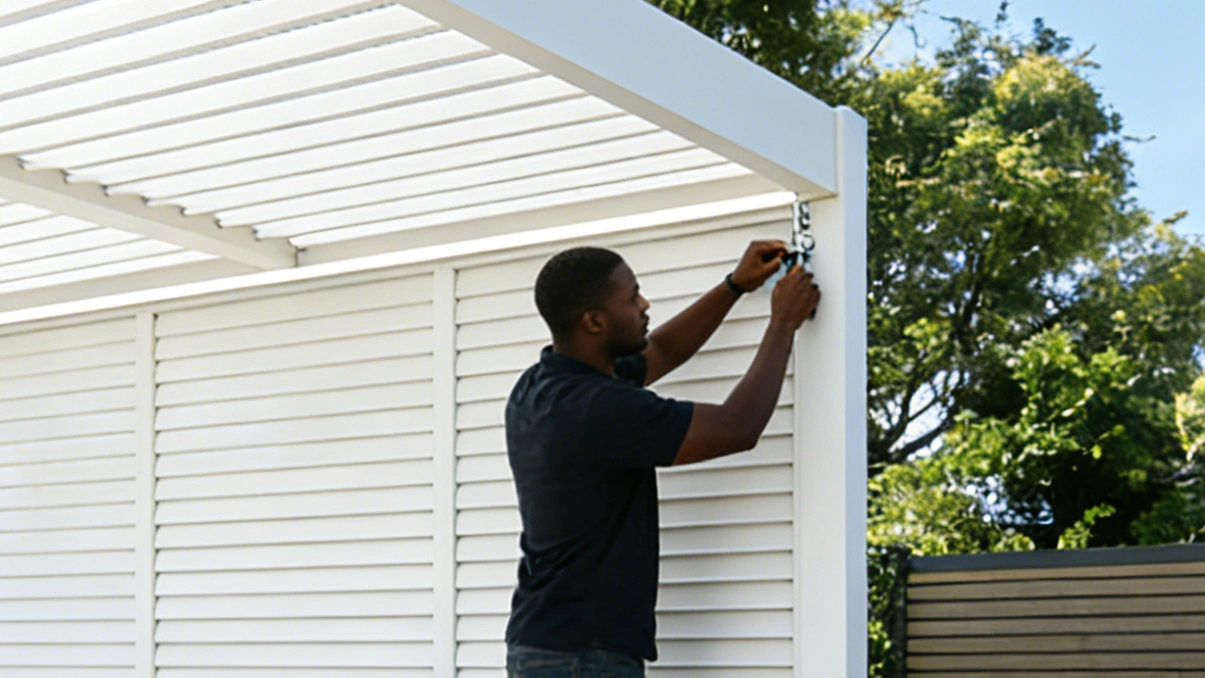
(4) Tighten loose components and replace corroded parts with corrosion-resistant alternatives.
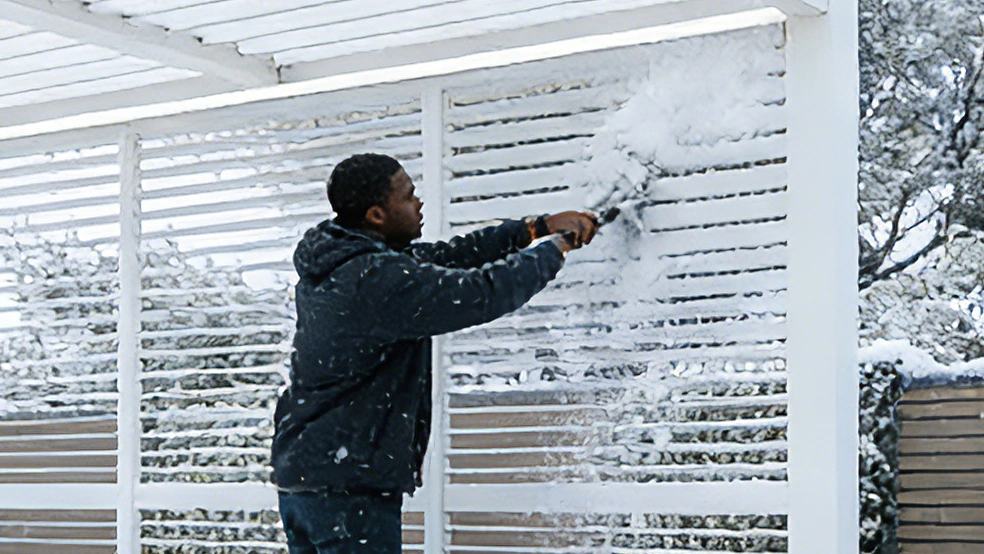
(5) In winter (cold regions), promptly remove snow accumulation from the blinds. Heavy snow can cause slats to warp or break.
3.2 Solid Wall Care
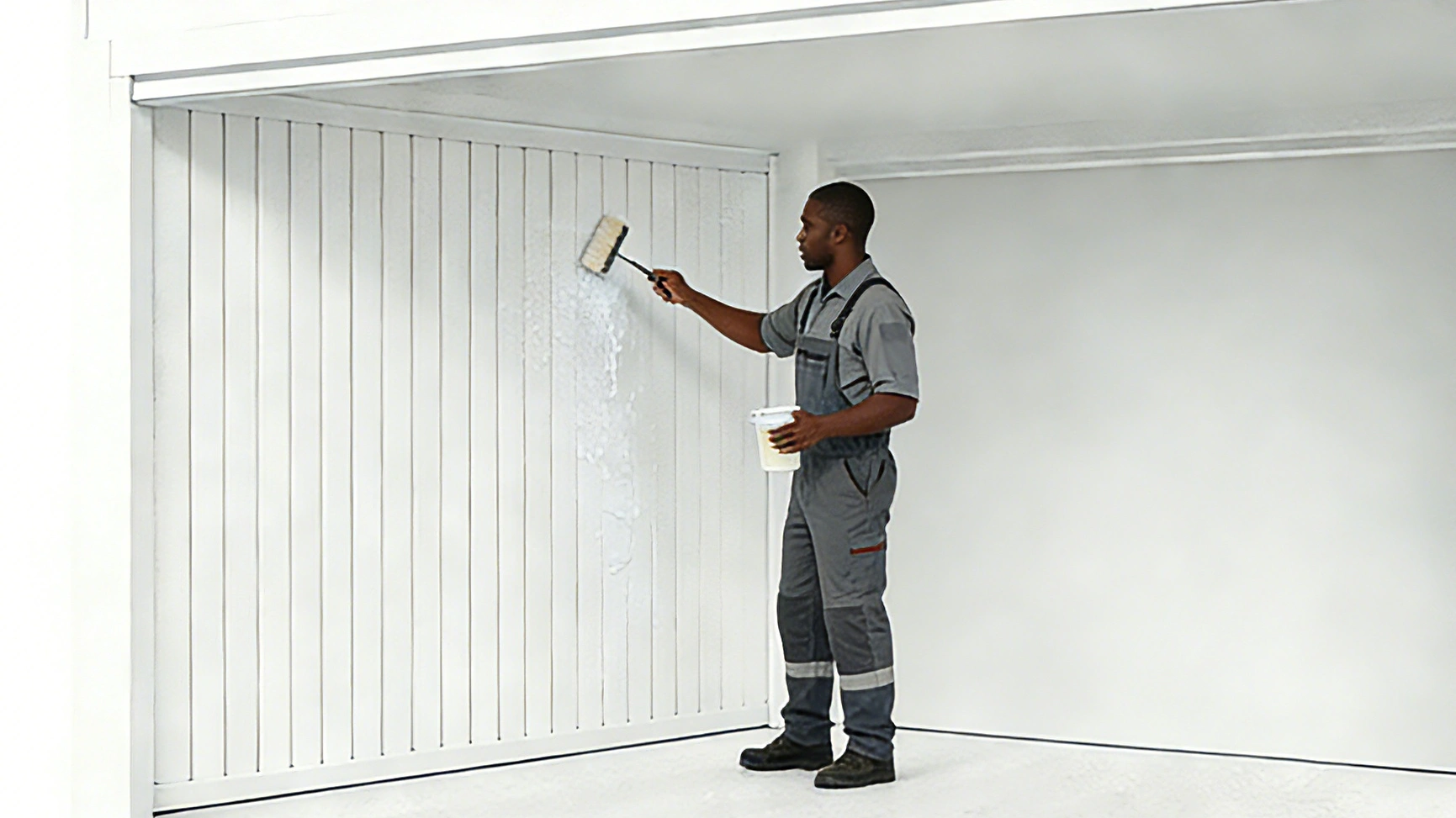
Solid privacy walls (typically made of wood, vinyl, or aluminum) require annual deep cleaning:
(1) Wash with mild soapy water and a soft brush.
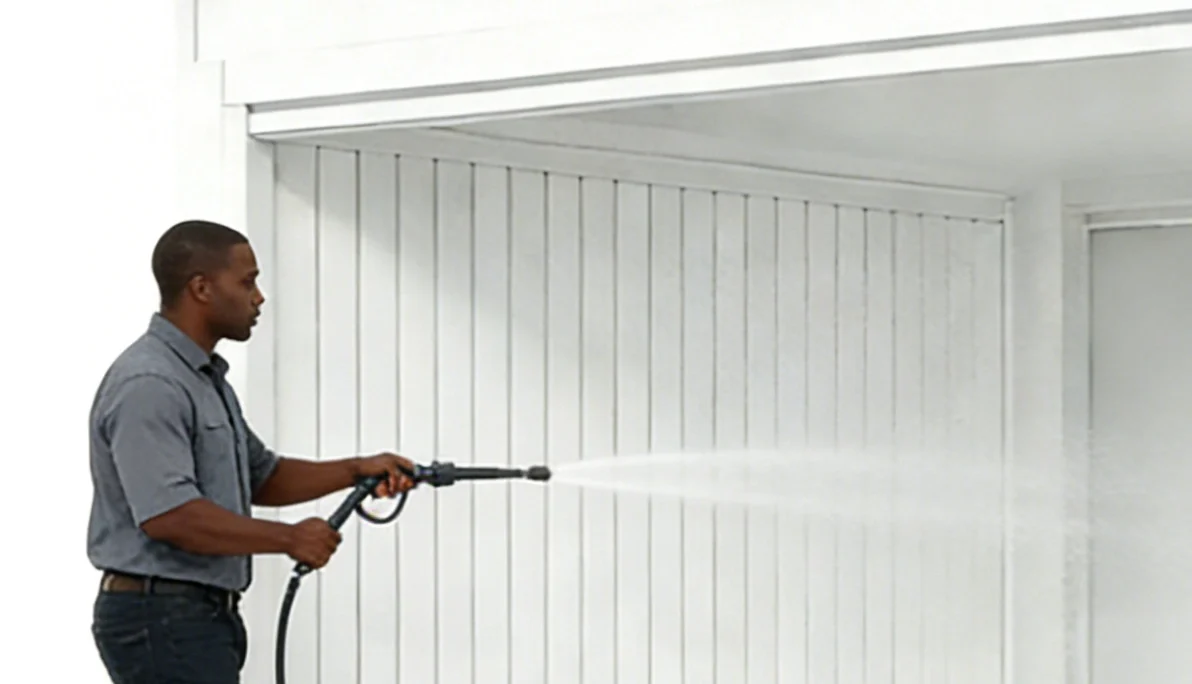
(2) Use a hose to rinse the privacy solid wall of the pergola.
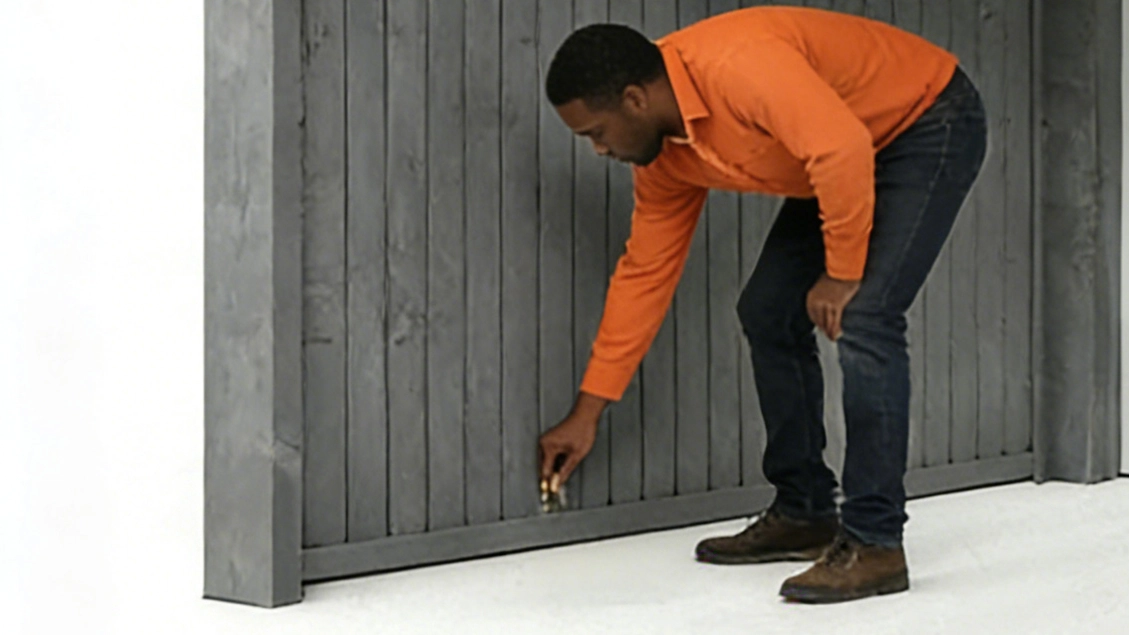
(3) Inspect caulking along wall edges—replace cracked or peeling sealant to prevent moisture penetration..
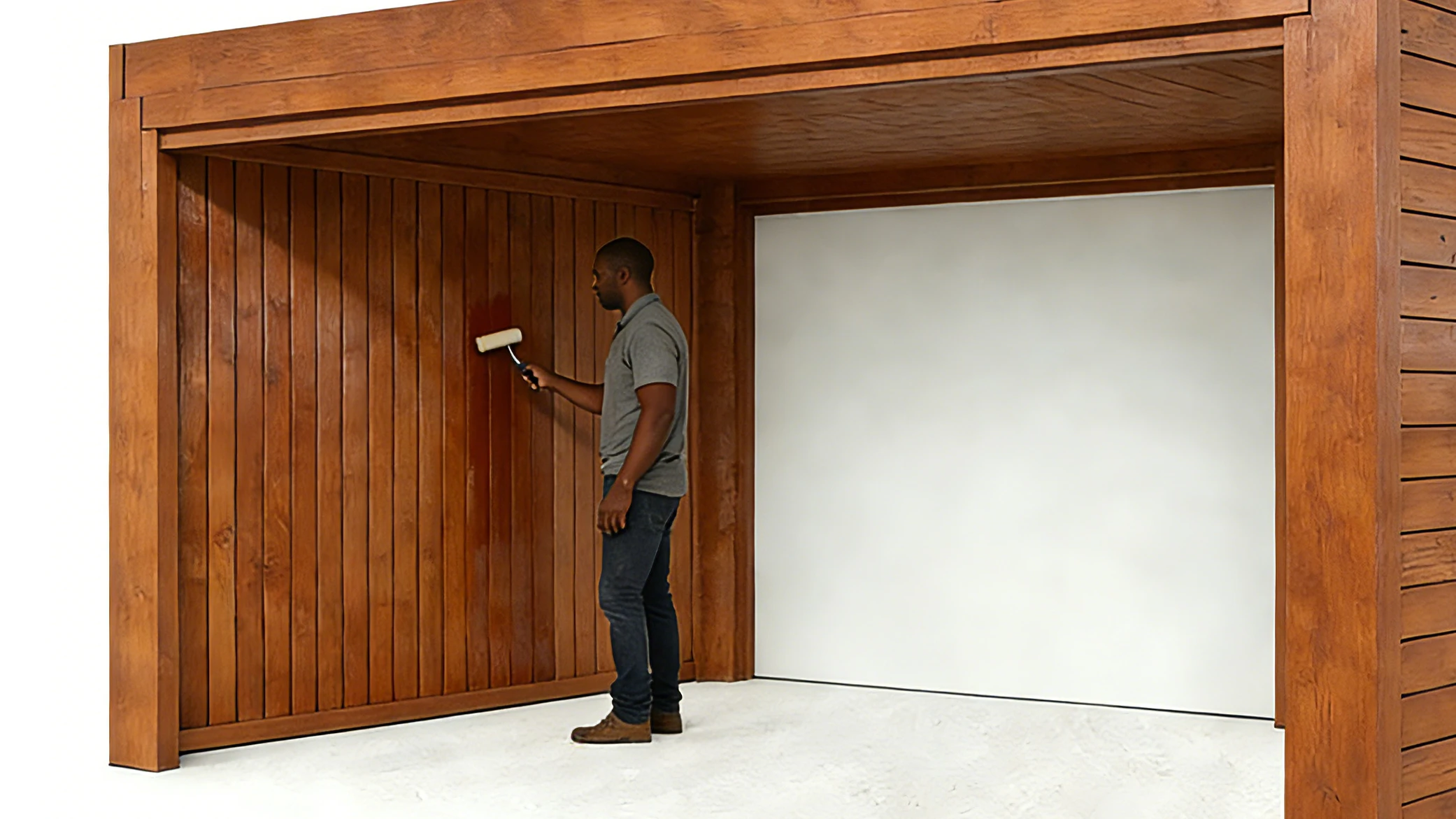
(4) Reapply waterproof stain or paint to wooden fences every 2-3 years to resist weathering.
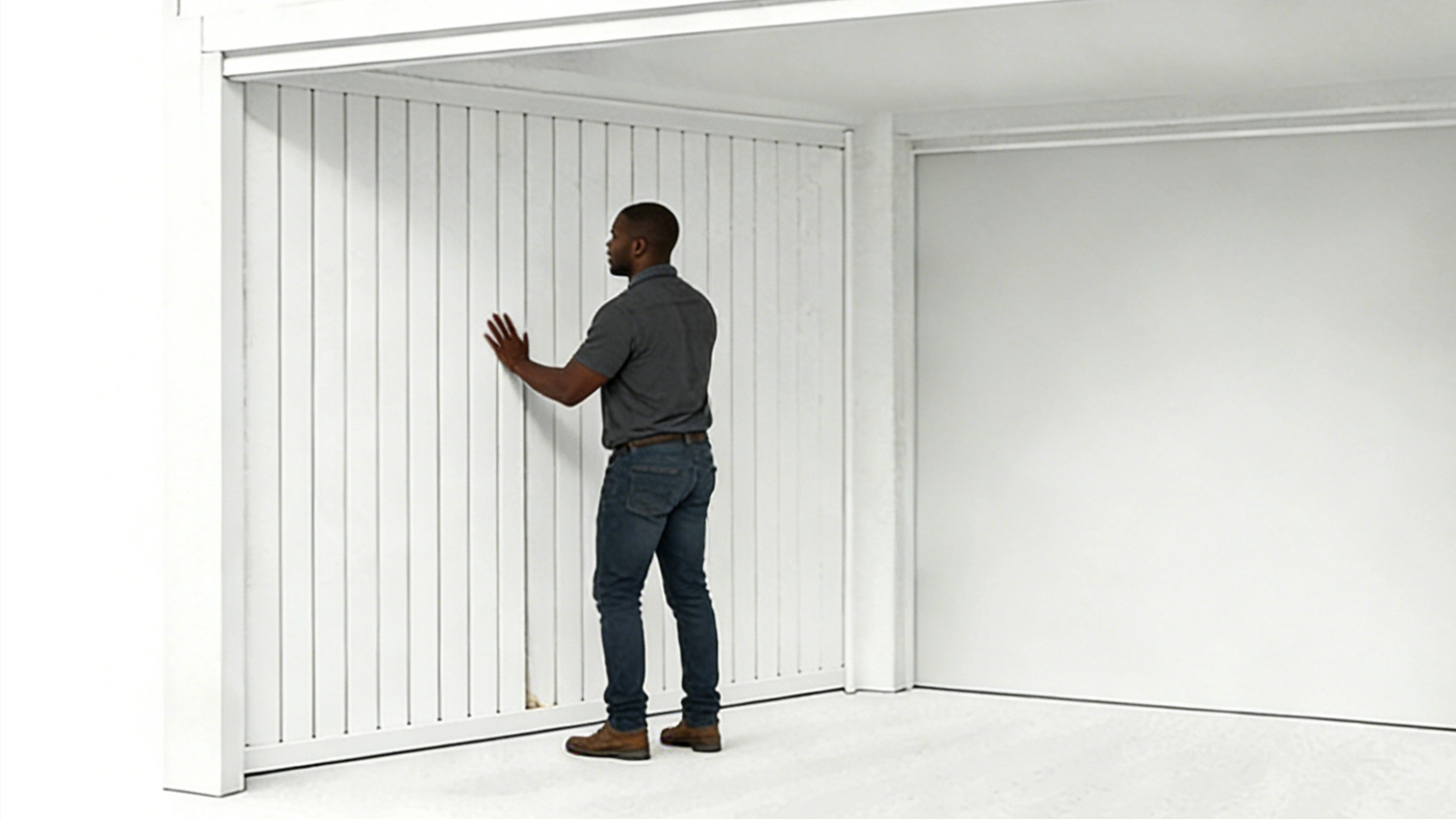
(5) In windy areas, quarterly inspections are needed to check for loose fence panels.
4. Maintenance for Glass Sliding Doors
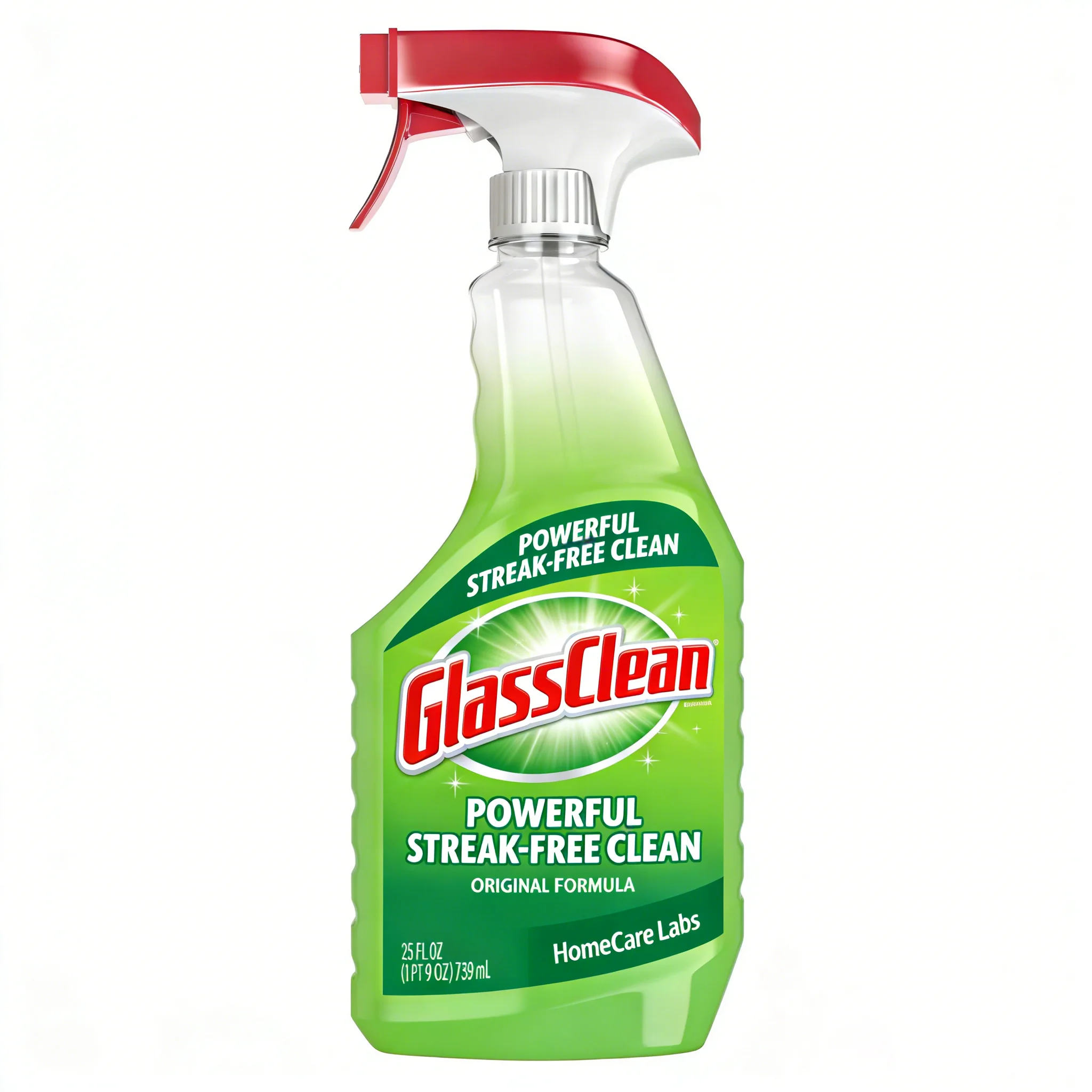
- Clean exterior glass with ammonia-free glass cleaner to prevent streaks and fogging
- For interior glass cleaning, first wipe with a dry cloth, then apply cleaner
4.2 Sealant & Weatherstripping
- Inspect weatherstripping and sealant annually in spring and fall. Worn weatherstripping causes drafts and leaks. Check glass edge weatherstripping for integrity
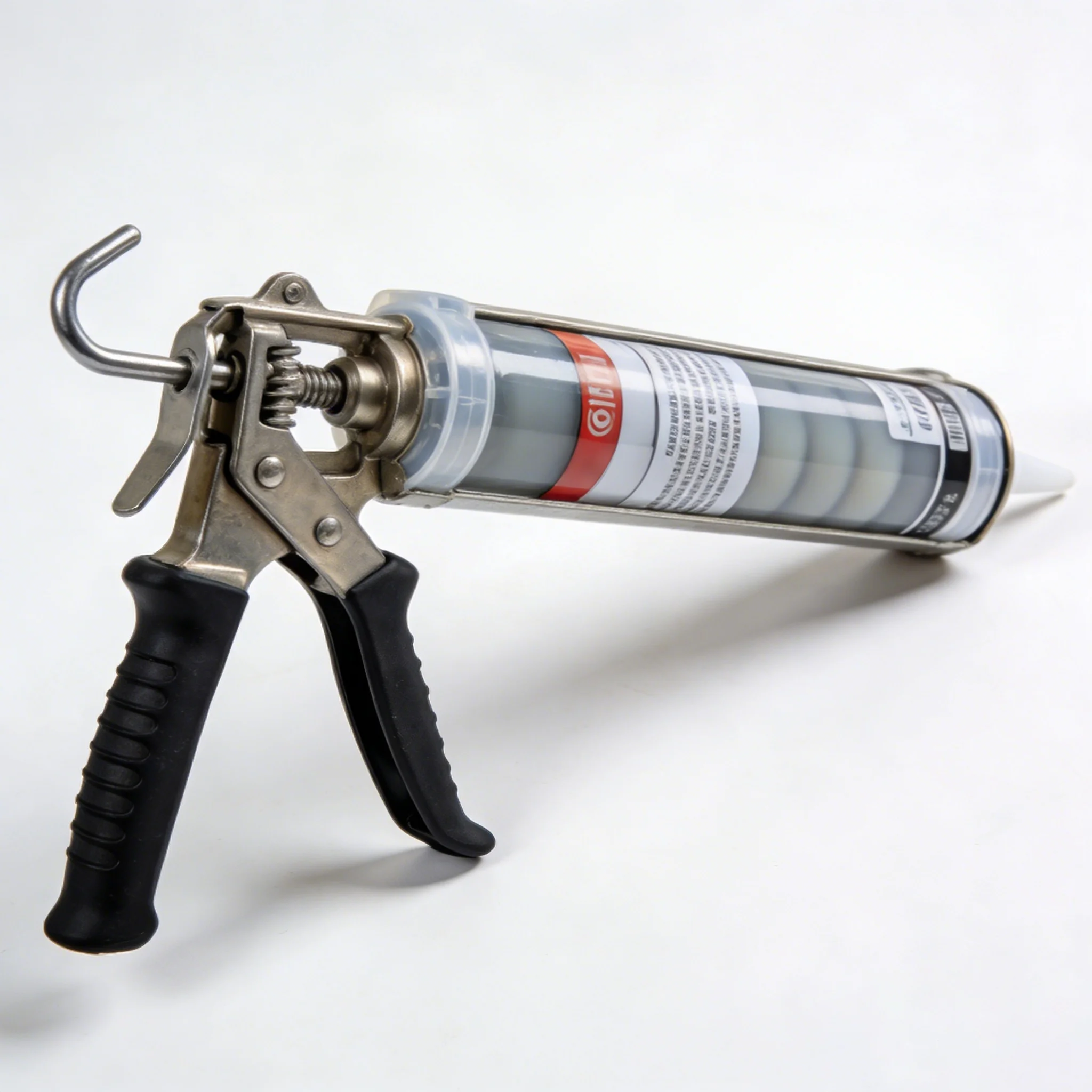
- Replace immediately if cracks, gaps, or hardening are found. Reapply industrial-grade waterproof sealant around door frame gaps using a caulking gun
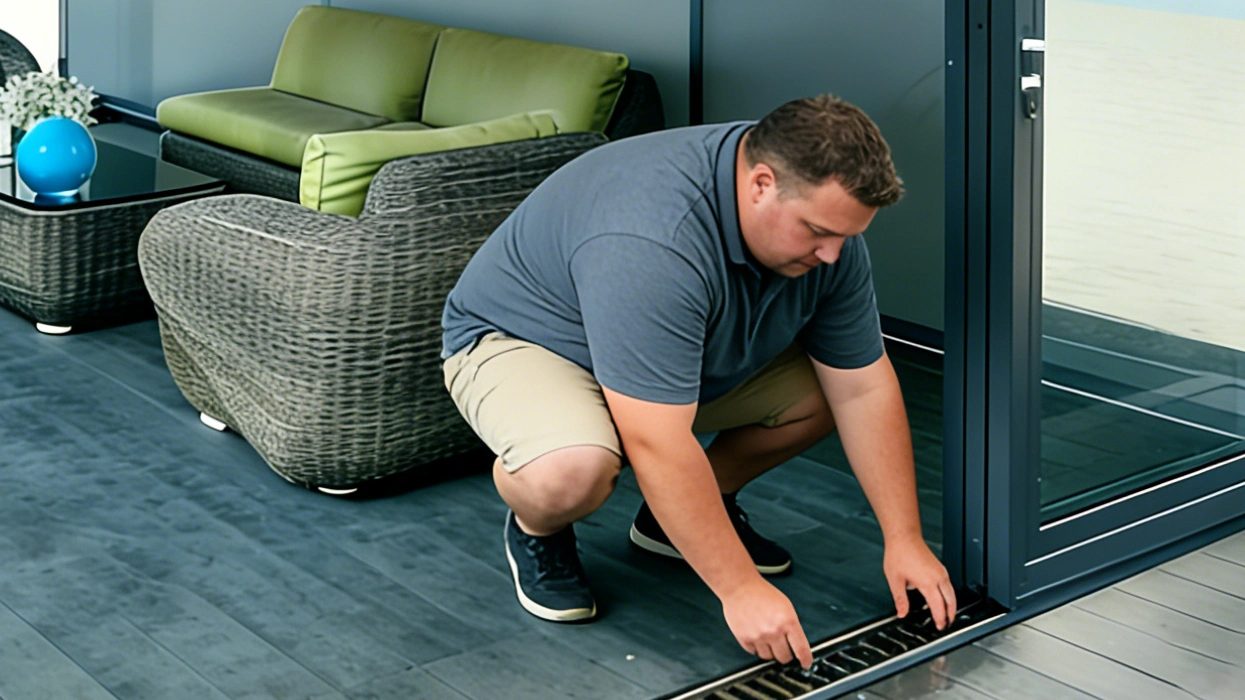
- If water seepage occurs around the door frame, inspect the bottom track drainage holes—clogged drainage holes are a common cause of leaks
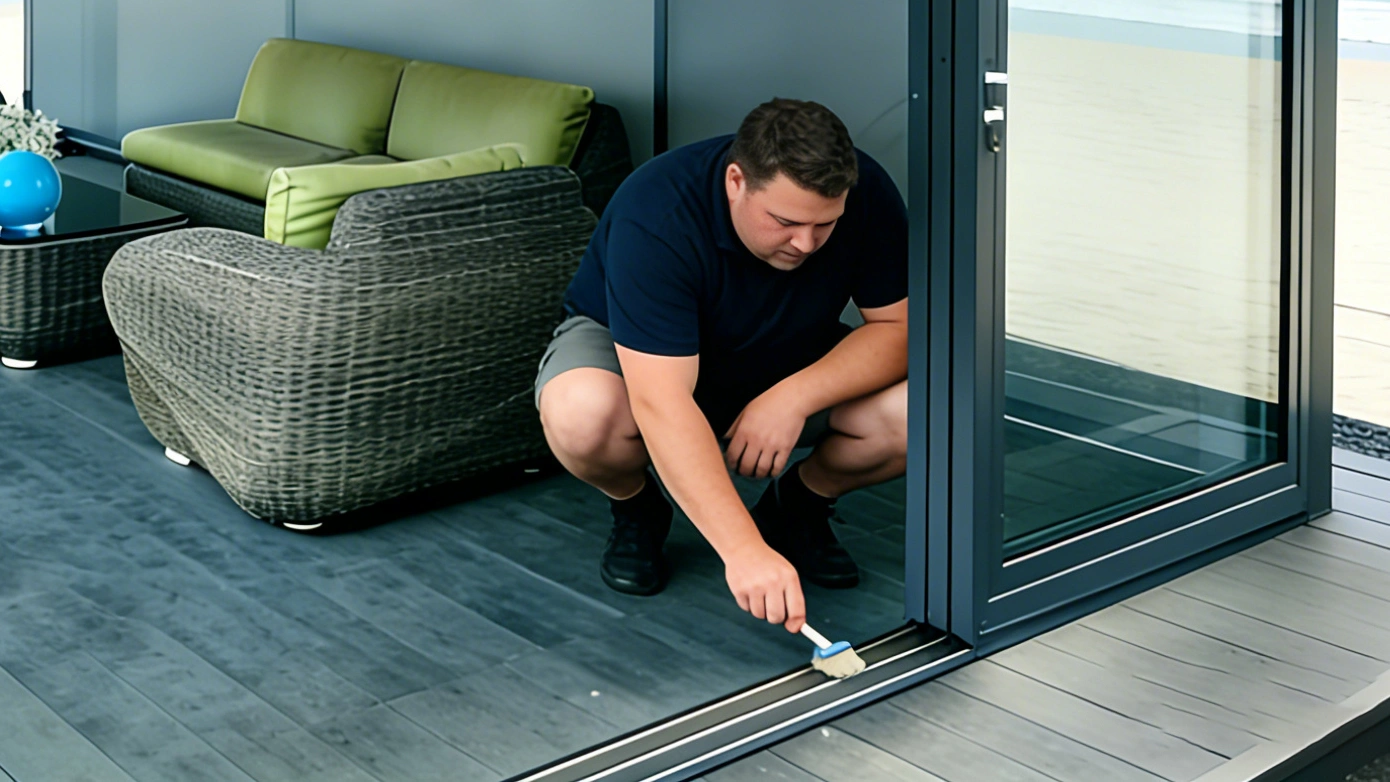
- Clean the sliding tracks with a small brush to remove dirt, debris, and leaves—track blockages can cause the door to jam or slide unevenly. Regularly apply silicone-based lubricant to the tracks and door rollers
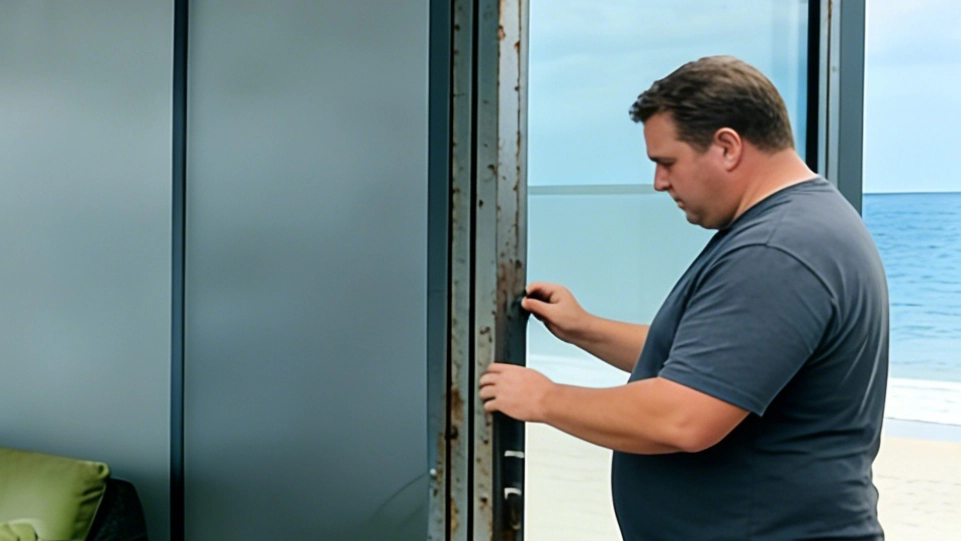
- Tighten loose hardware and regularly inspect metal frames for rust—repair with rust-proof paint to prevent rust spots from spreading
5. Maintenance for Folding Screen Door
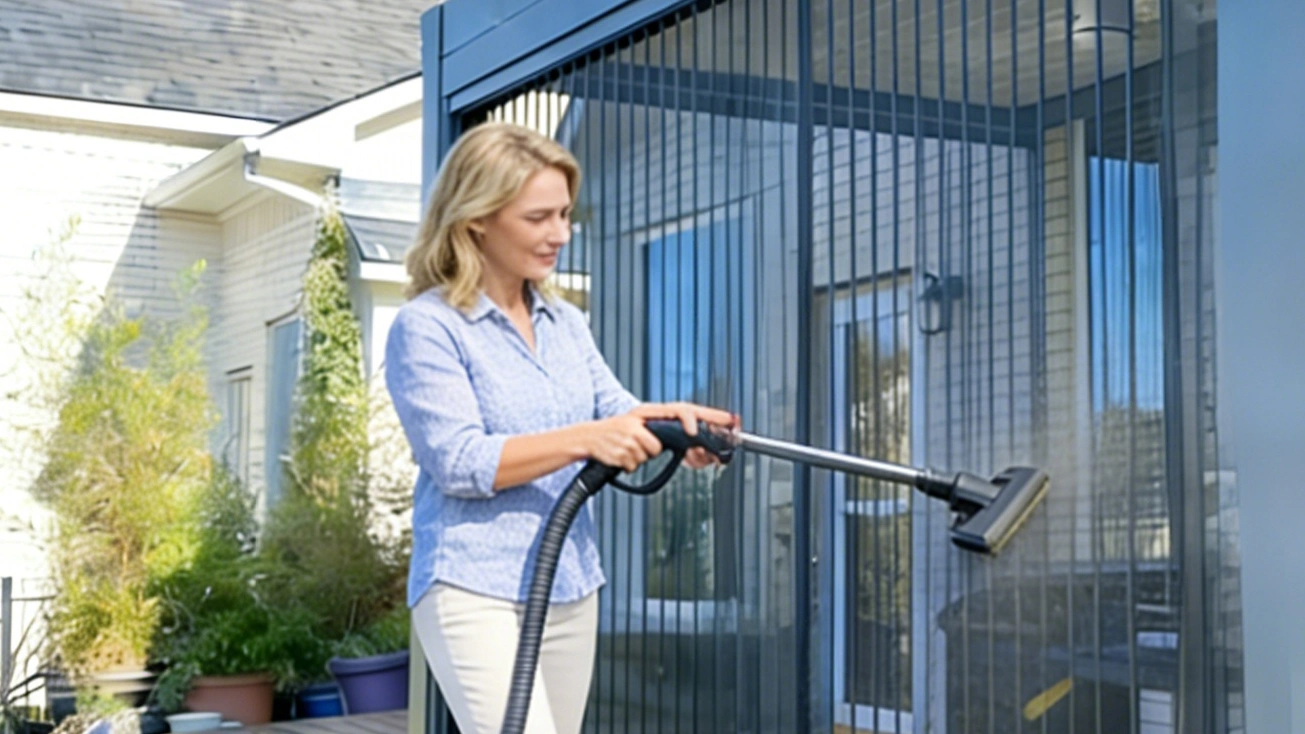
- Remove dust from the mesh using a vacuum cleaner or soft brush.
- For stains, spot-clean with mild soapy water and avoid vigorous scrubbing.
- Repair small tears in the mesh using a mesh repair kit.
- Larger tears may require replacing the entire panel.
Proper screen maintenance ensures folding screens provide effective insect protection for years, as demonstrated in our Enclosed Pergola in Sugar Land case study.
- Regularly lubricate tracks and hinges with silicone-based lubricant to ensure smooth folding and sliding.
- Use a small brush to clean tracks and remove debris, preventing folding jams.
- Quarterly inspect pins or screws in the folding mechanism for looseness; tighten or replace as necessary.
- Use a sponge or soft cloth dampened with a mixture of warm water and dish soap to wipe away dirt and dust from the surface.
- Finally, rinse thoroughly with plenty of clean water and dry with a microfiber towel.
6. Climate-Specific Maintenance Tips
6.1 Coastal Areas
- Increase cleaning frequency (monthly for screens/glass, bi-monthly for walls).
- Use corrosion-resistant hardware and sealant.
- Apply anti-rust treatment to metal parts annually.
- Clean salt residue from all surfaces regularly to prevent corrosion and glass etching.
6.2 Harsh Climates (Extreme Heat/ Cold)
- Store folding screens and manual retractable screens indoors in winter.
- Apply UV-protective spray twice a year (extreme heat accelerates fading).
- Clear snow/ice from walls and glass doors promptly.
6.3 Mild Climates:
- Follow the standard maintenance schedule.
- Inspect for mold in rainy seasons (clean with mild soap and water).
- Lubricate moving parts twice a year.
- Check caulking annually for gaps.
7. Common Issues & Troubleshooting
(1) Screen jamming:
- Clean tracks/rollers to remove debris
- Lubricate with silicone lubricant
- For motorized screens, check wiring connections and remote calibration
(2) Glass door leaks:
- Clean the drain holes in the track
- Replace worn weatherstripping
- Reapply sealant around the frame
(3) Louvered wall sticking:
- Clean louvers and tracks
- Lubricate hinges/tracks
- Tighten loose fasteners
- Replace rusted parts
(4) Mesh tears:
- Patch small holes with a mesh kit
- Replace severely damaged panels
- Avoid high-pressure hoses when cleaning to prevent new tears
(5) Solar screen not working:
- Clean solar panels
- Check battery connection
- Ensure panels are aligned to direct sunlight
- Calibrate the motor
8. Conclusion
Regular maintenance turns your enclosed pergola from a one-time upgrade into a long-lasting outdoor asset. By following these tailored guides for your specific enclosure type and climate, you can avoid costly repairs, preserve the space’s functionality, and enjoy year-round use.
Learn more about choosing the right enclosure in Pergola Ideas for Privacy: Screens, Walls, Doors & Which Is Best for You. For help deciding between DIY and professional installation (and maintenance), refer to: DIY vs. Professional Enclosed Pergola Installation: Pros, Cons & Cost. Want to see how other homeowners maintain their enclosed pergolas? Browse our pergola case for real user maintenance stories and long-term use effects.